

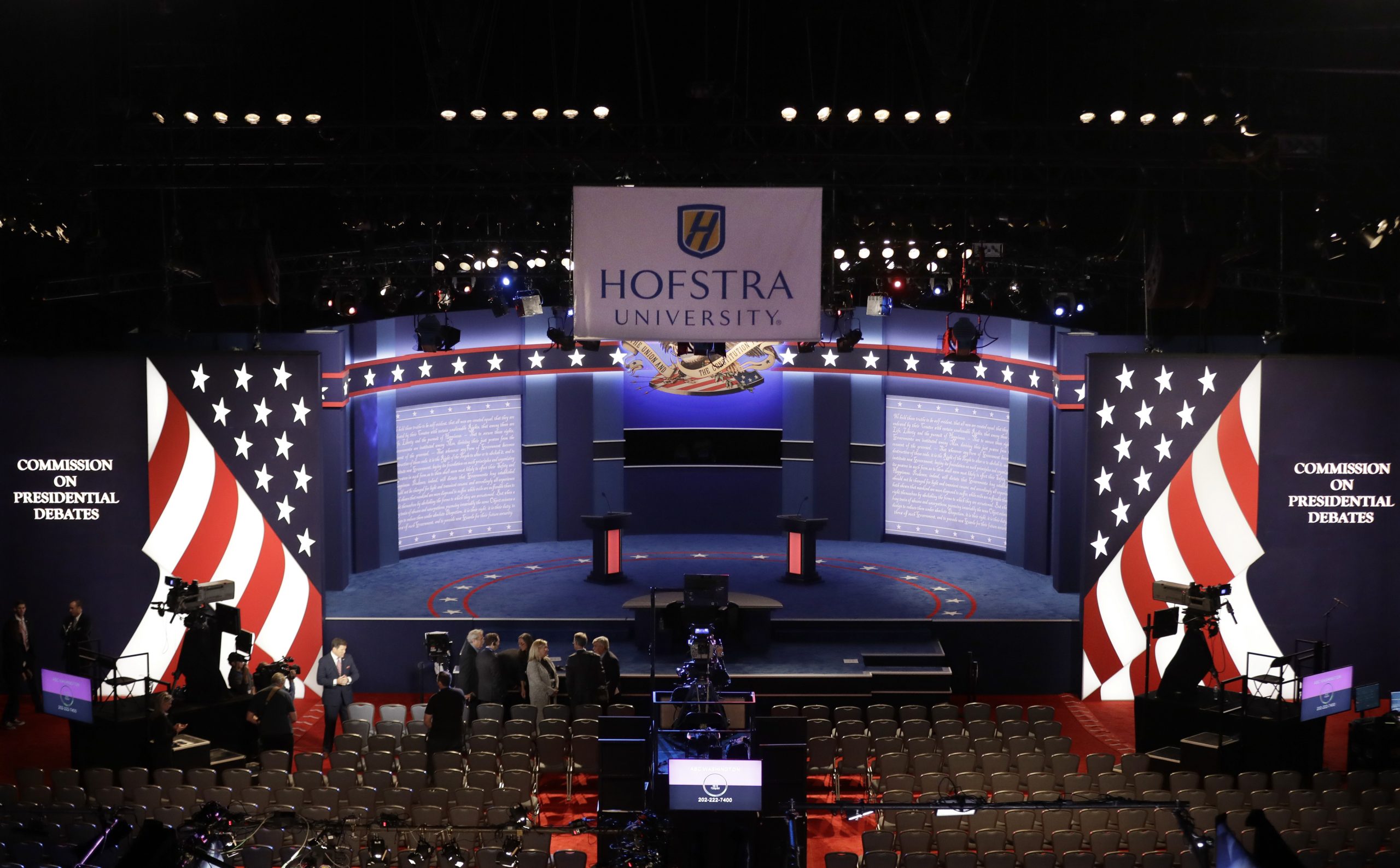
If history is any indication, Donald Trump will win the presidential debate tonight.
No, not because he did well in the Republican primary debates — simply because he’s the Republican nominee while a Democrat is in the White House.
Recommended Stories


According to analysis by Nate Silver and Harry Enten at FiveThirtyEight, after the first presidential debate, polls tend to shift in favor of the candidate from the challenging party.
In 2012, for example, after the first presidential debate, Mitt Romney closed the gap with President Obama by 4.4 percentage points in the polls.
From 1976-2012, Silver and Enten found that the nominee of the party not in the White House gained, on average, almost 2 percentage points in the polls.
That doesn’t mean Trump will definitely pass Clinton in the polls after the debate in the polls. From 1976-2012, the candidate leading the polls only changed twice because of the first debate: Ronald Reagan in 1980 and George W. Bush in 2000. Each took the lead after the first debate and went on to win.
There’s also many ways 2016 is different than other elections. In polls, a relatively large number of voters support third-party candidates or are undecided. That number typically falls the closer Election Day gets.
According to the RealClearPolitics polling average, Clinton and Trump account for only 84 percent of the vote. In 2012 at this time, Obama and Romney combined for 94 percent.
That could mean a bigger swing for Trump after the first debate, or it could mean that both candidates gain support.
Of course, the election is actually decided in the states. Depending on what happens in the debate, different states might swing more or less toward a certain candidate.
Keep an eye on national and state polls in the next week or so to find out what happens.
Jason Russell is a commentary writer for the Washington Examiner.
