

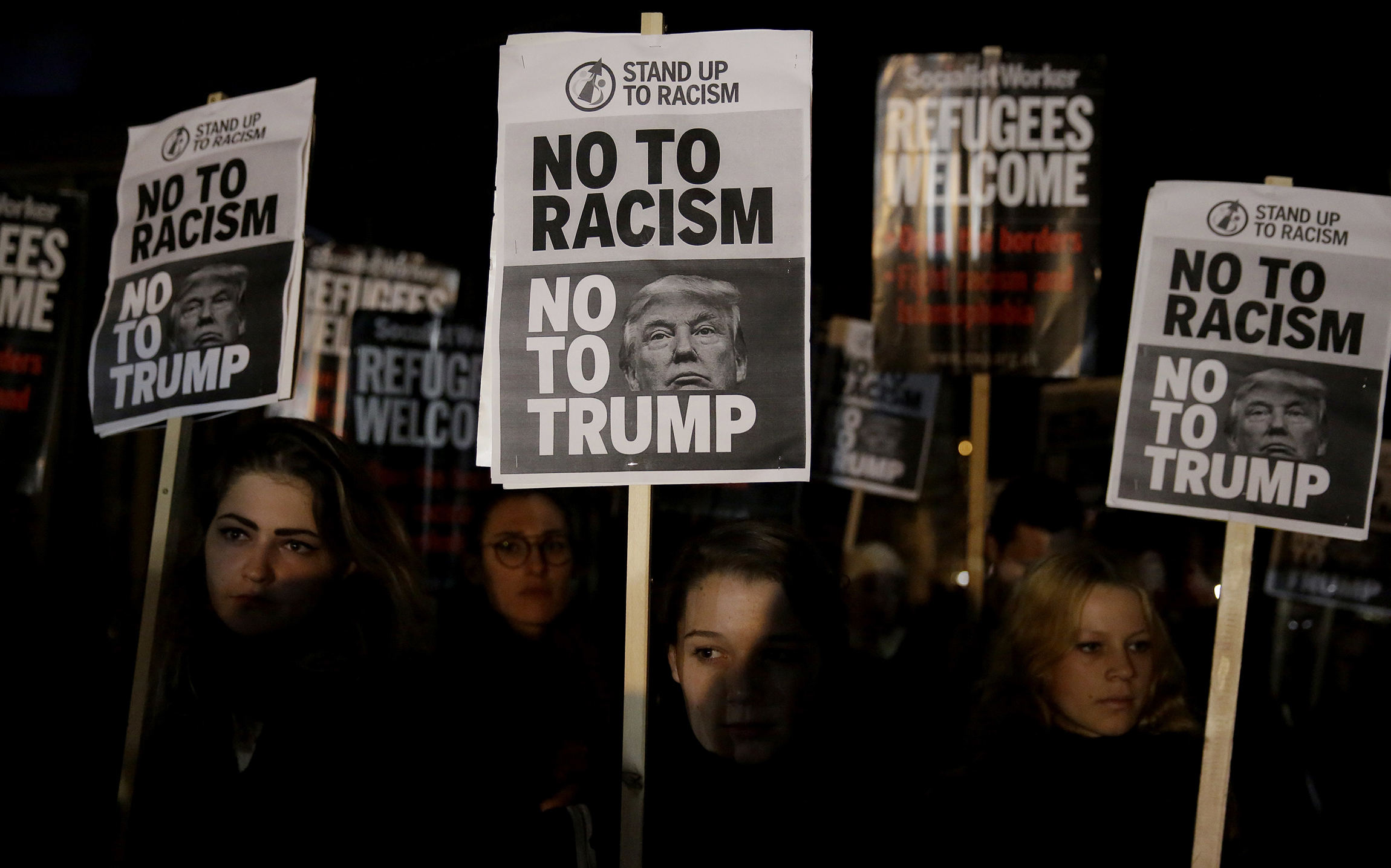
We’ve seen many arguments that wolf-crying over racism led us to the point where no one could persuade President-elect Trump’s supporters during the election that this time, the wolf is really here. And although some remain in denial, more liberals than you might expect have come to this same conclusion in the aftermath of the election.
It isn’t hard to see why if you look back over the last eight or nine years of political controversy. You’re upset by the scandal of the IRS targeting conservatives? Racism. Public-sector union reform? That’s just a vehicle to disempower African-American workers. The Second Amendment? That’s racism, probably — even if we can’t actually get any of you gun nuts to take the bait and object to the idea of black Americans owning guns. You say you believe in limited government? That’s just a clever code word for racism. After all, “America’s unique brand of anti-statism is historically inseparable…from the legacy of slavery.”
Recommended Stories



(I actually wrote two more paragraphs’ worth of such examples, but I’ll delete them and spare you all that.)
Many liberals have come to grips with this basic problem. In the Atlantic, Vann Newkirk quotes some of them, and agrees that they have a point. But how much of a point? There has to be a more civil way of doing politics than just calling everyone who disagrees with you a racist or a white supremacist, he acknowledges. But doesn’t this limit our ability to discuss racism to the detriment of fighting it? Doesn’t it leave white Americans in a position where they can be comfortable and complacent without even thinking about a serious national problem?
In the aggregate, though, these calls for civility threaten to impose a burden on people of color. If calling out racism is largely counterproductive, using a systemic definition like white supremacy is also unacceptable, and stigmatizing or shaming those who espouse racist beliefs is self-defeating, what tools remain?
If you ask me, there’s still a layer of denial here. The issue is not that wolf-crying cost liberals their credibility in persuading people. What it really did was poison the entire topic of racism for anyone outside their own bubble of partisan motivated reasoning.
There’s no easy rhetorical fix for that, because the very mechanisms for shaming racist behavior and comments seem to have broken down after a decade of relentless sabotage by self-described opponents of racism.
During this election, it proved nearly impossible, even during the primary, for non-liberal thinkers — say, Charles Krauthammer or the editors of National Review, or others whose judgment your average Republican voter might normally trust — to make what should have been an easy case to the marginally involved Republican voter.
A guy who says that a Mexican-American federal judge cannot be trusted to keep his oath to protect the Constitution because his parents are Mexican doesn’t deserve the benefit of the doubt about any of those other racist comments that otherwise might have been easier to explain away. You’ve just caught him in an instance of textbook racism, and he was given every chance to climb down but wouldn’t.
But try to explain this, and the response you’d hear over and over again was, “Eh, but they say that about everybody.” It was more an excuse they made than a true justification of anything, but it was a factual statement, they literally had said that about everybody. And that was enough for a lot of people to put any racism that came out of Trump’s mouth down at the bottom of the deck, and think instead about gun rights or judges or just keeping Hillary Clinton out of the White House.
The key audience here, I believe, was not the white working-class habitual Democratic voter who unexpectedly put Trump over the top. I view those voters as mostly non-ideological former Obama voters who were just happy to hear someone finally promise concrete action (no matter how unrealistic) to stop the offshoring of jobs. Nor was it the so-called alt-right, who are proudly racist by definition.
Rather, it was the far more numerous educated suburban or exurban Republican regular, who belongs to neither of those groups. These people disliked Hillary Clinton, of course, but a lot of them were deeply reluctant about Trump. Many didn’t vote for him, which was reflected in his underperformance in suburban areas. Many did, but wouldn’t want anyone to know.
Trump got just enough of these people’s votes in crucial suburban and exurban areas to win the election. And I think part of the reason he managed it that is that it’s easier to cloud over questions of racism in one’s mind when liberals have worked so hard and for so long to cloud it themselves.
