

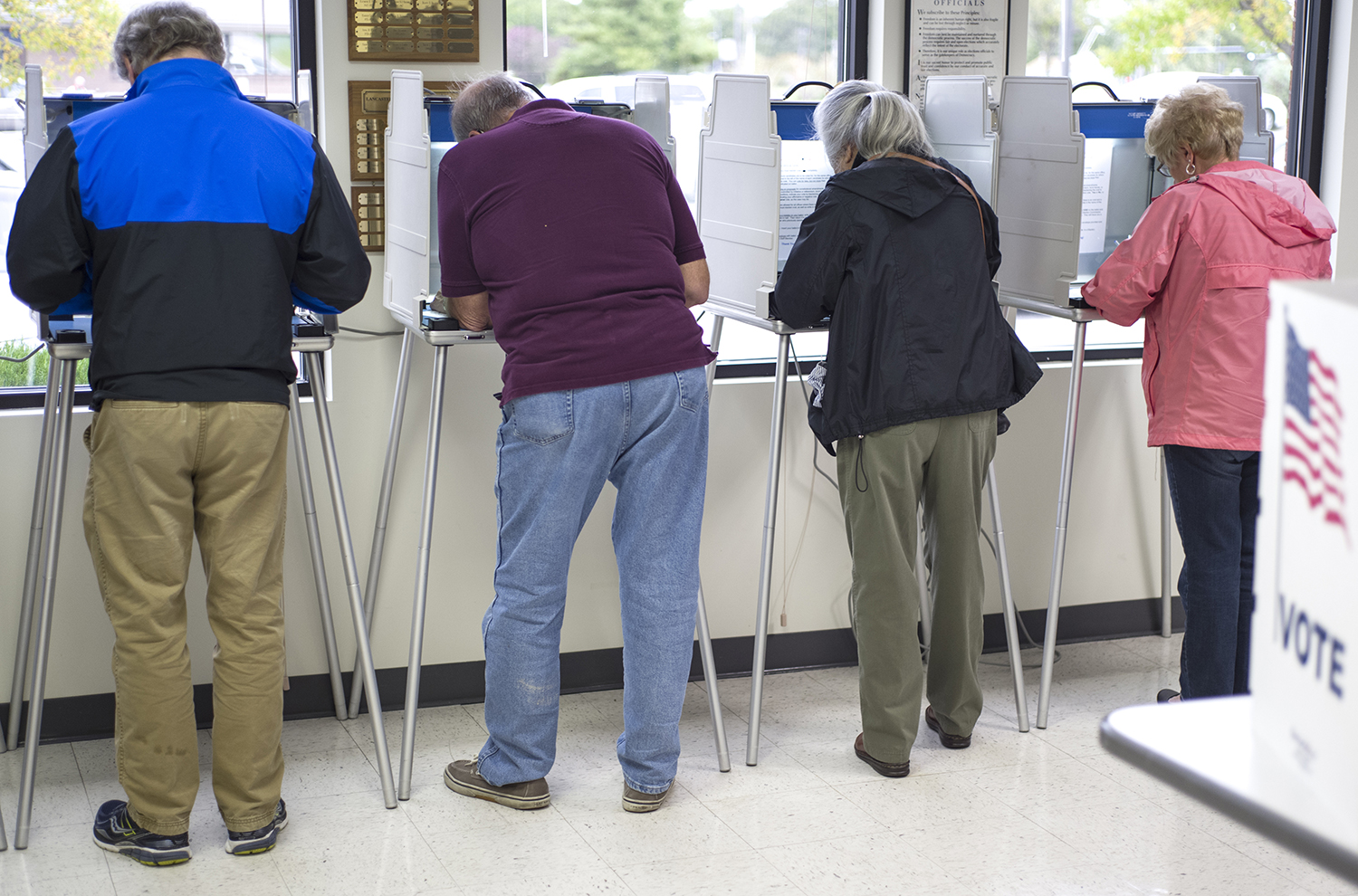
The problem with making claims that undermine the validity of democratic elections is that your supporters may believe them. When Manhattan liberals sipped cocktails and said “selected, not elected” throughout the George W. Bush presidency in a persistent effort to delegitimize his election, it’s not surprising their friend Donald Trump took the mantra to heart.
In 2004, Trump supported John Kerry and internalized the worst Michael Moore lies about the Iraq War. Trump now repeats those lies a decade later, just as he now spouts the Left’s calumny about the electoral process.
Recommended Stories



To be clear, the American system of election administration makes it virtually impossible to “rig” a national election. Elections are locally controlled and supervised, largely by Republican statewide officials. Elections are held in public, and all fifty states and Washington, D.C., have laws that allow poll watchers from both parties to observe voting and counting on Election Day. Meanwhile, candidates and parties are standing by with armies of lawyers and operatives, all of whom are ready at a moment’s notice to challenge any perceived irregularities.
Before the election, voting equipment is publicly tested and secured. After the election, the results are canvassed and verified to confirm the count’s accuracy.
Moreover, in response to the “hanging chad” ballot-counting controversy of 2000 that incensed Trump and his liberal friends, Congress passed the Help America Vote Act. The law set new standards for voting systems while requiring states and localities to replace aging machines. By law, all voting equipment — electronic or otherwise — must allow voters to verify and correct the choices on their ballot before they leave the polling booth. HAVA also requires all voting systems to produce a permanent record of each vote in case of a recount or post-election audit.
Indisputably, there have been isolated instances of voter fraud on the state and local level. I’ve seen them myself, having worked on recounts in Washington state and a U.S. Senate race in Louisiana. The Senate committee report on former Sen. Mary Landrieu’s, D-La., election explains voters “ringing the bell” in her parishes, meaning they voted after the polls were supposed to be closed. But, to be fair, this chicanery was decades ago, long before HAVA reforms.
Although it is possible — especially in a state with lax voter identification requirements — for an individual to submit a fraudulent ballot, the idea that an election could be conspiratorially “rigged” on a grand scale is something only Frank Underwood could pull off.
In the real world, the process to rig a presidential election would entail a person or group of people tampering with every piece of voting equipment (which has been publicly tested and locked away before the election); obtaining the cooperation of election officials, poll watchers and post-election canvassers (all of whom are drawn from both political parties and have no motivation whatsoever to collude); and then managing to trick thousands of lawyers and campaign operatives on both sides, as well as reporters and independent observers, who are all closely monitoring local returns for unusual results or vote fraud.
Elections in the United States are not perfect. But that’s why our country’s laws provide for multiple layers of protection before, during and after Election Day. It’s also why we allow ordinary citizens to become responsible, election law-abiding poll watchers to ensure the system works.
Democrats like Hillary Clinton shouldn’t have tried to delegitimize President Bush’s election. Worse yet, Trump shouldn’t be trying to delegitimize what he apparently thinks will be a loss before the election even takes place.
Charlie Spies is a blog contributor to the Washington Examiner. He previously served as counsel to the Republican National Committee, Mitt Romney’s 2008 campaign and Jeb Bush’s Right to Rise USA super PAC. He currently leads Clark Hill’s national political law practice and is member in charge of the Washington, D.C. office. Thinking of submitting an op-ed to the Washington Examiner? Be sure to read our guidelines on submissions.
