

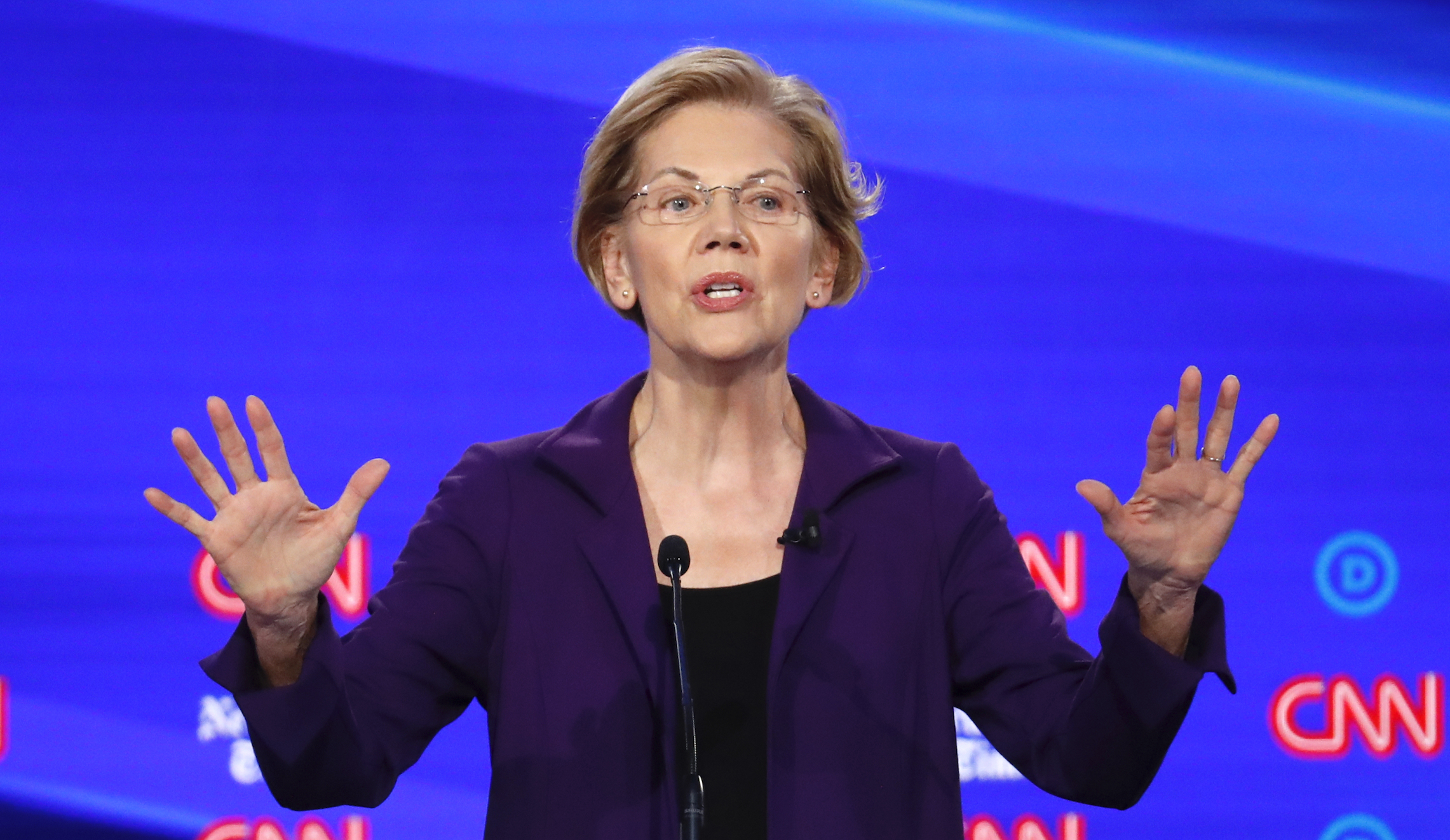
Democratic presidential candidates pushing a “wealth tax” are pushing policy that’s not only unwise, but almost certainly unconstitutional.
Article I, section 9 of the Constitution says that “no capitation, or other direct, tax shall be laid, unless in proportion to the census or enumeration herein before directed to be taken.” What this originally meant is that federal taxes could not be enacted directly on individuals as individuals, but only in proportion to the total population of each state.
Recommended Stories



The Sixteenth Amendment modified this original restriction, but only somewhat. It allowed for a tax on income. It did not, however, allow other direct taxes. By almost all understandings, a tax on assets is exactly the sort of “direct tax” prohibited by Article I, Section 9.
Liberal theorists in recent years have argued that this understanding of unconstitutionality is wrongheaded, but in doing so, they grasp at straws. Even they acknowledge that the most recent case that addressed this, Pollock v. Farmer’s Loan, goes against them. They just say the decision is wrong.
In other words, even though the ordinary language of the Constitution indicates that a wealth tax would be unconstitutional, and even though the relevant Supreme Court precedent says would it be unconstitutional, they want to construct a convoluted argument that the court is wrong and the Constitution doesn’t really mean what it says.
Sure, if a Democratic president gets into office and “packs” the Supreme Court, that president might be able to get a court majority to ignored the Constitution’s plain text. But if not even Franklin Roosevelt at the height of his popularity could succeed in packing the court, the likelihood is that no Democratic president could easily succeed at doing so in the 2020s.
In chasing “wealth,” Democrats are like those deluded people who still chase rainbows to find the leprechaun’s gold at the rainbow’s base. Worse even than fool’s gold, this is gold that doesn’t actually exist in any accessible way. These candidates are wasting their time — and ours.
