

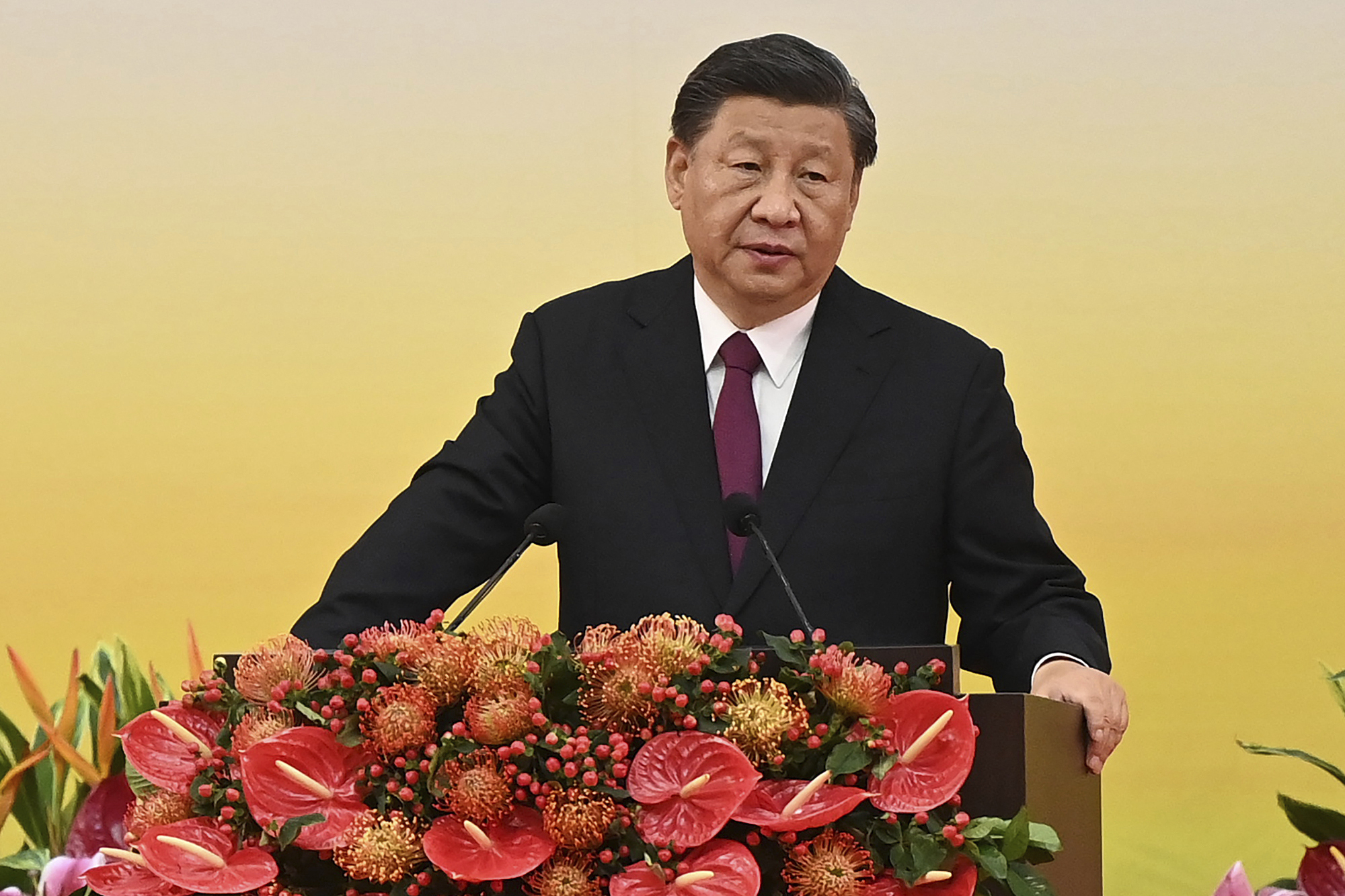
Alarmed by Japan’s move to shed constitutional prohibitions on the use of military force, China is upping its threats against Tokyo.
Recommended Stories



In a Tuesday editorial, Beijing’s Global Times warned that Japan’s scrapping of its pacifist constitution would lead it into an “abyss.” The newspaper accused the United States of pressuring Tokyo to become “a geopolitical thug.” Also on Tuesday, China reacted angrily to the attendance of Taiwan’s vice president at the funeral of former Japanese Prime Minister Shinzo Abe. Beijing views Taiwan as a breakaway province and has been deeply alarmed by its improving relationship with Japan, the U.S., and certain European powers.
But it is constitutional change that China fears most.
The landslide victory of the governing Liberal Democratic Party-Komeito alliance in Japan’s upper parliamentary house on Sunday means that Prime Minister Fumio Kishida has both the mandate and means to amend the constitution. The prospective changes would allow Japan to use military force in more circumstances and bolster its offensive combat capabilities. On Monday, Kishida suggested he would move to make these changes without delay. They would have to be approved by a public referendum, even if the country’s parliament did give its assent. But it is clear that Japan is moving toward a more robust deterrence doctrine in the West Pacific.
Japan sees escalating Chinese threats to Taiwan and aggressive joint Sino-Russian incursions near Japanese waters and airspace. It also faces pressure from the U.S. to take a more robust stance in support of its security architecture. Yet, while Kishida is set to make big boosts to defense spending, it will take years for Japan to reach even 2%-of-GDP annual defense allotments. Significantly more than that will be necessary to deter China and provide credible support to the U.S. military in any war. Japan particularly needs more longer-range missiles, submarines, and a higher level of readiness on the part of its naval and air forces.
Regardless, these moves are positive. Alongside Australia, Japan recognizes that a Chinese invasion of Taiwan, which most U.S. military and intelligence officers believe is likely to occur by 2030, would dramatically undermine its own security and sovereignty. Were China to conquer Taiwan, its forces would be within 70 miles of Japan’s Yaeyama Islands. Those islands eventually connect to Okinawa and then the southern Japanese home island of Kyushu. To put Japanese concerns in perspective, imagine if Taiwan was 70 miles from Guam. Xi Jinping’s imperial destiny-driven ambitions have made Japan wake up to a very dangerous new reality.
At the margin, this is good news. Any additional Japanese military capability that its leaders are willing to deploy is beneficial to the U.S., Taiwan, and broader democratic security in the Pacific. China wants a Japan that is supplicant and scared. Moving in the opposite direction, Tokyo is attracting Beijing’s increasing ire.
