

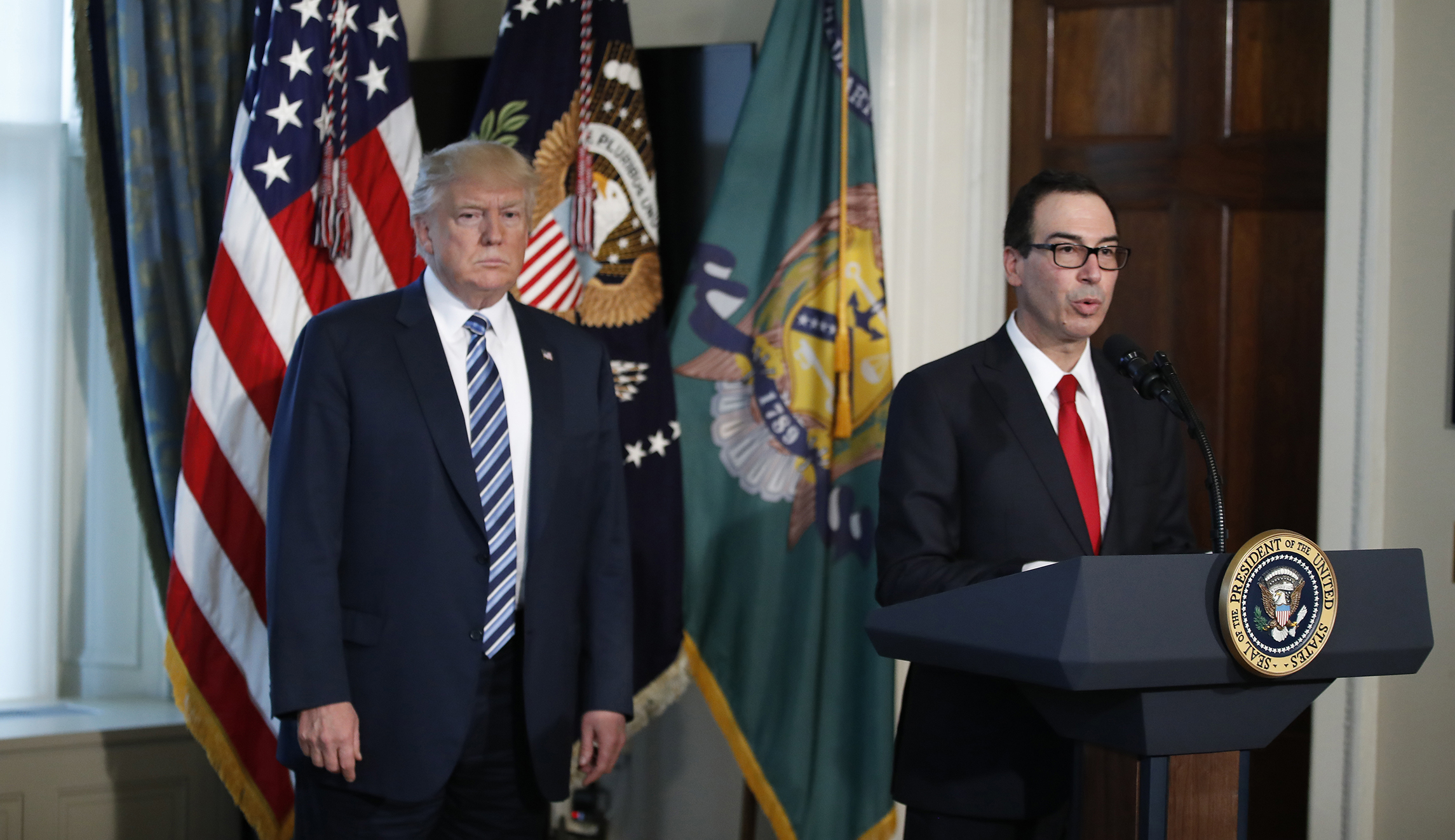
President Donald Trump’s debt ceiling compromise with congressional Democrats earlier this month kept the government open through December and represented the first major bipartisan compromise of the administration. However, after an all-encompassing level of coverage in real time, the media quickly moved on to the next day’s news cycle and interest in the debt ceiling waned. If you were to ask the average American today to recall what happened, the majority likely would tell you that the deal was a win for the nation.
Unfortunately, raising the debt ceiling yet again has resulted in rapid and entirely foreseeable financial consequences that are detailed in the ledgers of the U.S. Treasury Department’s “Debt to the Penny” website. Just 24 hours after Trump signed the measure, a torrent of $317 billion in concealed—and technically unauthorized—government spending made its way onto official ledgers for the first time. In the last two weeks alone, that number hit a staggering $335 billion. This significant development is only the beginning of what’s likely to be a tumultuous time for the country’s fiscal health.
Recommended Stories


If you pull up historical national debt figures, there is a series of these dramatic spikes that coincide with debt ceiling fights across both Democratic and Republican administrations. Most recently, the debt limit was set at $19.9 trillion from March 15 until Sept. 8, 2017. If official Treasury Department statistics are to be believed, government finances held steady at that level for months. None of this accurately reflects the financial position of the federal government. It actually was an artificial freeze that was accomplished using accounting gimmicks and an aggressive cash management strategy on the part of Treasury Secretary Steve Mnuchin.
Legally, the government was not able to borrow more money, but the Treasury did have a toolbox of “extraordinary measures” at their disposal to pay for government expenses without counting the dollars as official debt. Extraordinary measures are difficult to explain to the non-accountant type, but you can think of them as using one credit card to pay off another.
The simplest extraordinary measure involves temporarily looting the federal employees’ retirement fund to pay for day-to-day government operations. The Treasury can “borrow” from this $225 billion fund and spend it without moving the official national debt by one penny.
And this is exactly how they kept the government open in recent months without tripping the $19.9 trillion debt ceiling.
As soon as the ceiling was raised, however, the Treasury Department undid their extraordinary measures, replenished the employee retirement fund, causing the national debt to spike with months of concealed spending. This accounting charade occurs like clockwork every time the government has a debt ceiling confrontation, and it just happened again without anyone seeming to notice.
A $335 billion spike is a difficult number to put into context. As an example, consider that normal government operations add $12.8 billion to the national debt in a given week. That means that this month’s increase represents six months of normal government spending. It’s a tremendous amount of taxpayer money.
For all the stories we saw about Trump’s budget deal, very few hinted at the dishonest accounting tricks behind the granite façade of the Treasury Department. Even fewer articles mentioned the $335 billion spike. It’s far easier to rehash the familiar narrative arc of who won this round of the endless fight.
Largely unexamined in this flurry of coverage are the true losers on the fiscal cliff: American taxpayers and the federal government’s worsening financial condition.
Sheila Weinberg, CPA, is founder and chief executive officer of Truth in Accounting, a nonprofit organization that researches government financial data and promotes transparency for a better-informed citizenry.
If you would like to write an op-ed for the Washington Examiner, please read our guidelines on submissions.
