

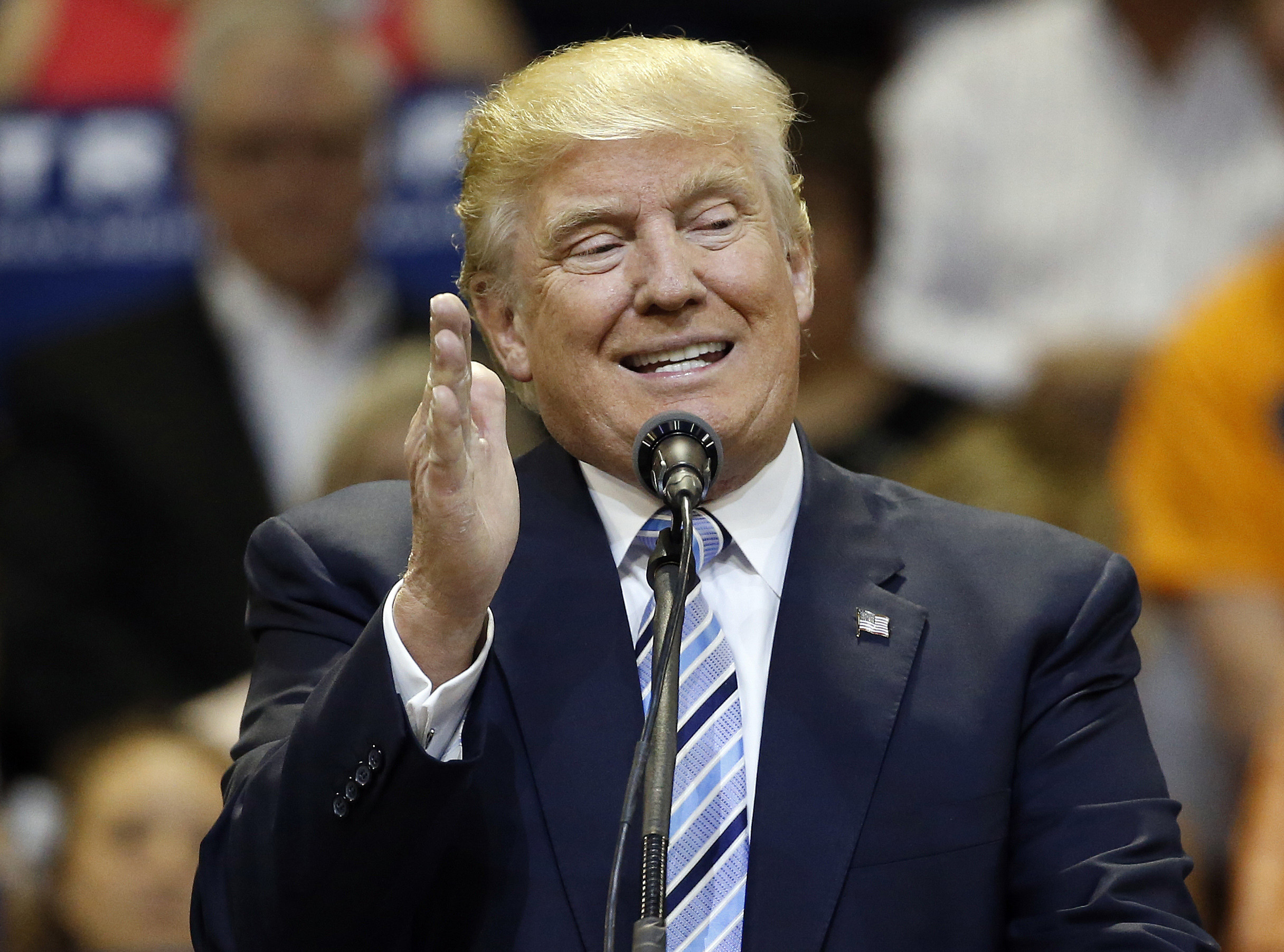
Donald Trump said what he said about Gonzalo Curiel, the federal judge presiding over the Trump University lawsuit. Trump has to live with the consequences.
But imagine an alternate universe in which Trump accused Curiel of bias without directly raising the toxic issues of race and ethnicity. It could have been done, it might even have been effective and it would have spared Trump the current controversy, had he but the wit.
Recommended Stories


There’s no sensible explanation for Trump’s decision to devote 10 minutes of his speech at a May 27 rally in San Diego to the Trump University suit. (That was longer than Trump spent talking about jobs, immigration and other key issues.)
But if Trump simply had to discuss the case, and if he had to mention Curiel, he might have said something like, “This judge is a lifetime member of an organization that is boycotting all of my businesses. And he’s supposed to be fair in a case involving one of my businesses?”
In paperwork submitted to the Senate for confirmation to the U.S. District Court for the Southern District of California, Curiel noted that he is a lifetime member of the Hispanic National Bar Association (HNBA). Last summer, the group’s then-president, Cynthia Mares, issued a statement announcing, “The HNBA calls for a boycott of all of Trump’s business ventures, including golf courses, hotels and restaurants.”
The call was issued in the wake of Trump’s June 2015 statement that Mexicans coming to the United States are “bringing drugs, they’re bringing crime, they’re rapists. And some, I assume, are good people.”
“His comment that Mexico only sends rapists and criminals to the United States reveals a racist nature that cannot and will not go unnoticed by the Hispanic National Bar Association, nor the Latino community,” Mares said in the boycott announcement.
If Trump had cited the HNBA boycott, instead of pronouncing the Indiana-born Curiel a Mexican and therefore biased against him, Trump could have focused on the judge’s associations and activities, instead of his race and ethnicity. Perhaps some listeners would have found that persuasive, and perhaps some would not. But it would have avoided the firestorm that Trump brought upon himself.
In a conversation Tuesday afternoon, HNBA spokesman Daniel Herrera said the boycott policy has changed slightly under current president Robert Maldonado. “HNBA is going to choose not to do business with any of Mr. Trump’s businesses,” Herrera said, “but there’s no active campaign right now to get other people to boycott Trump.”
We’re not actively calling other people,” Herrera said. “HNBA isn’t organizing folks.”
Nevertheless, the group continues its own boycott of Trump’s businesses. Maldonado issued a statement condemning Trump last February, when Trump launched a less-noticed attack on Curiel. And a few days ago, Maldonado demanded Trump apologize for “belligerently inject[ing] bigotry and divisive politics into the 2016 contest.”
Of course, many businesses are now avoiding Trump, from NBC to the PGA Tour to all sorts of organizations that will no longer book his hotels. But imagine the different argument that would be taking place now if Trump had focused his ire on Curiel’s HNBA connection rather than the attack Trump chose.
Yes, some would accuse Trump of employing dog-whistle racism, which might be damaging but would be far, far less so than the straight-on variety now being alleged. And Trump’s defenders would have something to say.
Finally, Trump himself would be able to move on to actual issues. But as he should have learned by this point in the campaign, he can’t unring the bell.
