

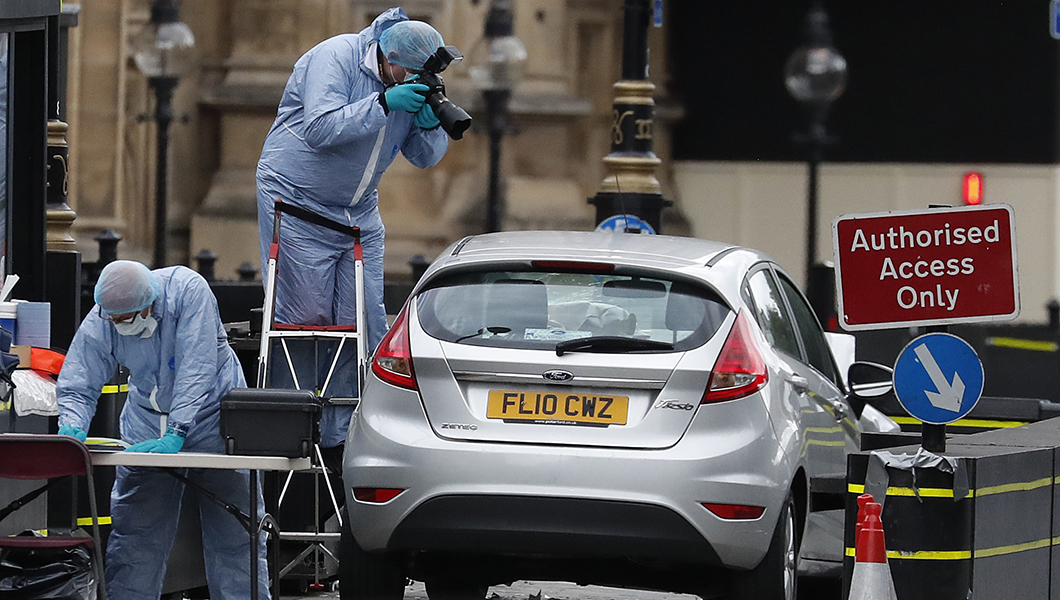
On Tuesday, a terrorist attempted to murder civilians in London.
The method of the attack was an increasingly familiar one: A car was used in an attempt to run down pedestrians. Fortunately, while the attacker struck a number of cyclists and pedestrians, none were seriously injured or killed. The terrorist then crashed into a security barrier protecting the Palace of Westminster, where the House of Commons meets. Authorities were originally concerned the car may have carried explosives, but it did not.
Recommended Stories


[Related: Trump blasts terrorist ‘animals’ after new attack in London]
While the investigation is at an early stage, the attacker has been identified as a male British national originally from Africa. Suspected of acting alone, the terrorist is also believed to have recently endorsed the Islamic State ideology (although there is no evidence thus far that he was directed by any ISIS external operations officers). However, the terrorist is from an area of Birmingham which has long been a center for Islamic extremist-related concerns. The area has had particular problems with al Qaeda-related plots and sympathizers, and individuals connected to various Pakistani extremist organizations.
Still, although it’s clear that Britain faces a serious terrorist threat and an ongoing challenge from rapid extremism-to-violence transitions, there are some positives from Tuesday’s incident.
For a start, the attacker was unable to breach the parliamentary security perimeter. That’s important not just in and of itself, but because it may deter future attacks on Parliament (which has taken on an increasing jihadist-related threat consideration in recent years).
Moreover, the security response to this attack was both rapid, confident, and aggressive. Civilians were immediately evacuated from the area and ambulances arrived within a few minutes. Armed police officers in the vicinity of Parliament were on site almost immediately and a quick reaction squad of more heavily armed officers arrived soon thereafter. This indicates that had the incident involved more attackers with greater capabilities, the emergency services would have been able to dominate them in short order. Building this capability amid other national security threats has taken a number of years, but is now well-established. Other counter-terrorism improvements are also currently underway.
So ultimately, for Britain, Tuesday was a good day. A terrorist tried and failed to take life and spread fear in pursuit of a fanatical ideology. Improvements can always be made to counter-terrorism-related intelligence and security operations, but Britain is on the right track. Lives will continue to be saved as a result.
