

Parents, students and educators across the nation are celebrating National Charter Schools Week this week. Data show the movement has plenty to celebrate this year.
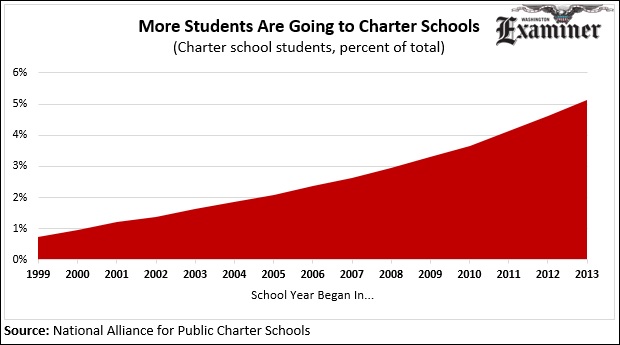
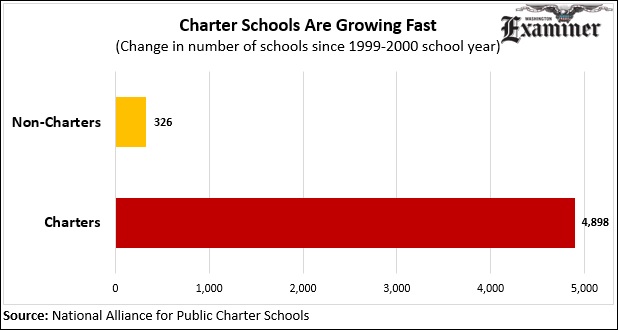
Since 1999, the share of students in charter schools has grown from under 1 percent to over 5 percent. In the same time period, the number of charter schools has risen by almost 5,000. In contrast, the number of non-charter schools has increased by only 326 since the 1999-2000 school year.
Recommended Stories



The movement also gained its 43rd state this year, with Alabama passing a law to allow its first charter schools to open in the near future. Only Kentucky, Montana, Nebraska, North Dakota, South Dakota, Vermont and West Virginia do not have charter school laws.
The charter school movement is one of the few issues that enjoys bipartisan support. Senate Education Committee Chairman Lamar Alexander, R-Tenn., and Sen. Michael Bennet, D-Colo., introduced a resolution to recognize National Charter Schools Week. “Charter schools … are the formula to help our children learn what they need to know and be able to do so they can succeed in life,” Alexander said.
Bennet added, “National Charter Schools Week is an opportunity to recognize the accomplishments of our teachers, school leaders, parents, and students who help create successful charter schools.” The resolution is co-sponsored by five Democratic senators and 16 Republican senators.
Across the country, 2.5 million students attended 6,440 charter schools during the 2013-14 school year, according to data from the National Alliance for Public Charter Schools.
Charter schools are publicly-funded and do not charge tuition. They are open to all students, but often don’t have enough space to meet demand and use a lottery system to determine admittance. Compared to traditional public schools, charter schools have more independence in their operations and curriculum, which is why so many families find charter schools desirable.
