

Google employees descended into hysteria last August over a memorandum that dared assert men and women are biologically different. Its author, accused of fostering a “hostile work environment,” was fired from the company.
As we observed at the time, reaction to the memo at Google headquarters — where educated, high-earning, coastal millennials run aplenty — seemed to be evidence that the campus culture of coddling political correctness and conspicuous offense-taking was finally poisoning the workplace.
Recommended Stories


The evidence continues to mount.
At the New York Times, younger staffers are complaining of “microaggressions” and petitioning the paper to implement “implicit bias training” programs. Editors, in response, have taken to holding “office hours,” looking to quell upset (reportedly shared among the younger generation) over ideologically divergent opinion writers, in much the same way professors address complaints about harsh grading.
Writing in the Washington Free Beacon, Matthew Continetti observed, “To read the complaints of New York Times staffers … is to be transported into a senior seminar on “(Re) Thinking Identity: Transvestitism and Pickled Herring in the Eighteenth Century Women’s Novel.”
Upon hiring Kevin Williamson, Atlantic editor-in-chief Jeffrey Goldberg felt compelled to issue a 600-plus-word memo to his staff explaining the decision, as though adding a smart (if provocative) conservative voice to the roster of a highbrow magazine demands extensive justification.
Compare these scenarios to a report out of Columbia University this week that a professor, described by his publisher Harper Collins as “a former leader of the Students for a Democratic Society (SDS) who stood at the forefront of the birth of the New Left and the student protests of the 1960s and ’70s,” upset a student by telling his class “negro” was an acceptable word to use when discussing race relations in the 1960s, as it was at the time the preferred term of African-Americans.
“It is in fact true, a matter of historical record, that African-Americans in the ’50s and ’60s wanted to be called ‘Negroes.’ Denying that practice would be a falsification of history,” the professor, Todd Gitlin, told the student newspaper.
No matter. The student suggested that he be subject to mandatory sensitivity training in order to learn “the language and the basic knowledge to be able to engage in those conversations.”
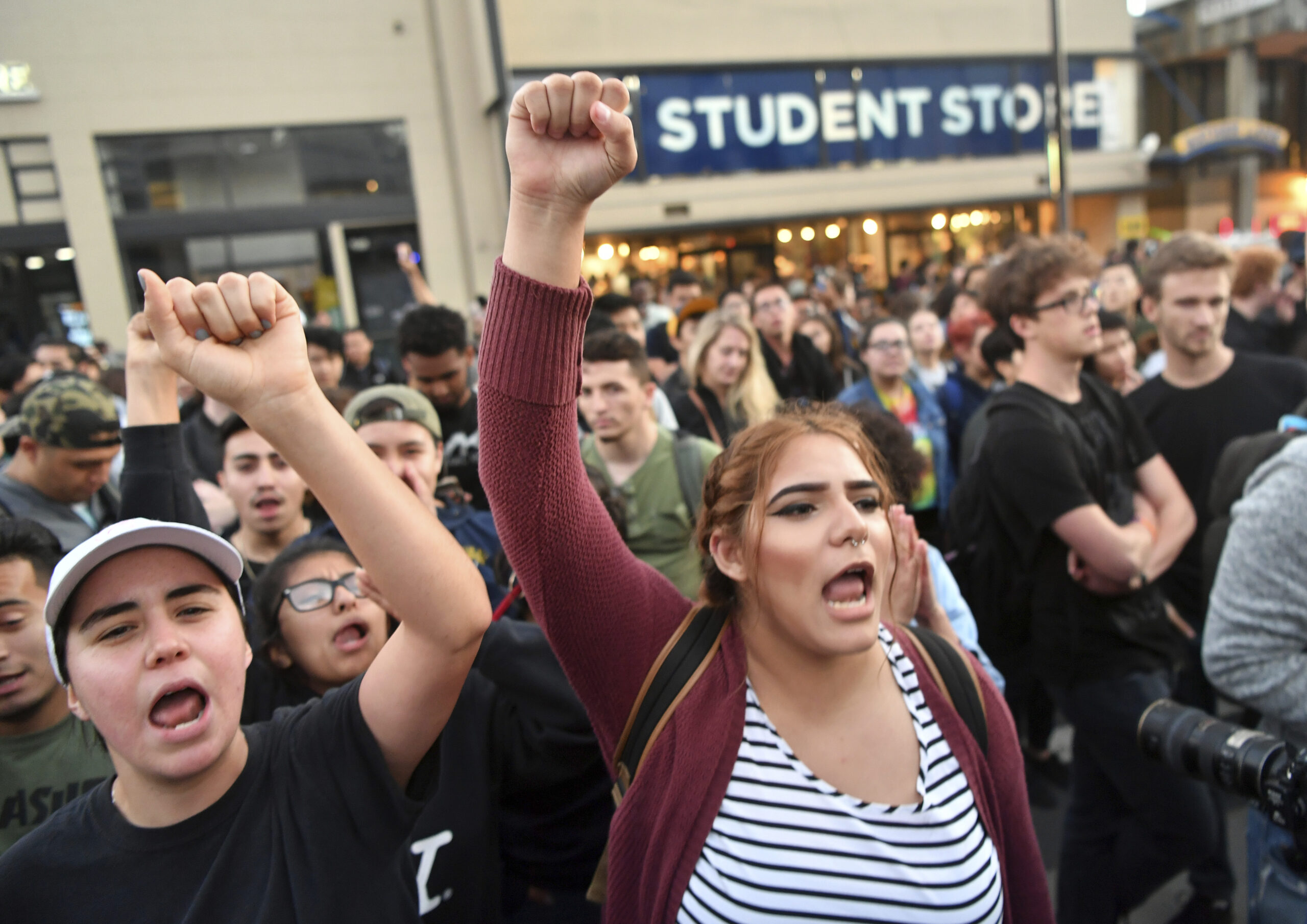
Students have been calling the shots on campuses more and more over the last half decade, successfully fighting to prevent themselves from being contradicted, triggered, or intellectually challenged. They have fought to get speakers uninvited, to revoke the charters of conservative student groups, and to fire campus columnists for thought crimes. Emboldened by their victories on campus in spreading the shadow of their smug and self-absorbed ignorance, graduates are now waging the very same wars in workplaces.
Sure, at the moment, this problem appears to be most pronounced in newsrooms and other tiny places of employment most likely to be populated by graduates from the elite schools where these trends first began. But professors and administrators should be advised that the consequences of their fecklessness and their enabling are making themselves felt at the expense of the broader culture.
Confronted with reports of safe spaces and disinvitations, many an exasperated parent has wondered, “What’s going to happen to these kids when they have to work in the real world?”
Increasingly, it seems as though the real world is conforming to the standards of the campus. If MTV were to brand the drama poised to grip American workplaces with a familiar tagline, it may sound something like, “Find out what happens when people stop being respectful and start getting woke.”
