

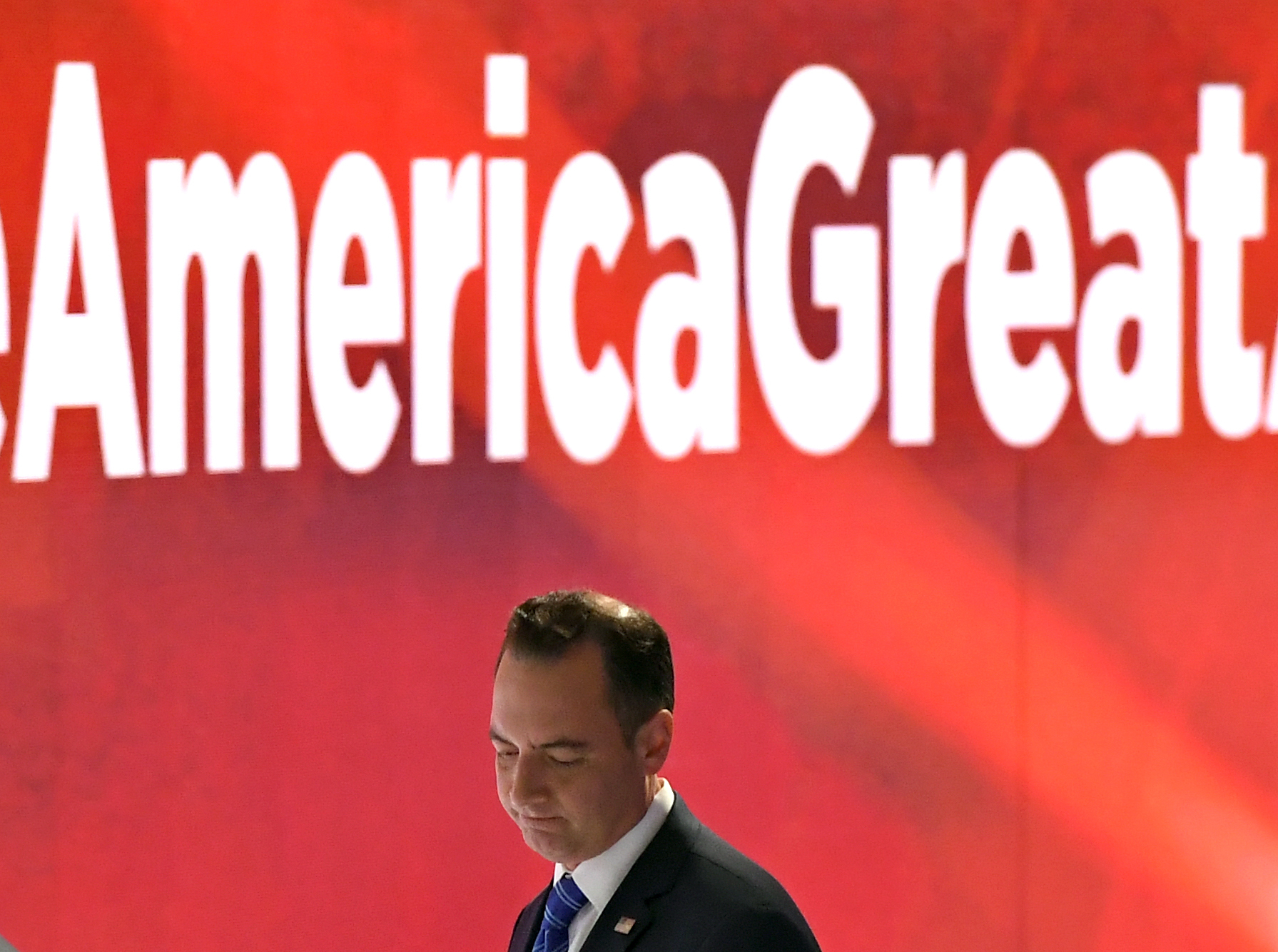
Reince Priebus continues to be unhappy that some Republicans don’t support Donald Trump, but now he’s taking his tactics against them to the next level: Priebus says the party might make it difficult for them to run for president in the future.
“If they’re thinking they’re going to run again someday, I think we’re going to evaluate the nomination process, and I don’t think it’s going to be that easy for them,” Priebus said. “We’re a private party. We’re not a public entity. Those people need to get on board.”
Recommended Stories


Six former 2016 GOP candidates have yet to endorse Trump: Jeb Bush, Ted Cruz, Carly Fiorina, Lindsey Graham, John Kasich and George Pataki.
But Boris Heersink, a Ph.D. candidate at the University of Virginia, wrote in the Washington Post that Priebus’ comments are “empty threats,” because there’s not much a national party committee can do to harm a specific presidential candidate.
“National committees don’t control ballot access or party membership,” Heersink said. “That means the RNC cannot ban individual candidates from running in Republican primaries or from appearing as the Republican nominee on the ballot. If someone wins a GOP primary, he or she will appear on the general election ballot as a Republican.”
There are only a couple ways the Republican National Committee could actually make life hard for presidential candidates (at least as a formal institution).
Heersink says one possibility is withholding support in a general election if a certain candidate gets nominated. But that would require the party to give up on trying to win the 2020 election if that candidate is nominated.
Another possibility is excluding candidates from primary debates in 2020. That would likely trigger a public backlash, however. In a less visible way, though less damaging, the party could withhold the voter data that it usually gives to all primary candidates. “That would deny [candidates] a wealth of information on potential voters and how to reach out to them,” Heersink says.
The party could also punish a state’s delegation to the national convention.
For example, if Jeb Bush runs again in 2020, the RNC could ban the Florida delegation from the national convention, or cut it in half. That could make Florida Republicans hoping to attend or influence the national convention more hesitant to support Bush.
There is a precedent for this, sort of. Delegations have been punished in the past when their state held its primary earlier in the calendar than party rules allowed for. But there would likely be an outcry over a whole delegation getting punished for the actions of one person.
“It’s hard to imagine that, to punish Cruz or Kasich, the RNC would cut Texas or Ohio’s delegations,” Heersink says.
Jason Russell is a commentary writer for the Washington Examiner.
