

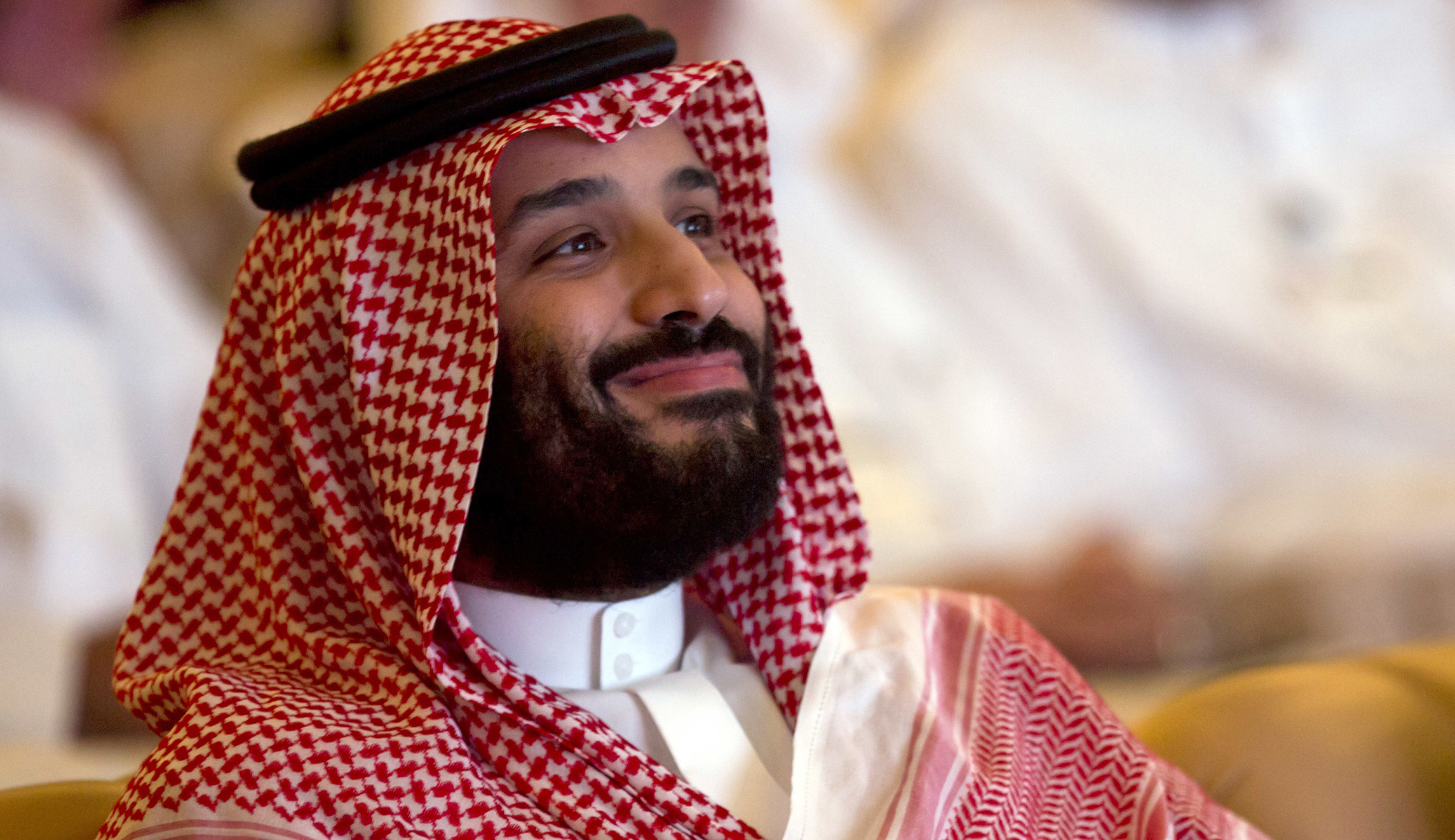
When Mohammed bin Salman came to power in 2017, there was disquiet in Riyadh. Many prominent Saudis, including other royals, feared that the petulant princeling might destabilize the region, pursuing his vendetta against the emir of neighboring Qatar, aggravating the tension in Yemen, possibly even provoking a war with Iran. They also feared, with reason as it turned out, that he would overturn what few checks and balances existed in his oil-rich realm and establish a personal autocracy.
Word of their anxieties reached the crown prince’s ear, and he duly invited a number of leading Saudis to the Ritz-Carlton in Riyadh. After they arrived, they were detained and tortured badly enough that a mobile hospital had to be brought in. Some of them were forced to hand over their wealth, a story disgracefully reported in some credulous Western media as an anti-corruption drive. Crown Prince Mohammed had bought up half the public relations agencies in London and D.C. and, by heaven, they earned their fees. Western diplomats, however, knew perfectly well what kind of monster they were dealing with.
Recommended Stories

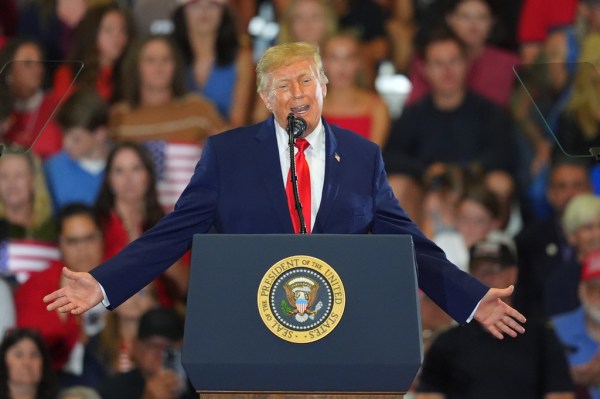
Yet the crown prince has now received the unequivocal backing of President Trump. This goes well beyond the general policy of maintaining cordial relations with the desert despots, a policy pursued by every president since Franklin Delano Roosevelt. This time, the support is personal, designed to shore him up domestically.
Let’s review the record during Crown Prince Mohammed’s 18 months in power. At home, there has been an unprecedented crackdown. Among those currently in prison are Salman al-Ouda, a religious scholar who now faces the death penalty after refusing to tweet in support of the Qatar blockade; Essam al-Zamil, an economist charged with treason after criticizing the crown prince’s economic policies; and blogger Raif Badawi, currently 50 lashes into his thousand-lash sentence.
Crown Prince Mohammed, or rather the British PR men in rumpled linen suits at his shoulder, make much of the fact that he has allowed women to drive, a well-chosen symbolic change. But women’s rights activists, including many of those who originally campaigned for the change in the law, remain in custody.
On the world stage, Saudi Arabia is becoming a rogue state. The war in Yemen is now the worst human rights catastrophe on the planet. The little kingdom of Qatar has been subjected to a military siege for daring to host an independent TV station. A serving head of government, Lebanon’s Saad Hariri, has been detained against his will. In a violation of all diplomatic convention, the Saudi consulate in Istanbul was used to kill and dismember the journalist Jamal Khashoggi. Almost all observers, including the CIA, say that that killing was authorized by the crown prince himself. But in a grisly act of betrayal, the blame has been shuffled off onto the men who carried out those orders, who now face the headsman’s sword. So much for loyalty to subordinates.
Why is Donald Trump propping up this spoiled, peevish, vindictive creature? Did Crown Prince Mohammed and Jared Kushner, as is alleged, come to some understanding that blended business with geopolitics? Or is it simply President Trump’s constant fascination with strongmen, from Russia’s Vladimir Putin to Turkey’s Recep Tayyip Erdogan?
In the absence of evidence to the contrary, let’s consider the president’s own justification. He says that he is backing the desert despot for two reasons. First, that the crown prince is anti-Iranian; and second that “after my heavily negotiated trip to Saudi Arabia last year, the kingdom agreed to spend and invest $450 billion in the United States.”
The first assertion is true, but irrelevant. American policy has been to contain and squeeze the ayatollahs. It may quietly have facilitated targeted strikes against Iran’s nuclear facilities and technicians. But it is hard to see how inflaming the war in Yemen, and so increasing Sunni-Shia tensions in the region, complements that policy. As for the “American jobs” argument, it is based on a profound misunderstanding of money and power.
For one thing, America’s economy and population are roughly ten times the size of Saudi Arabia’s. You can see why Saudis might fawn and fret and fuss about that relationship, but not why Americans should. For another, trade is not an act of kindness. By definition, it is about mutual advantage. If another country has to be coaxed and flattered into buying things from you, it’s not trade, but corporatism.
I worry that the United States is making an epochal error here. Once again, it has bet on a strongman and then continued to back its bet as that strongman tightens his grip. We saw the same pattern with Gamal Abdel Nasser, with the shah, with Saddam Hussein. This never ends well, neither for the country concerned nor for America.
