

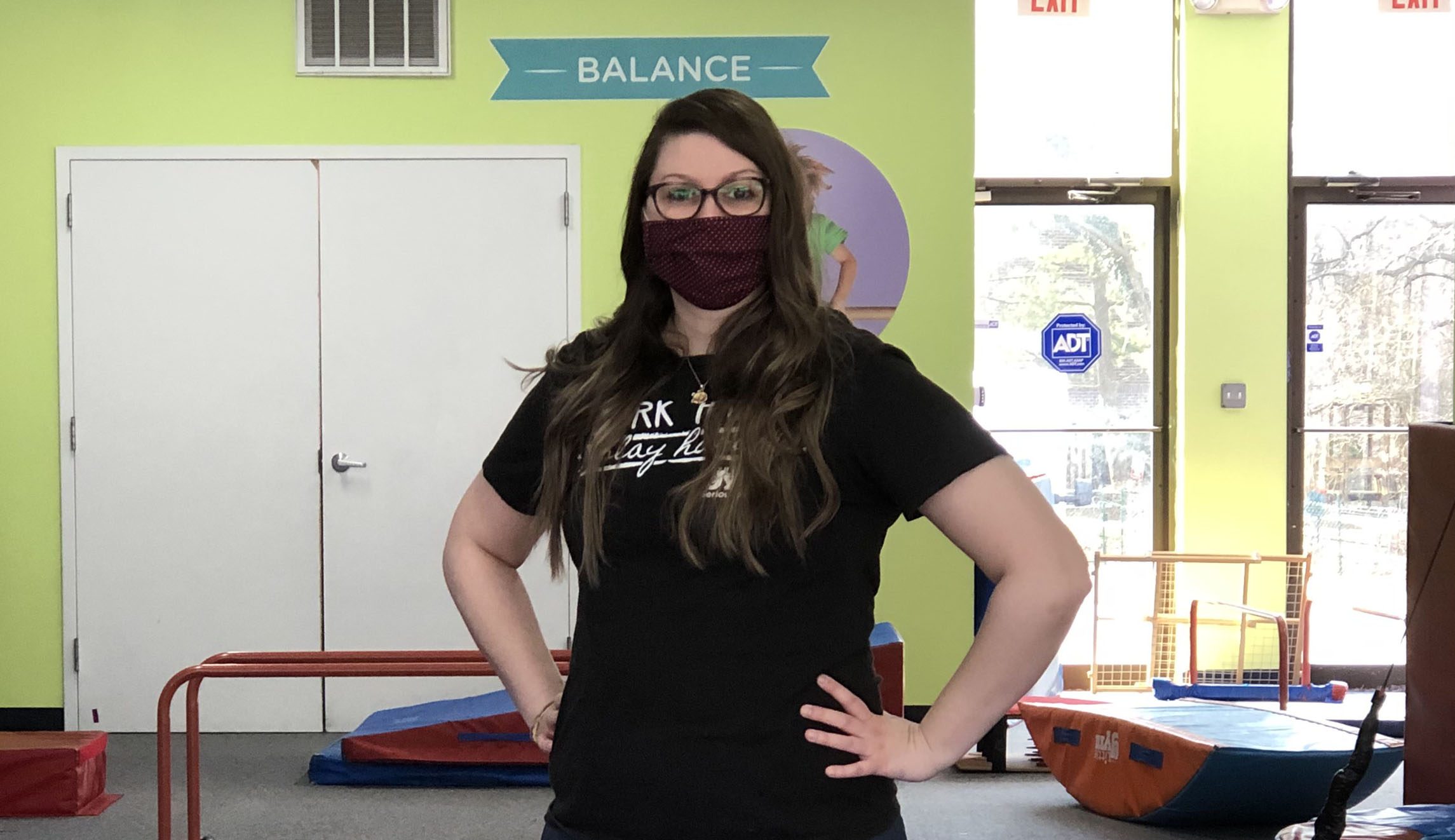
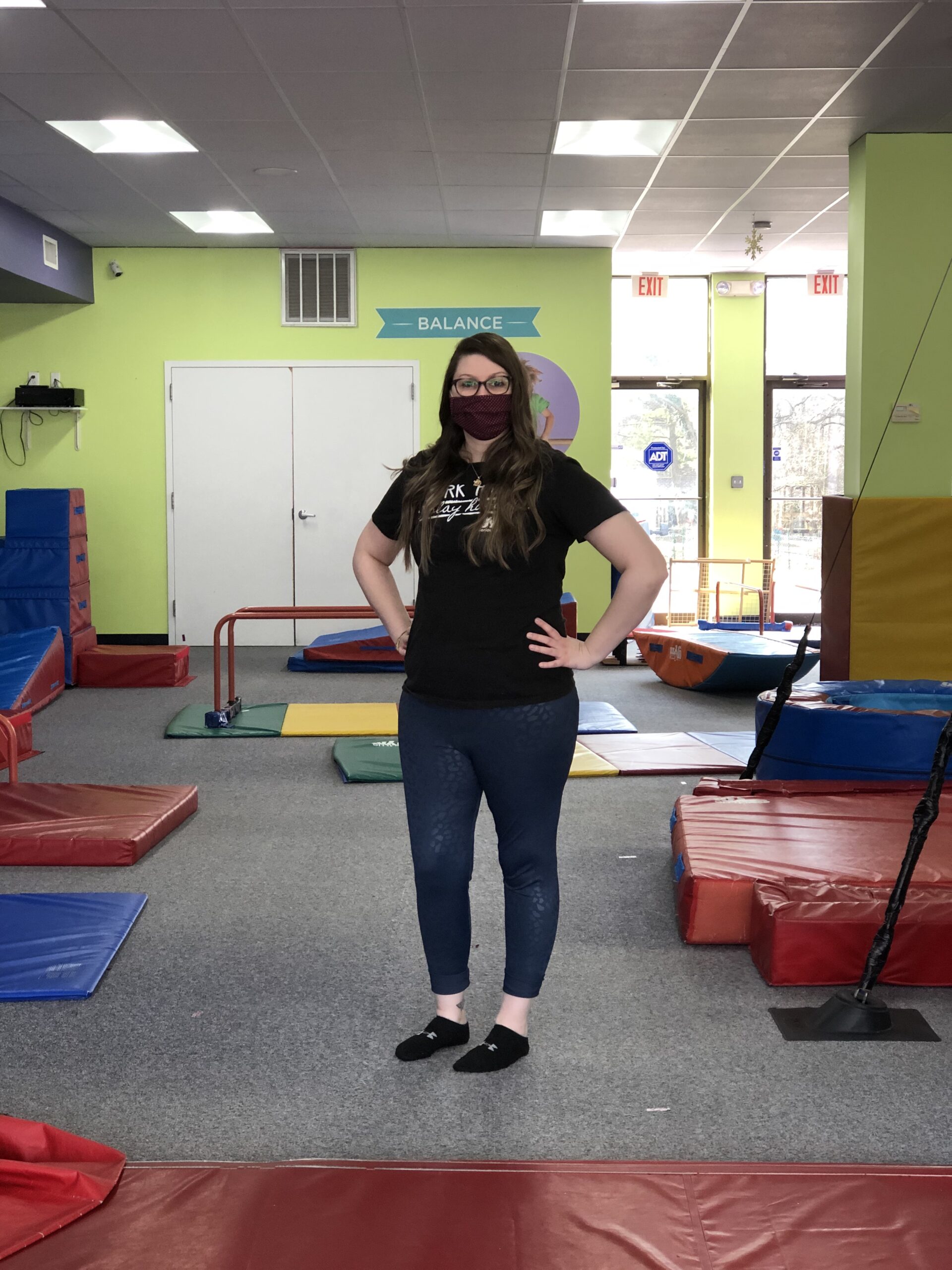
Rebecca Phelps is standing alone in the center of a room filled with colorful mats, oversized balls, and places where children can climb, balance on a beam, bounce to their hearts’ content, or seemingly glide through the air. It is a space bursting with bright hues that beckon the imagination.
It is quiet here today. It has been quiet here for nearly a year.
Recommended Stories


For four years, as the operator of The Little Gym, which is part of a chain that offers parent-child classes for children between the ages of 4 months and 3 years, as well as noncompetitive gym classes, birthday parties, and camps, Phelps said she has rarely ever stood alone at her facility in Silver Spring, Maryland.
“It was always filled with the activity of children, whether it was a toddler class with a mom or dad, or a gymnastics class, or a birthday party, this place has always just radiated energy,” she explains.
Phelps says the sad thing was that at the beginning of 2020, they were in the best position they had ever been going into a new year. “We were really booming, and everything projection-wise was just looking great,” she says.
Like everywhere in America, she shut her business down last year for two weeks to flatten the curve; like everyone in America, she was hopeful. But hope vanished, she said, as the leadership of Montgomery County in Maryland went from reasonable restrictions to untenable oppression.
“Two weeks became two months became three months,” she recalls. “The goalpost kept being pushed back, and we actually weren’t legally allowed to reopen our doors until the end of June.”
Normally, she explains, summer camp would be anywhere from 25 to 30 children with three instructors. “Well, we could only have 15 maximum people in the gym, so that meant 13 kids and two instructors,” she says. “It was a big financial hit. Summer camps were always really great revenue, because we’re also extremely flexible. We kind of let parents mix and match days or half-days, and you don’t have to necessarily commit to a whole week, so people really relied on us and liked our program for that reason.”
Add parental confusion, fear, and local, state, and federal government and expert inconsistencies on just about everything, and her business was brought to its knees.
Phelps says that the instability and all of these revenue losses became impossible to overcome. “I mean, it’s just insurmountable,” she says, half-exasperated and half-tearful.
She hasn’t been able to pay the rent since August. “By September, the money ran out, and then, to add insult to injury, in November, the county executive, Marc Elrich, instituted a 25% occupancy cap. It’s still at 25% currently, with really no end in sight.”
She says she knew it was all over on March 1. “That is when the landlord said he wasn’t renewing the lease. I understand it from their point of view. Obviously, they have a bottom line too, and I fully get that, and I completely respect that they need their money as well.”
“The worst part of all this, we were a county or two over in Howard County or Baltimore County or Allegany, we wouldn’t be having this conversation,” she says, her voice breaking with frustration. “It’s Montgomery County that has the highest restrictions, and truly for no reason, that’s really killed us.”
Every time a small business closes in this country, someone’s dream has died; thanks to COVID-19 and government restrictions in response to it, hundreds of thousands of dreams met their maker last year.
Their little deaths often go unnoticed until someone looks up when they are walking along the strip mall where they were located and notices that they are gone or glances for their familiar facade along a Main Street in America and sees their shuttered doors.
The numbers of closures often go uncounted because their closures rarely make it to bankruptcy court; in an interview last year with Jovita Carranza, who was the head of the Small Business Administration, she said that is because they rarely operate in debt.
Data compiled by the University of California, Santa Cruz show that nearly 317,000 businesses closed between February and September of last year — about 1,500 small business closures a day.
When a small business closes in a community, it isn’t just a loss for the owner; it is a loss for their employees and the amount of money that the employees spent in neighboring businesses for lunch or using the local service station or buying at the grocery store or picking up a birthday present for their mother.
There is also a collective impact. It isn’t just one store or one gym or one restaurant; SBA data show that small businesses employ half of all U.S. workers.
On June 30, Phelps will turn out the lights of her gym, climb in her car, and drive away forever from the little strip mall and not look back. “I’m heartbroken. I really am. I mean, it’s just been a lot of really tough decisions, and every decision sucks, for lack of a better word,” she admits candidly.
“It is so hard thinking at the beginning of 2020, we had the highest numbers in Maryland. We had over 500 kids enrolled in our program and now nothing. When dreams die, they sure die hard, don’t they?”
CORRECTION: In a previous version of this story, the Washington Examiner reported the closing date as March 31. The closing date is June 30. The Washington Examiner regrets the error.
