

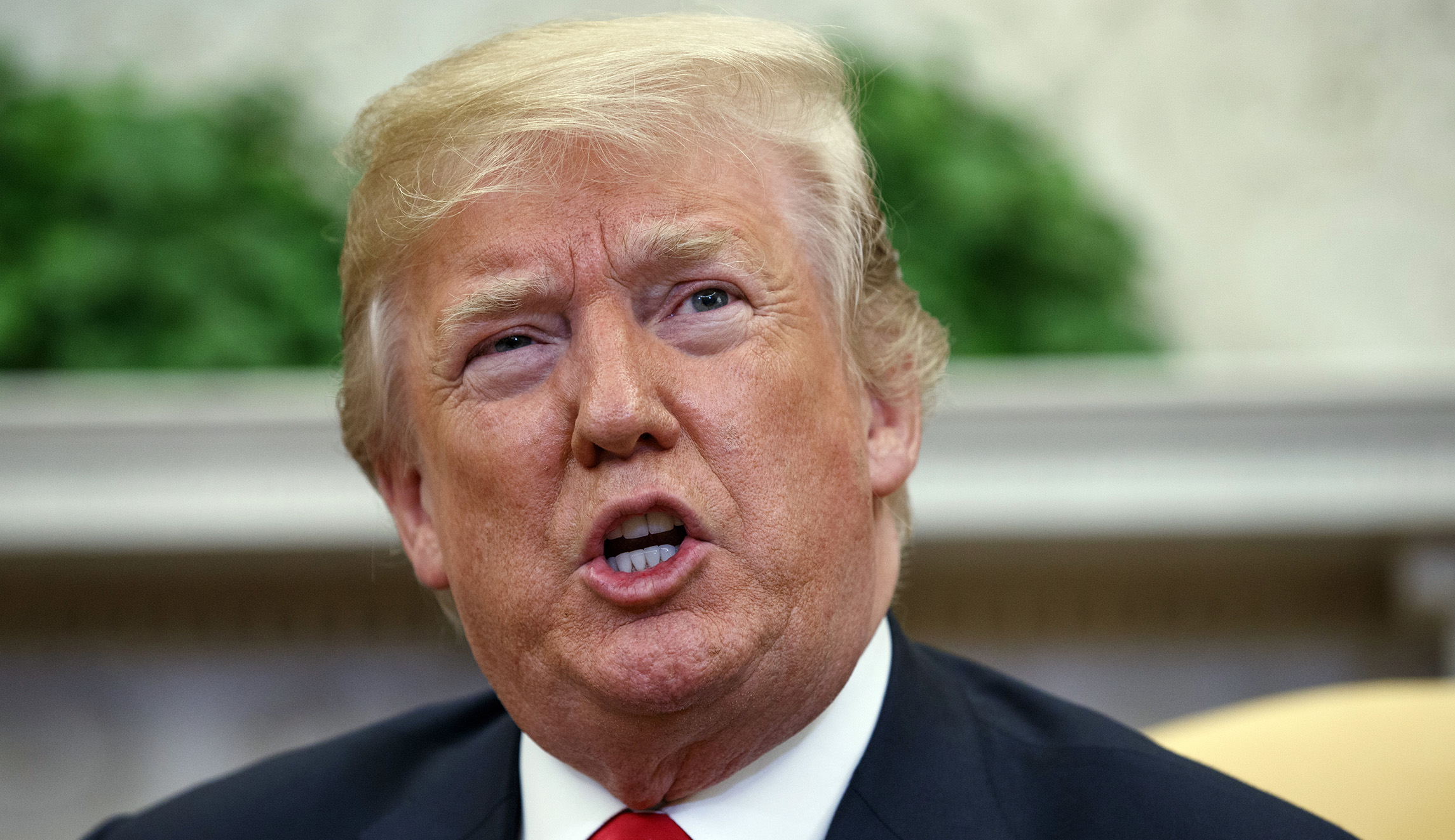
The problem with the 24-hour news cycle is that, with all those minutes to fill, the media too often feels compelled to make something of nothing. And so it is with President Trump’s tweet that he was “looking forward to” the release of the jobs report an hour prior to its official announcement.
Based on the echo chamber’s reaction, you would think Trump was caught making personal calls to Wall Street friends to give them insider information. Obama officials even went so far as to allege Trump had broken the law in a way that would have never occurred under their former boss. Far from it.
Recommended Stories



Oops. It turns out that, back in early 2009, former President Barack Obama actually did break protocol by communicating substance of the “somewhat scary” impending jobs report to then-Senate Majority Leader Harry Reid on the eve of its Feb. 6 release. Sharing a party label as high-ranking elected officials is irrelevant: Sen. Reid, D-Nev., as a member of the legislative branch, had no more claim to the information than you or me.
We can go back even further. The day before the jobs report release of Jan. 7, 1994, Labor Secretary Robert Reich announced to the French media that employment growth would likely be in the range of 160,000 to 200,000 jobs. Analysts had been expecting stronger figures, so the news sent Wall Street into a frenzy of trading. Then the report came out: 183,000 jobs. Spot on. The irony is that Reich — who, as a lawyer, has no training in economic forecasting — hadn’t even seen the numbers when he made his oddly specific remarks. No matter, though — the frantic surge of activity on Wall Street indicated that traders assumed he must have had inside information.
Of course, hypocrisy and opportunism by political opponents is not by itself an adequate defense. Did Trump’s tweet amount to an inappropriate tipping of the hand to privileged insiders about the jobs numbers? First of all, it’s a stretch to consider Trump’s 52 million Twitter followers “insiders.” Second, it’s fair to say that anybody not operating out of a closet must be aware by now of Trump’s penchant for going directly to the public via Twitter. People whose livelihoods depend on timely access to political information probably ought to hit the “Follow” button.
Third, the directive that Trump supposedly violated states that “employees of the Executive Branch shall not comment publicly on the data.” Putting aside whether the president can even be considered a mere “employee” of the Executive Branch, it’s hard to make the case that Trump’s tweet was informative in any way as a “comment.” Some of Trump’s detractors have suggested it signaled a good jobs report. But why would that be surprising? We’re in the middle of a durable economic expansion with good news the order of the day.
Did Trump’s tweet that he was “looking forward” to the jobs numbers signal to Wall Street that unemployment would fall to 3.8 percent instead of remaining at 3.9 percent, which was already near historic lows? Hardly. Let’s also not forget that Trump has used the phrase “looking forward to” in previous instances where his detractors would no doubt conveniently assign a different meaning. When Trump said he was “looking forward” to interviewing with special counsel Robert Mueller, did Democrats and the media take his eagerness as a sign that he was clearly innocent of the collusion allegations against him?
If you want insight into the rationale behind the convulsions over Trump’s remarks, look no further than Nancy Pelosi’s commentary on the glowing report: “strong employment numbers mean little.” This head-scratcher of a statement perfectly encapsulates the Democrats’ election year strategy of dodge and distract when it comes to addressing the continued strong economy.
Their narrative — which the media is constantly beating the drum to promote — is that Trump is a dangerous failure and that America is falling over the precipice. Instead, it’s time that we all celebrate the good news and do our part to keep the momentum going.
Aaron Hedlund is an economics professor at the University of Missouri and a visiting scholar at the Federal Reserve Bank of St. Louis. The views expressed are not necessarily those of the Federal Reserve Bank of Saint Louis or the Federal Reserve System.
