

Democrats running for president seem confounded as to why they’re not getting any airtime as all 98 of them compete for the party’s nomination. But they may have figured out the secret this week. They’re going to have to differentiate themselves and that means, yes, fighting each other. Viciously, if need be.
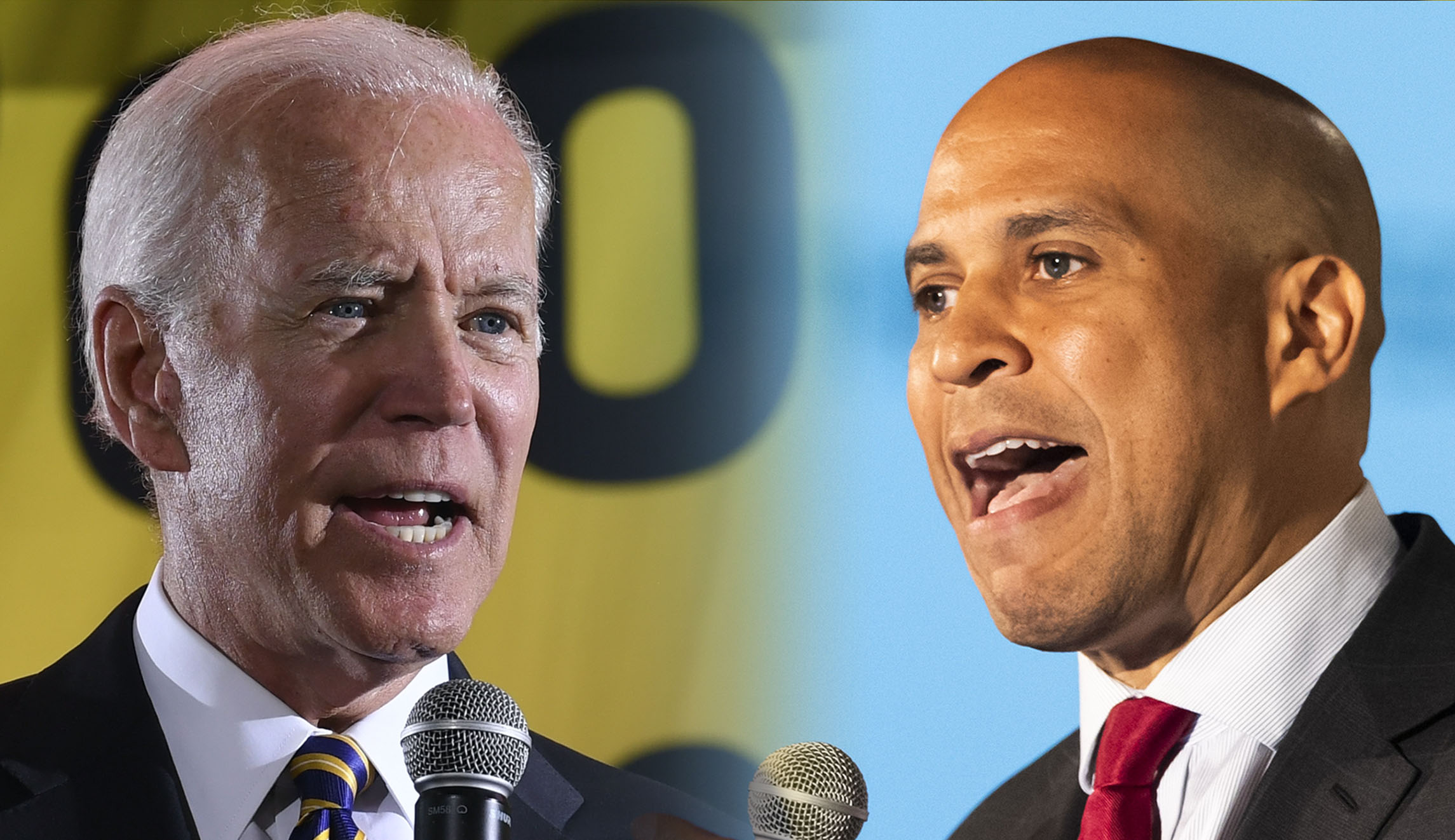
They might have gotten a clue this week when Sen. Cory Booker, D-N.J., resurfaced on cable news after weeks in obscurity. We were only reminded of who he is because he pointedly attacked Joe Biden for heralding his working relationship with segregationist senators as an example of “civility.”
Recommended Stories


That should be a clue for Democrats as to how this works, but as recently as Monday, they were still bemoaning their inability to divert attention from President Trump or their competitors to themselves.
Democratic National Committee Chairman Tom Perez complained to the Washington Post that Trump “has managed to control the media cycle on a daily basis in ways that have made it difficult to communicate our message.”
Earlier this month, the New York Times reported that candidates complaining about scant coverage of their campaigns “reflect frustration with the new, celebrity-driven political era that Mr. Trump’s rise helped usher in.” The Times said that “established governors, senators, other elected officials and their staff frequently whine about the media attention being paid to less experienced politicians like Mayor Pete Buttigieg of South Bend, Ind., whose presence on cable television helped him exponentially expand his list of donors and propelled his rise in the polls.”
First, the notion that Trump in 2016 received excessive attention from the national media, which in turn gave him an unfair advantage in the crowded Republican primary field, is only held by people ignorant of how the news business works.
It’s called “earned media” for a reason. In a campaign, no less a primary campaign with two dozen candidates, you have to do something to earn people’s attention.
Here’s a free tip for them all: The No. 1 way to do that on a national level is by creating conflict. Trump did that every single day during the GOP primary, taking on each of his party rivals one by one. It’s not enough, though, to call someone a name. There has to be a point, which in news terms is called impact.
Trump famously stuck Jeb Bush with the “low energy” label, and it worked because it made it clear to GOP voters that Bush wasn’t prepared to fight for a nomination that he must have already felt was his.
In late 2015, when polls showed Ben Carson edging out Trump in Iowa, Trump took a chainsaw to the former neurosurgeon’s most precious asset — his life story — which until then had gone without scrutiny. Trump accused Carson of making up much of his gauzy autobiography and, using Carson’s own book, started referring to Carson’s “pathological temper.”
The Democrat who is prepared to do what Trump did is the one who will get the media attention to elevate his or her campaign and its message (assuming it has one). But if every Democrat is going to pretend that this isn’t a competition, and if they’re only going to say things like, “The most important thing is beating Donald Trump,” then they might as well stop complaining about being ignored.
