

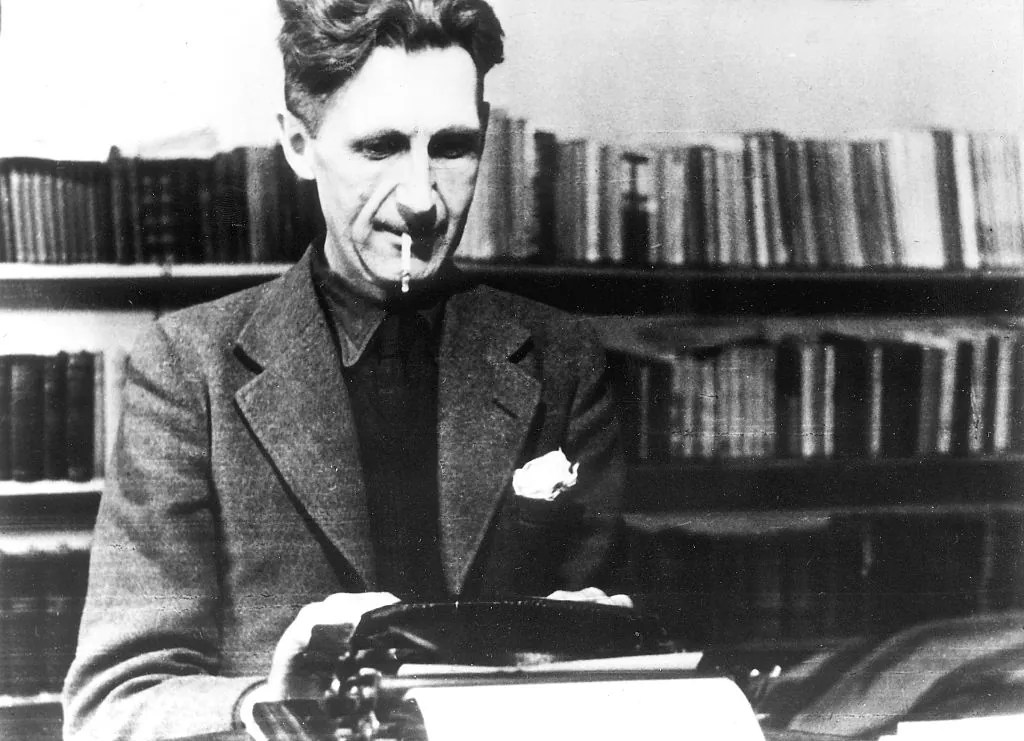
George Orwell defined a “good bad book” as “the kind of book that has no literary pretensions but which remains readable when more serious productions have perished.” His supreme example was Uncle Tom’s Cabin. Orwell thought it “unintentionally ludicrous” and full of “preposterous melodramatic incidents,” but he also found it “deeply moving and essentially true.” It was, he concluded, “hard to say which quality outweighs the other.” I, too, find it hard to say, but that is because I gave up after 50 pages.
A recruiter for the abolitionist cause, Uncle Tom’s Cabin is one of the few novels that can claim to have started a war. President Abraham Lincoln is said to have greeted Harriet Beecher Stowe by saying, “So this is the little lady who started this great war.” After that kind of review, asking whether Uncle Tom’s Cabin is good or bad, true or false, is beside the point. Uncle Tom’s Cabin is historically significant, like Honest Abe’s cabin. We read it to understand an era.
Recommended Stories


What is the Uncle Tom’s Cabin of our time? It’s still possible for a novelist to depict a political moment as Orwell did in Animal Farm, and even predict political developments, as he did in Nineteen Eighty-Four. Among living novelists, Michel Houellebecq has done it several times over. Atomized and Platform exemplify the decadence of liberalism into childless hedonism and sex tourism. Submission predicts the Left’s deal with Islamism, and Serotonin anticipated the rural uprising of the Yellow Vest movement.
Houellebecq’s flat style mimics his subjects’ lack of commitment and SSRI-dulled inner lives so closely that he achieves Orwell’s “good bad” mix. Especially in his graphically bland sex scenes, which is more than we can say for Beecher Stowe. Still, Houellebecq, like Beecher Stowe in the 1850s and Orwell in the 1950s, radicalized many of his readers, or at least allowed them to name enormities that everyone saw but few dared to name.
The American and British novelists of today know better than to describe our critical issues in realistic terms. They want to get published. The path to advances, reviews in the Times, and university teaching jobs with health insurance runs through the gates of the “Big Five” publishing houses. The gatekeepers are timid, but firm enough to select for race and sex like the slaveholders of old. We have exploitation on a global scale, but no Dickens or Dos Passos to describe it. We have a social carnival whose depravity would make Becky Sharp puke, but we have no Thackeray or Tom Wolfe to shame us all. We have religious fanaticism too, but no Dostoevsky to psychologize it. Instead, we get counterfeiters of reality such as Jonathan Franzen and Zadie Smith.
A category of book that Orwell did not investigate is the “bad bad book” that becomes required reading despite its badness. We read the “bad bad books” not for pleasure, but for the profit of understanding their time, especially if it turns out that they anticipated it, as Beecher Stowe, Orwell, and Houellebecq did. America’s most important “bad bad” novel is William Pierce’s race-war fantasy The Turner Diaries. Pierce, a white nationalist, published it privately in 1978. It sold an estimated 300,000 copies by mail order. A trendy Brooklyn “literary novel” typically shifts 3,000 copies. It goes to show that you can multiply your sales one hundredfold if you give your readers what they want. In Pierce’s case, that meant pouring on the racist violence like Bertie Wooster lashing his crumpets with butter.
The Turner Diaries is a key text for understanding white nationalism. Yet it’s banned in Canada, France, and Germany. Amazon stopped selling it in 2020. Instead, Jeff Bezos suggests Industrial Society and its Future by Ted “Unabomber” Kaczynski, The Anarchist Cookbook, and, for advanced thinkers, The Chemistry of Powder & Explosives. This soft censorship is infantilizing and illogical. To know ourselves and our times, we must know our enemies and their enemies.
GRIFTING AT SEA. WHO FLOATS GAZA’S BOAT?
Another “bad bad book” that everyone should read is Jean Raspail’s The Camp of the Saints, a 1973 novel that imagines the destruction of European civilization through mass immigration from India and the soft-brained sentimental humanitarianism of the Europeans. Unlike The Turner Diaries, The Camp of the Saints received mainstream publication and positive reviews from intellectuals, including Jean Anouilh, Sidney Hook, Jeffrey Hart, William F. Buckley (“a great novel”), and, allegedly, President Ronald Reagan (“terribly impressed”).
The French edition of The Camp of the Saints recently returned to the French bestseller lists. But a secondhand English translation goes for $175 or more. This leaves us unable to form our own opinions of a novel that, “bad bad” as it may be, now looks a lot more significant than other 1973 novels such as John Updike’s Rabbit Redux and Philip Roth’s The Great American Novel. Vauban Books, a self-styled “dissident” publisher opposed to “ideological curation and gatekeeping,” will publish a new translation of The Camp of the Saints this summer. I shall read it once I’ve finished The Chemistry of Powder & Explosives.
Dominic Green is a Washington Examiner columnist and a fellow of the Royal Historical Society. Find him on X @drdominicgreen.
