

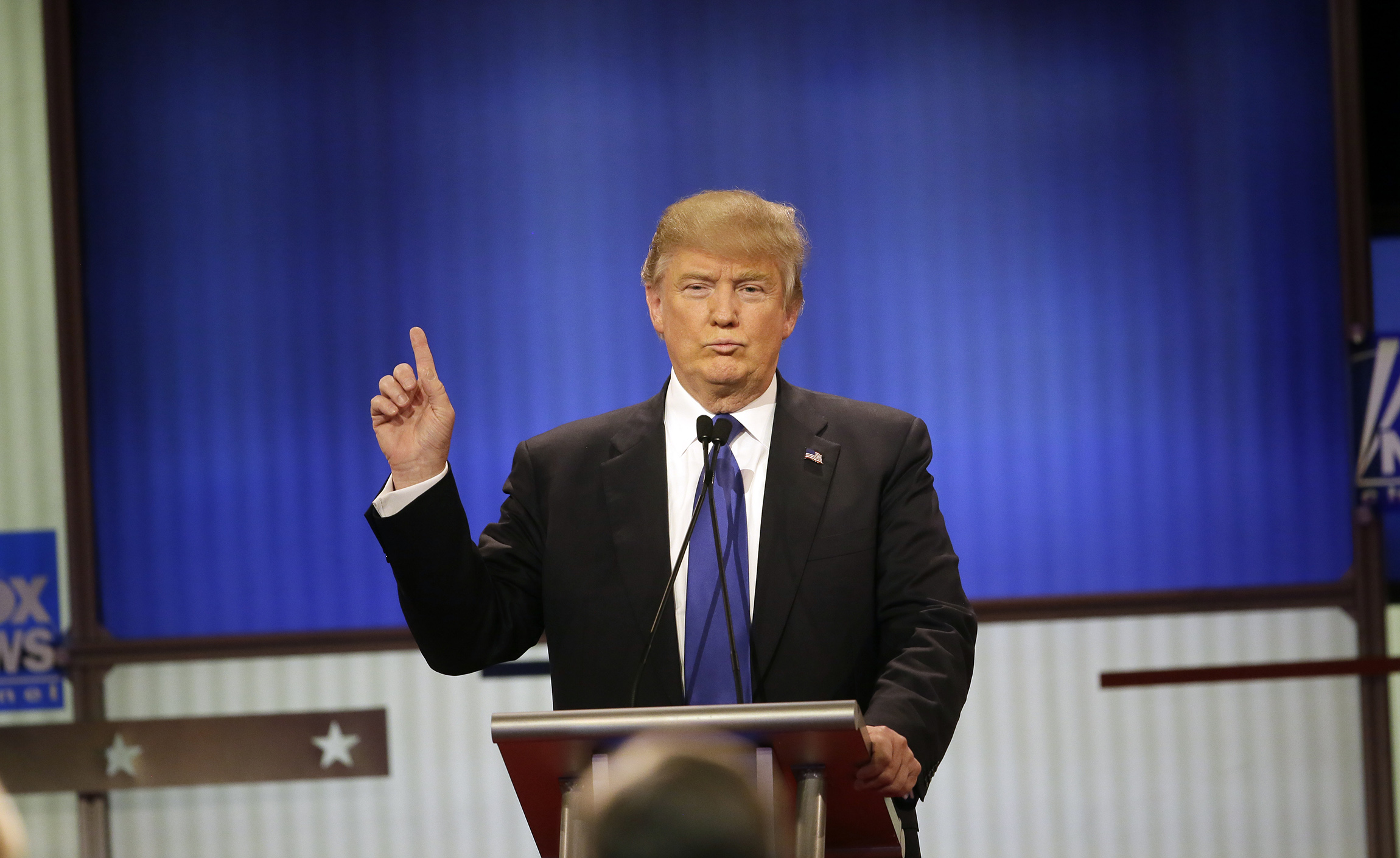
Here are eight questions that Monday’s debate moderator, Lester Holt of NBC Nightly News, should ask Hillary Clinton and Donald Trump.
Jobs
Recommended Stories


“Americans routinely rank economic problems as the most important problem facing the country. Name the single biggest thing you would do to improve the economy and create jobs.”
Despite all the media attention on police shootings and terrorist attacks, Americans say the economy is the country’s biggest problem. Before the debate turns to issues of the day, Clinton and Trump should explain their solutions for the country’s biggest issue.
ISIS
“What’s your plan to defeat the Islamic State?”
Clinton and Trump should be able to give a clear and concise outline of their plans to defeat terrorism. There are a number of follow-up questions that should be considered, like “What would you do to avoid another Syrian power vacuum?” but the candidates should reveal their highest priorities and show they’re prepared to be commander in chief.
Police Shootings
“Do Black Lives Matter, or do All Lives Matter?”
Although the question itself is probably overly-simplistic, it’s a question that Americans want to hear the answer to. Of course, this is a complex issue that Clinton and Trump deserve plenty of time to explain their nuances on. The candidates will have to establish a balance of supporting most cops while calling for smart reforms, all while supporting the First Amendment right to protest while condemning rioters and looters that take things too far.
Compromise
“Please name one position you would be willing to compromise on in order to get something greater done.”
It’s a pretty safe bet that Republicans will maintain control of the House of Representatives. Speaker of the House Paul Ryan doesn’t agree with either candidate on everything. It would be interesting to ask the candidates such a direct question. If they dance around it and can’t give a direct answer, voters will be disappointed.
Debt
“The next president will inherit almost $20 trillion in federal debt. Explain what the consequences are of that debt and how you plan to deal with it.”
If Clinton and Trump haven’t thought seriously about this question, they haven’t considered one of the federal government’s most significant problems. They need to tell the American people the government can’t just spend its way into fixing its problems.
Explaining the implications of the federal debt requires understanding of the problem and its causes, all while being able to articulate its effects to voters without sounding too wonky. Any plan to tackle the debt that doesn’t include entitlement reform is ignoring reality.
Executive Actions
“As his presidency comes to a close, President Obama has increasingly governed around congressional gridlock using his ‘pen-and-phone’ strategy. Keeping in mind that Congress is also elected by the people, do you plan to continue Obama’s path on executive actions?”
The American people could use a reminder that they’re not just voting for president in November, they’re also voting for their representatives in the House and, in most states, the Senate. It’s much easier for a constituent to contact their members of Congress to influence them than it is to influence the president. Depending on their intent, there’s also the small issue of the constitutionality of legislating by executive orders.
Congress’ usefulness is limited if the president just legislates by executive order.
For Clinton
“Mrs. Clinton, what would you do differently from President Obama on Syria?”
In an embarrassing exchange on MSNBC’s “Morning Joe,” Clinton Campaign Manager Robby Mook couldn’t answer this very basic question. “I think you’re going to have to ask her that question, that’s a matter of policy,” Mook said. That caused host Joe Scarborough to ask Mook incredulously, “What are you here for?” Humiliating moment aside, it’s an important question for Clinton to answer. If elected, should Americans expect four more years of the same on Syria?
For Trump
“Mr. Trump, a recent NBC News and Wall Street Journal poll found that 69 percent of voters have concerns about your comments regarding Muslims, immigrants and women. If elected, would you change your attitude toward these groups to fix voters’ concerns?”
A president is supposed to unite the country. That might be tough for Trump to do if nearly seven in 10 Americans are concerned about the president’s attitude toward minorities.
Jason Russell is a commentary writer for the Washington Examiner.
