

MEMPHIS — “We must not be afraid to be free,” Supreme Court Justice Hugo Black famously said in a dissent defending free expression. That appeal is germane today, especially on college campuses, professor Daniel Cullen argues.
Cullen, a professor of political science at Rhodes College, is working to engage liberal arts college students on the critical importance of the First Amendment and free speech. It’s part of a program at 30 colleges and universities across the country who will be marking Constitution Day on September 17, the 231st anniversary of its signing.
Recommended Stories



“It is a critical moment in American society and culture to deeply reflect First Amendment traditions as they relate to the Constitution,” said Cullen of the initiative sponsored by the Jack Miller Center.
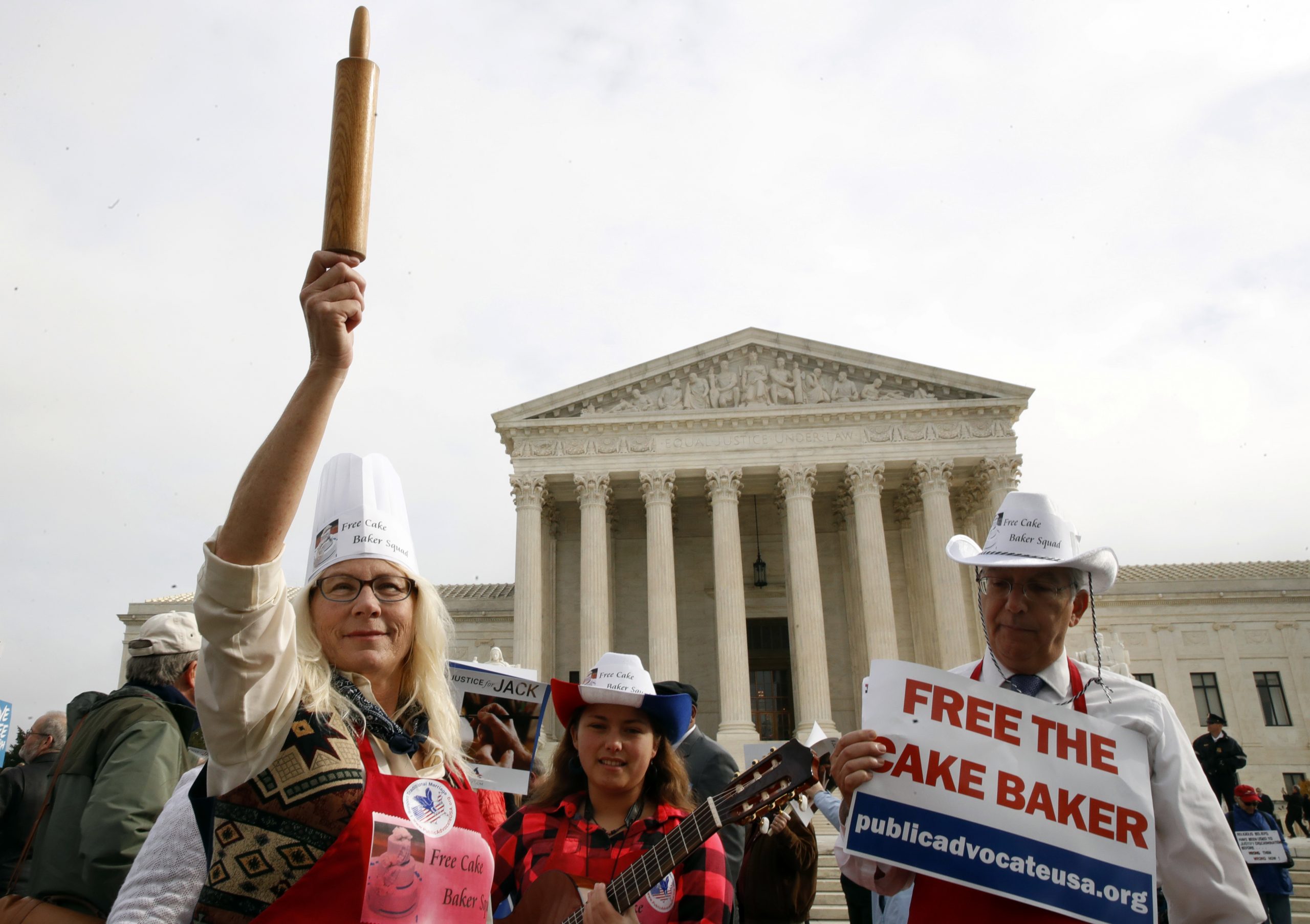
Last year the program was on free speech specifically. This year is a little broader, with the Masterpiece Cakeshop case and others, the issue of freedom versus anti-discrimination measures is alive on campuses.
“Students are really interested in that stuff, and there is just a kind of appalling lack of study of constitutional principles and courses that deal with the argument,” he explained.
The Constitution Day project is an important attempt to try to model what the study of constitutionalism means in a non-partisan way. It also hopes to understand and shape how young people view their rights under the Constitution in a world where conversation and opinions are both driven and silenced on social media.
Social media provides a cloak of anonymity to those who want to be more provocative, outrageous, or offensive. Indeed, this can be harmful — young people today are apt to believe in limits on such offensive speech.
“There was a survey recently done by the Knight Foundation that found a majority of American college students today either believe incorrectly that the First Amendment prohibits hate speech, or if it doesn’t, then it ought to,” he says.
Simply put, it is an entire generation forgetting that one of the proudest achievements of American democracy is that we agree to tolerate the speech we hate.
“Nevertheless it’s that proposition that a majority of college students no longer accept. They don’t think it’s something to be proud of. They think it’s an error so the question is, ‘Why?’ And I think the best answer is that they, especially the iGen generation have become highly sensitized to the harm that speech can do and the offensiveness that often goes along with speech,” he said.
Cullen sees this generation as very different than the protests and cultural changes that went along with the 1960’s unrest, “I’d say the biggest change is that students in the ’60s were of course anti-authoritarian, whereas today students seem to have signed onto the authoritarian movement, or at least a point of view because they think that’s the compassionate thing to do.”
“In fact compassionate was the term students used at Middlebury College … when they shut down a speech by the author Charles Murray, an event that caused an injury to a faculty member and dozens of students to be arrested,” said Cullen.
“Charles Murray’s presence — just his presence on the Middlebury campus where he’s spoken before without incident — was deemed to be a threat to the safety,” Cullen said. “They actually used these terms … to the safety and even the existence of every vulnerable minority on campus,” Cullen explains.
“It’s a preposterous claim on its face, but it’s important to understand where it comes from, why people would make such inflated claims. And it really does have a lot to do with the presence of social media — the power it has among students and it really has upended traditional free speech principles. And the public thinks that this is crazy of course, and yet that’s not the view on campus.”
This is the new moral sense on pretty much every American campus, he says.
Yet Cullen remains hopeful, “What we do is we try and separate truth from falsehood and truth from error, and students remain naturally intellectually curious. They want to hear the arguments for important moral viewpoints, even arguments for viewpoints that strike them as fundamentally wrong.”
Students just naturally want to do the thing that we’re supposed to be doing. But in the circumstances of higher education today, there really is this oppressive concern for ideological solidarity or comfort that comes from having your world view affirmed at every turn, and never really questioned.
“For one thing, it’s boring,” says Cullen, something he doesn’t want American students to embrace.
