

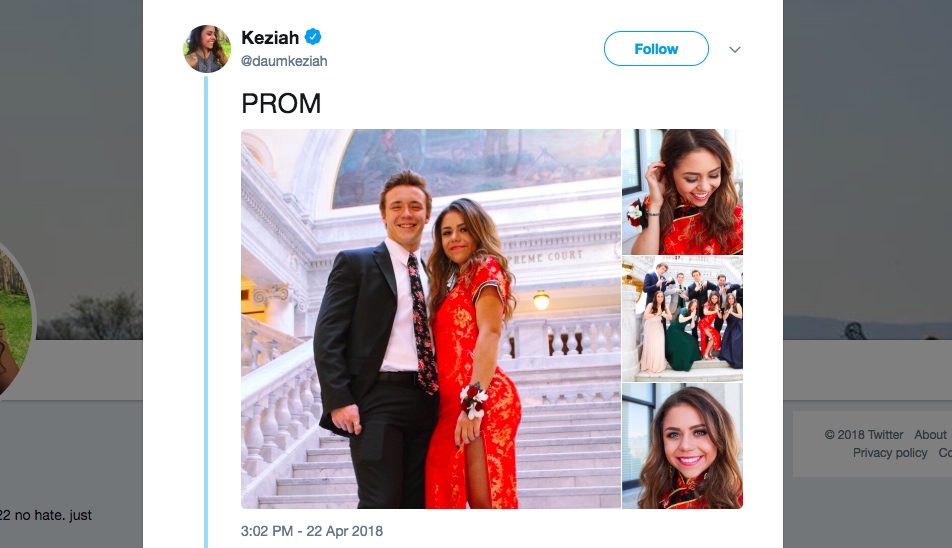
This week’s lesson in why the Internet is simultaneously terrible and maybe-kind-of-OK came courtesy of a prom dress, which sparked a dumb controversy that in turn sparked an interesting conversation (at least in some quarters of the glorious World Wide Web).
In short, a non-Chinese high school senior, Keziah Daum, wore a traditional Chinese dress to her prom, posted a photo to social media, and went viral amid complaints the outfit amounted to cultural appropriation. Outrage ensued. Discussion ensued. And here we are.
Recommended Stories


Cultural appropriation is among the Left’s most overused grievances, especially on college campuses, where the consumption of tequila on Cinco de Mayo is treated like a hate crime. But the concept is also misunderstood by some anti-P.C. crusaders, who conflate it with cultural exchange more broadly — an understandable error given that some people who fling the accusation around don’t seem to fully understand it either.
As it’s most often applied by the Left, cultural appropriation more narrowly involves members of a dominant culture appropriating the culture of a marginalized group and describes actions that under certain circumstances could legitimately be considered disagreeable. Again, it’s comically overused (the concept was at the center of one of this decade’s most shockingly absurd campus controversies), and conservative skepticism is usually warranted.
Even if a particular action meets the concept’s definition, it often seems as though too little weight is given to the actual impact of that action by anti-appropriation activists who assume it’s causing widespread pain.
As Jonah Goldberg and Bari Weiss have argued this week, cultural exchange has enormous benefits. The burden is on the anti-appropriation crowd to prove why a given offense is indeed offensive, rather than assuming any act that meets the definition is inherently offensive by virtue of meeting the definition. In other words, is it actually hurting people?
Here’s what the New York Times reported on the dress dust-up: “When the furor reached Asia, though, many seemed to be scratching their heads. Far from being critical of Ms. Daum, who is not Chinese, many people in mainland China, Hong Kong and Taiwan proclaimed her choice of the traditional high-necked dress as a victory for Chinese culture.”
I think this conversation is a worthwhile one, which is why it’s also worth our time to make sure conservatives are using the same terms as the people they’re rebutting.
