

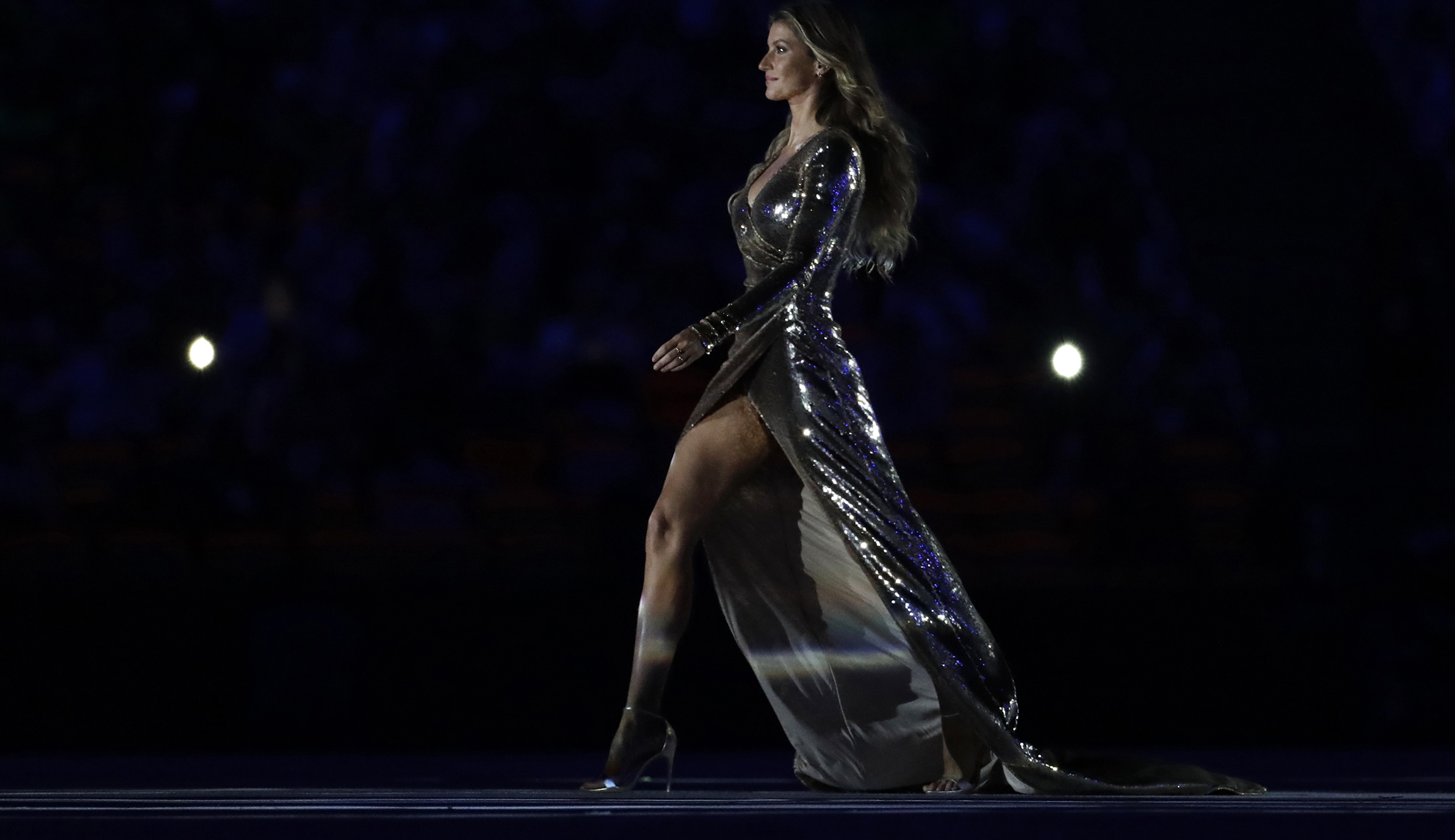
Do attractive workers get paid more than unattractive ones? Some labor economists think so, having clearly demonstrated the existence of the “beauty premium,” which shows attractive workers have higher wages and more job opportunities. So, should we look to implement a “ridiculously good looking” tax?
That depends on what truly leads to higher wages for our photogenic friends. Is it because our beautiful colleagues are more effective at their jobs? Or is it because we are biased toward them, in the same way that society has historically discriminated in favor of whites and men, for example?
Recommended Stories


If physical attractiveness brings about superior productivity — similar to how more intelligent people make better professors, or faster people make better sprinters — then the beauty premium is morally justifiable. Employers pay for productivity, after all, and we aren’t all equally suited for every job.
In that scenario, attractiveness plays a sorting role in the labor market by encouraging beautiful people to gravitate toward the jobs where beauty is most valuable. As such, the less beautiful would simply have to accept the tougher hand that nature dealt them. If I deserved a subsidy from Gisele Bundchen for being less beautiful, would I deserve one from Lionel Messi for being a less capable soccer player? Seems unlikely.
But if, on the other hand, earnings differences can be attributed to bigoted oppression of those blessed with less beauty, then there may be moral grounds for some positive discrimination and equal-pay legislation. Under these circumstances, paying beautiful people higher wages undermines productivity, creating artificially inflated costs by putting the wrong workers in the wrong positions and breeding discord, similar to a premium for being white or male.
In the past, the economists studying the beauty premium have favored the “discrimination” explanation, fueling the perception that physically attractive workers are the beneficiaries of corrupt labor market conventions. But these studies failed to use data that allow for the clear differentiation between the two competing theories of the beauty premium.
A recent paper by Todd Stinebrickner, Ralph Stinebrickner, and Paul Sullivan uses new data to address this flaw. They begin by noting that if the beauty premium is an issue of bigoted discrimination, then it should appear in most sectors. In contrast, if it is related to productivity, then it should only appear in the sectors where beauty enhances productivity.
They theorize which sectors are likely to see beauty-boosting productivity: those characterized by a high degree of interpersonal interaction. These include sales, in-person customer support, and flight attendant. In contrast, positions based primarily on working with data or information, such as data science or computer coding, are likely to see little or no impact of beauty.
They discover that the beauty premium is in fact restricted to the face-to-face types of jobs where you would expect physical attractiveness to positively affect productivity. Therefore, they conclude that rampant bigotry against the less beautiful is not the cause of wage differentials, and that as a result, there is no need for society to consider forcing its physically attractive members to compensate their less fortunate peers.
If the idea of a beauty tax seems strange or unlikely, then you may be surprised to learn that several respected economists have argued in favor of a height tax, whereby tall people are forced to subsidize the short. The proposal stems from the theory of “optimal redistributive taxation,” which emphasizes taxing factors that make people richer but are beyond their control, in order to avoid dulling the incentive to make money.
Thus, for example, one of the flaws in taxing people with larger salaries at higher rates to fund transfers to the poor is that it can discourage workers from earning higher levels of income. They may choose to maintain a low income to maintain government benefits and avoid paying taxes. This is called the “benefits trap.”
Height, meanwhile, is beyond any individual’s control (for the most part), yet it has a statistical connection with wealth. Many studies have confirmed that taller people earn higher incomes because people treat them with more respect than shorter members of society, a form of “bigoted” discrimination.
So some economists’ solution to redress this unfair practice, while simultaneously addressing the benefits trap, is to eliminate income taxes and replace them with height taxes.
Even if we accept that logic, and it certainly has plenty of flaws, it wouldn’t mean we need a beauty tax. Height is a genetically-inherited trait; physical attractiveness is less so, being both subjective and partially based on exercise, fashion choices, and grooming. So a beauty tax might simply motivate people to become less attractive.
Therefore, for the time being, the incentive to be good-looking remains as strong as ever.
Omar Al-Ubaydli (@omareconomics) is a senior affiliated scholar with the Mercatus Center at George Mason University and a researcher with Derasat, Bahrain.
