

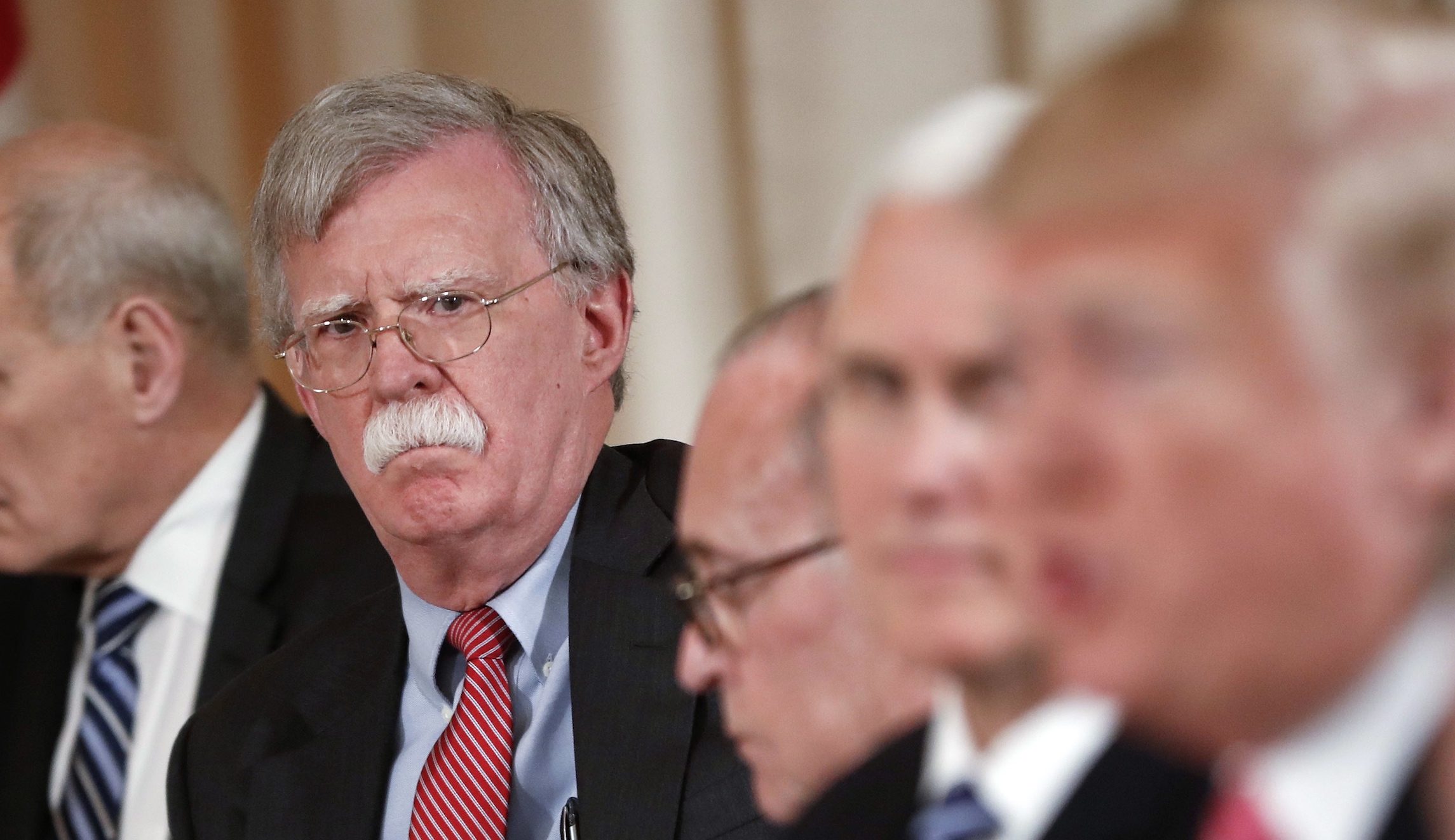
Yes, John Bolton said that he would lie to defend national security. No, it is not relevant to claims that Bolton apparently makes in his upcoming book.
I note this in light of Sean Davis’s argument to the contrary. The Federalist writer references Bolton’s 2010 comments on the Fox Business Network that he would lie to protect national security. Davis suggests that those comments undermine the claims in Bolton’s book. The New York Times has reported that the former national security adviser’s book alleges that President Trump did indeed withhold aid from Ukraine to extract that nation’s agreement to investigate former Vice President Joe Biden and his son.
That is the central contention of Democratic efforts to convict Trump in his impeachment trial.
Recommended Stories

Don’t get me wrong: I recognize that we must ask questions here. Why, for example, did Bolton wait to make his claims in his book and not when the impeachment saga began? It is also wholly legitimate to point out that other witnesses would supposedly contradict Bolton’s apparent claims about the president’s motives. As Davis observes, both Attorney General William Barr and acting White House chief of staff Mick Mulvaney say Bolton’s claims are untrue.
That said, I believe Davis misreads what Bolton is saying and what importance those statements have for Bolton’s credibility in his book.
Davis notes Bolton’s response to Andrew Napolitano’s question: “You would lie in order to preserve the truth?”
Bolton: “Absolutely. If I had to say something I knew was false to protect American national security, I would do it.”
It doesn’t sound great, but Bolton then adds: “I don’t think we’re often faced with that difficulty, but would I lie about where the D-Day invasion was supposed to take place to deceive the Germans? You better believe it.”
The former U.S. ambassador’s point is a good one. After all, the Allies did indeed deceive the Nazis in preparation for the D-Day landings. And they did so with elaborate setups and conspiracies in schemes such as Operation Bodyguard. Deception is often a pivotal element of any successful military campaign.
Davis also fails to address Bolton’s response to Napolitano’s follow-up question: “Can you break the law, as a diplomat, as a government leader, if you think there’s a greater good?”
Bolton: “No, you cannot break American law without suffering the consequences. Period, closed quote.”
Bolton’s affinity for deception is clearly tied to national security and not to the willful manipulation of the American people.
The best way to address the Bolton issue is to get him to testify speedily and up-front. Only that course of action would allow those judging Trump to weigh Bolton’s potentially significant statements before voting to convict or acquit the president.
