

Russia has technically committed an act of war against the United Kingdom, and thus against NATO. The truly shocking thing is that no one is especially shocked.
The use of officially sanctioned force against a man living under the Queen’s peace is not a minor violation of sovereignty, like an incursion of airspace. It is state terrorism of the worst kind, carried out as it was through a banned nerve agent.
Recommended Stories


Even during the Cold War, we never experienced such attacks. In those days, intelligence agencies operated within understood parameters and according to clear, if unwritten, rules. One such rule was that, if you were involved in a spy swap, as Sergei Skripev was, you would afterwards be left alone. Once the receiving country had wrung you dry of every drop of information, you’d be allowed to retire from the game.
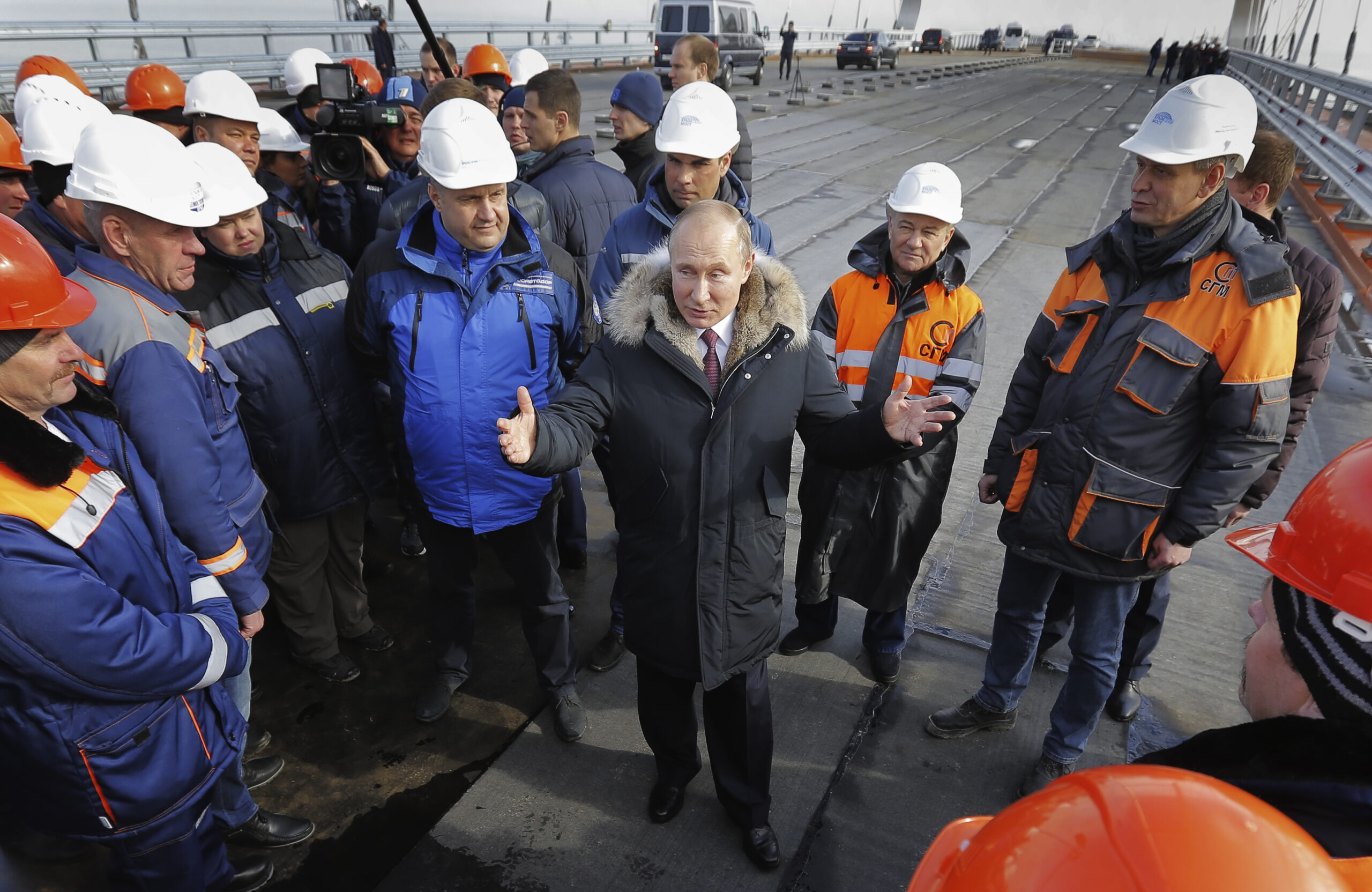
That rule evidently no longer pertains. When Russian President Vladimir Putin publicly looked forward to the “traitors” choking on their “thirty pieces of silver,” he signaled a change in approach. Experts differ on whether the attempt on the life of Skripev, the former FSB double-agent who had been swapped for a Russian spy in the West and was living out his life quietly in an English market town, was specifically sanctioned by the Russian president, or whether the FSB was freelancing. Either way, Putin is standing by the assassination attempt — despite the fact that, in an even more flagrant breach of Cold War etiquette, it put the lives of local people in jeopardy.
When I say that Putin is standing by the crime, I don’t mean that he is admitting to it. Rather, he has adopted what Britain’s Foreign Secretary, Boris Johnson, aptly calls a tone of “smug sarcasm.” While he formally denies any involvement, he wants to send the signal that any Russian who works with an open democracy might suffer a similar fate.
Incredibly, to Western eyes, it’s playing with his home crowd. If a British or American leader were to sanction an illegal and extraterritorial killing, there’d be inquiries and exposés and resignations. But Russian voters are lapping it up. This kind of chest-beating soothes the phantom pains of their amputated colonies. Their economy may be roughly the same size as South Korea’s or Spain’s, but they can still make the world take notice of them.
From his own point of view, Putin has pursued a remarkably successful strategy. Bellicose revanchism creates a sense of siege mentality in Russia and drives up his poll ratings. His country may languish, but he remains on top — reputedly the richest man in the world. To keep winning, though, he has to keep picking fights.
Extraterritorial murders are only one part of the former Soviet intelligence man’s provokatsiya. Russian agents have gunned down critics in Turkey and Austria, kidnapped an Estonian intelligence officer on his own soil, and assassinated at least one other Russian in Britain — and there is now pressure to reopen a number of other suspicious cases. But such gangsterism, on its own, is not enough. Nor is the turning off of gas supplies to neighbors. Nor, even, were the full-on invasions of Georgia and Ukraine. No, for Putin’s approach to keep working, he has to keep upping the stakes.
What will be next? Even more blatant military incursions? Cyberattacks? Cutting the undersea cables on which Western communications depend? The use of chemical or biological weapons in further terrorist strikes?
What if Putin were to invade, say, Latvia, a NATO ally? He wouldn’t officially invade it, of course. Rather, he’d follow the same pattern as in Ukraine — local Russian-speaking militia would spontaneously declare self-governing enclaves, then be joined by “volunteers” from Russia. After initial denials, as in Ukraine, Putin would acknowledge that the volunteers had been serving soldiers, but by then, the annexation would be a fait accompli.
You don’t think Russia would take on NATO so directly? What do you think the attack in Britain represents?
Putin’s experiences so far have taught him that the West is craven, sluggish, and filled with useful idiots. In the old days, the useful idiots came from the far Left. While a few of these are still around – notably the British Labor leader, Jeremy Corbyn, who seamlessly transferred his sympathy from Communist Russia to Putinite Russia – most now come from the authoritarian Right: Marine Le Pen and Geert Wilders in Europe, UKIP in Britain, and a few Trump cheerleaders in the U.S.
Putin will probe and probe until he encounters real resistance. And, so far, he hasn’t.
