

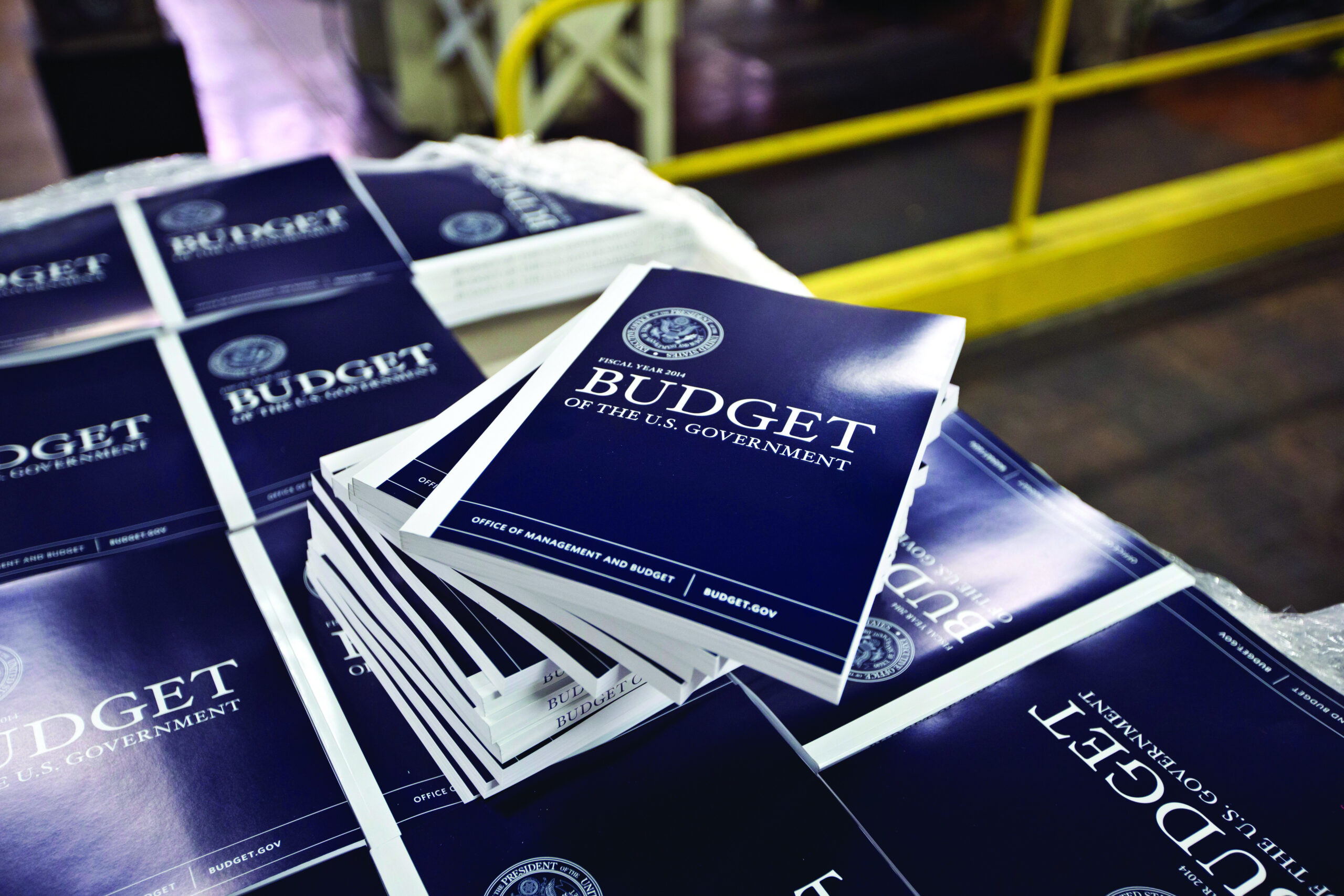
James Capretta for Economics21: Now in his sixth year in office, President Obama has made it clear he is not interested in serious reform of the major spending programs that are causing, and will continue to cause in the future, so much fiscal distress for the federal government. He wants to retain the current welfare state as it is, and in fact expand it with the new spending enacted in Obamacare. Instead of serious entitlement reform, he would rely on three policies to close future deficits: steep and unprecedented defense cuts, lower payments for services in the Medicare program, and higher taxes.
Recent events and data make it clear that this approach to fiscal consolidation is, at best, a risky bet for the U.S. economy.
Recommended Stories


The most obvious budgetary threat at this point is in the defense budget. The recognition that [the Islamic State of Iraq and Syria] poses a direct threat to U.S. security and global interests is rapidly shifting expectations about what a prudent defense posture will be in coming years. In addition, Russia’s aggressive incursions into Ukraine have also made it clear that the peace dividend from the end of the Cold War is now at least partially in jeopardy (even though it has already been spent many times over). …
Given the realities of the global environment, it is a far safer bet to assume that the U.S. will be required to spend something closer to the post-war average on national security than the historically low amounts built into Obama administration budget plans.
EXPLOITING IMMIGRANTS
Ross Eisenbrey for the Economic Policy Institute: The Tennessean reported yesterday on the miserable work life of a 17-year-old migrant worker named Ivan Alvarez, who lost three fingers when a tobacco farmer’s makeshift shearing machine sliced them off. How did the farmer treat him? He gave him a check for $100 and fired him. No worker’s compensation, no disability insurance and no compassion.
Young Alvarez was one of six migrant teenagers working at Marty Coley Farms in Macon County, Tenn. He lived with 13 adult men in a vermin-infested three-bedroom house, and was paid less than minimum wage for six days a week of work. Why did Alvarez and the others put up with such mistreatment? As undocumented immigrants, they were trapped.
A recorded conversation between the farm’s owner and one of the employees after the amputation shows how employers use the threat of deportation to oppress their workers and drive labor standards to the bottom. When the worker said he was leaving to take a better-paying job at another farm, the farmer, Marty Coley (one of the largest tobacco growers in the county), threatened him with deportation. …
One often hears that employers hire undocumented migrants because no American wants to do the kind of work they’re hired to do. Clearly, no American wants to live in overcrowded and disgusting quarters, be paid a sub-minimum wage, and have his fingers cut off. The answer isn’t to let this kind of exploitation continue — it’s to improve pay and working conditions enough that Americans will do the work, and to give immigrants the right to reject a job that degrades rather than rewards their labor.
WORRIES ABOUT EUROPE
Desmond Lachman for AEIdeas: Over the past three years, one would have to be blind not to have noticed the profound political changes in Europe. Seemingly coming from nowhere, across the continent populist leaders have emerged to take advantage of Europe’s difficult economic and social situation. As a result, they now pose a real challenge to Europe’s traditional parties of the center. Whether it be Marine le Pen’s National Front Party in France, Bepe Grillo’s Five Star Party in Italy, Pablo Iglesias’ Podemos Party in Spain, or Alexis Tzipras’ Syriza Party in Greece, politics would seem to be fragmenting at a rapid pace across the European economic periphery…
The most recent European political developments hardly provide support for the hope that Europe’s dangerous political and economic downward spiral will soon come to an end. In Germany, the extreme anti-European Alternative for Germany Party is now managing to win 10 percent of the vote in state elections. This will almost certainly constrain Chancellor Angela Merkel’s room to maneuver to pursue a more supportive budget policy for Europe or to give the [European Central Bank] the green light to pursue a policy of full-bodied quantitative easing. Meanwhile in France, President Hollande’s popularity plumbs new lows, which highly complicates his ability to secure passage of those economic reforms needed to get the French economy moving again. …
At a time that Europe’s economic recovery is stalling and that there is a real risk of deflation, one would have thought that both markets and policymakers would be very much less complacent about Europe’s economic and political prospects than they seem to be at the moment.
