

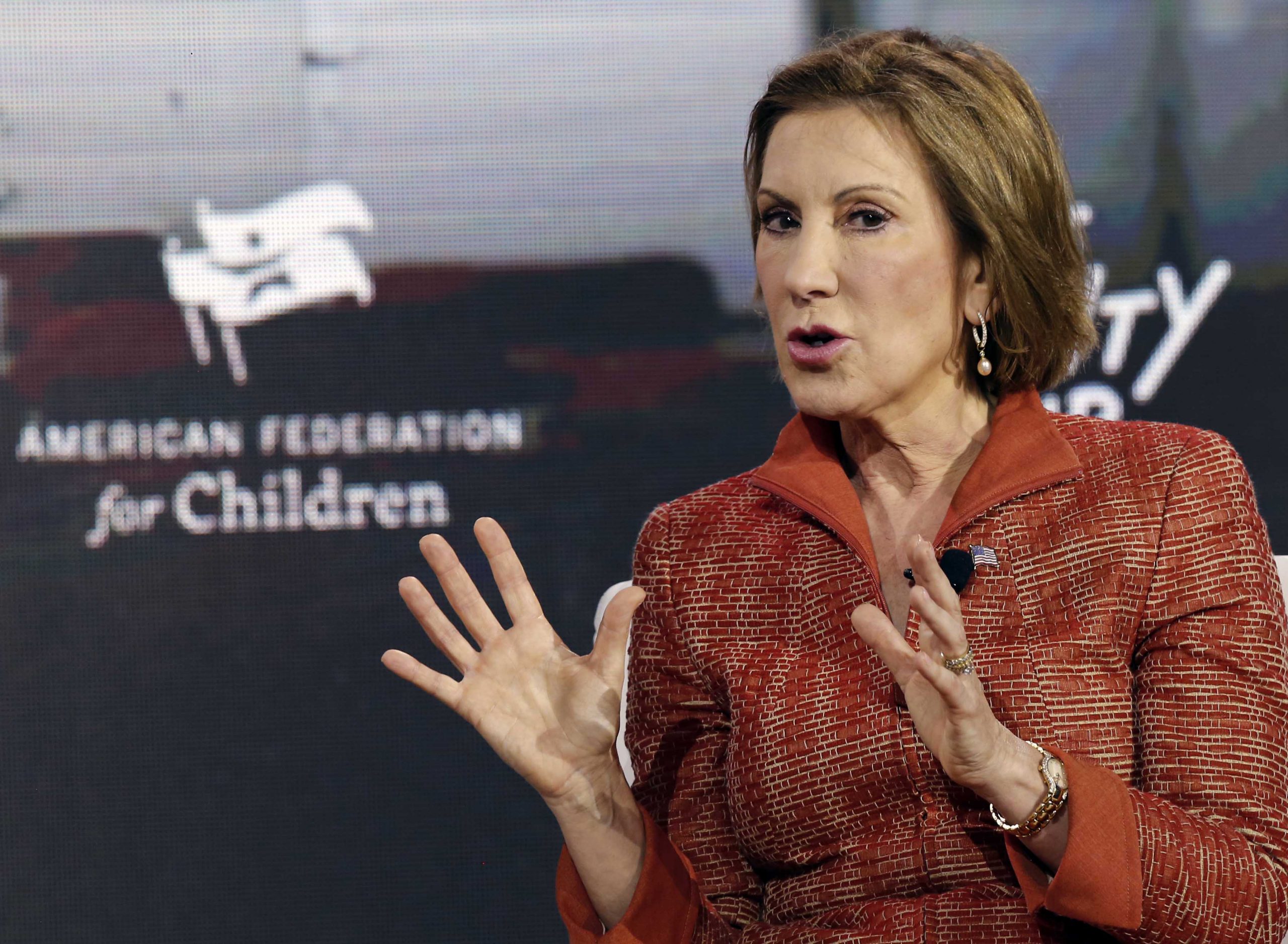
Republican presidential candidate Carly Fiorina has called on Congress to pass the controversial Cybersecurity Information Sharing Act, suggesting that “collaboration” between the federal government and private companies would help prevent cyberattacks.
“There is a level of collaboration that’s required between the private sector and the public sector to detect and repel attacks,” Fiorina said on NBC’s “Meet the Press” on Sunday. “That requires an act of Congress. There is a bill that’s been languishing, frankly, in Congress for several years now. We need to get that bill passed so that level of collaboration is possible.”
Recommended Stories


Outside of passing the cyberbill, Fiorina said, “It’s important to recognize that these cyberattacks that have been going on against the federal government systems, none of those are a surprise … We’ve known for over a decade the Chinese were coming after our most important systems.
“We ought to make it very painful for the Chinese to be aggressive in cyberwarfare,” the former Hewlett-Packard CEO concluded. She did not specify what that would entail.
The Senate recessed in August without passing a cyberbill. The legislation would grant companies like Apple and Google immunity from lawsuits that result from the companies giving their customers’ information to the federal government. Business entities like the Chamber of Commerce and the Financial Services Roundtable support the bill.
“We need a team America approach,” Tim Pawlenty, CEO of the Financial Services Roundtable, recently said in an interview on C-SPAN. “We’ve got to work as a team if we’re going to successfully identify and defend against those kind of threats.”
Opponents point out that the legislation would not prevent cyberattacks from China, which have been the most damaging to the U.S. government. That includes the breach of the Office of Personnel Management this year that resulted in data being stolen from more than 22 million individuals who had applied to work for the federal government in recent decades.
GOP presidential candidates who support the legislation include former Florida Gov. Jeb Bush, Sen. Marco Rubio of Florida and Sen. Lindsey Graham of South Carolina. Opponents include Sen. Rand Paul, R-Ky. The rest of the field has been largely silent on the issue, including Sen. Ted Cruz, R-Texas, who abstained from a vote on the matter this summer.
The legislation is expected to return to the Senate for another vote in September or October.
