

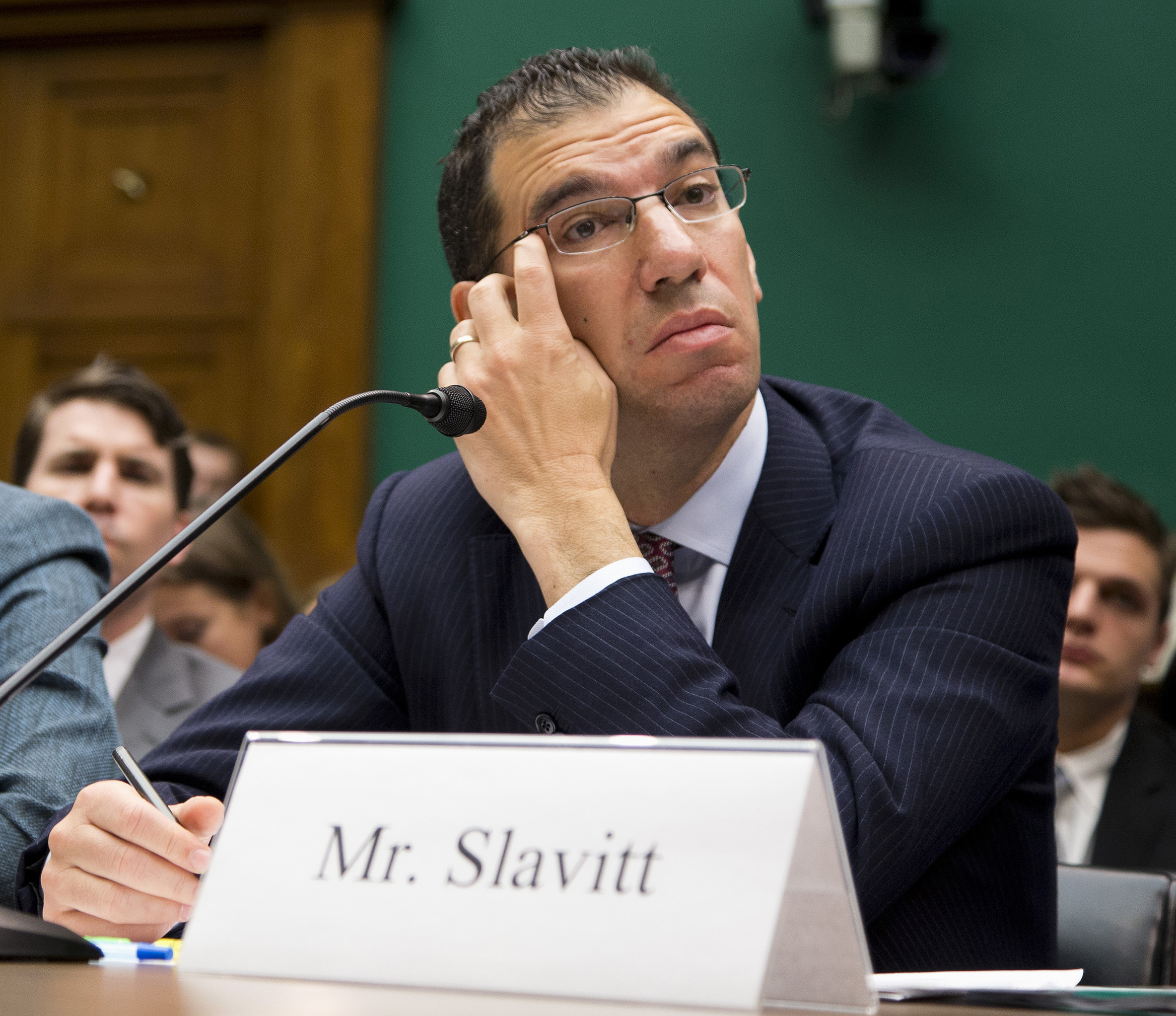
House lawmakers are expected to grill a top administration official on Tuesday over whether state Obamacare exchanges are using taxpayer-funded grants properly.
The House Energy and Commerce’s Oversight Subcommittee will hold a hearing Tuesday featuring Andy Slavitt, acting administrator of the Centers for Medicare and Medicaid Services, the agency tasked with overseeing Obamacare. The hearing is the second in a series on federal oversight of state-based exchanges.
Recommended Stories


“CMS oversight has been woefully sloppy at best and willfully ignorant at worst with obvious spending abuses costing taxpayers billions and counting,” Rep. Tim Murphy, R-Pa., told the Washington Examiner Monday. Murphy is chairman of the oversight subcommittee.
The administration counters that it has systems in place to properly oversee the use of grant funds by states.
Thirteen states run their own health insurance exchanges for Obamacare. Those exchanges were originally given more than $5.51 billion in federal grants to set up their exchanges.
Consumers in each of those states would sign up for Obamacare through websites established by each state. However, four states have switched to the federal healthcare.gov to sign up people after problems with their own systems.
Lawmakers are worried after a federal watchdog in April found that state exchanges might be using the federal establishment grant funds for operational expenses.
The problem is that as of Jan. 1, 2015, state exchanges can’t use those grants for operations.
Take Arkansas’ exchange, which spent $1 million of its establishment grants for prohibited activities. CMS discovered the problem in September and has said that it is working with the state to return the funds.
Murphy said he wants a blueprint from the Obama administration on how it will recoup any lost taxpayer dollars.
Slavitt said in written testimony that the agency is “committed to protecting the investment made in state-based marketplaces.”
Slavitt said in his prepared remarks that CMS conducted a thorough review of the grants it gave out to state exchanges. The agency also continues to monitor the exchanges to enforce the terms of the grants.
If the agency finds problems, it forces the state to develop a plan to deal with them. That is what happened in Massachusetts in 2013 to address system problems that hindered the ability to enroll consumers, Slavitt said.
In June, the agency gave states advice on how to properly use establishment grant funds. For instance, the states can use the grants to create information technology systems and for salaries, but they can’t use the funds to pay rent or maintain call center operations, according to the House committee.
The agency also conducts reviews of state-based marketplaces to ensure they are sustainable, he said.
In May, CMS notified Rhode Island’s marketplace, HealthSourceRI, it had to find another funding source other than the grant funds or it wouldn’t comply with agency regulations.
The state’s legislature passed a new budget that included a 3.5 percent premium assessment on health care plans sold through the marketplace, Slavitt said.
While a state can’t get new establishment grant funds, it can request a time-limited No Cost Extension to use existing establishment grant funds to complete the design, development and implementation of establishment activities, he added.
Slavitt has been acting administrator of CMS since Marilyn Tavenner left earlier this year to become a lobbyist for the insurance industry. President Obama nominated Slavitt to become the full administrator, but his nomination has gone nowhere in the Senate.
A source in the Senate Finance Committee recently told the Examiner that Slavitt’s nomination is being vetted and there is no timetable for a confirmation hearing.
