

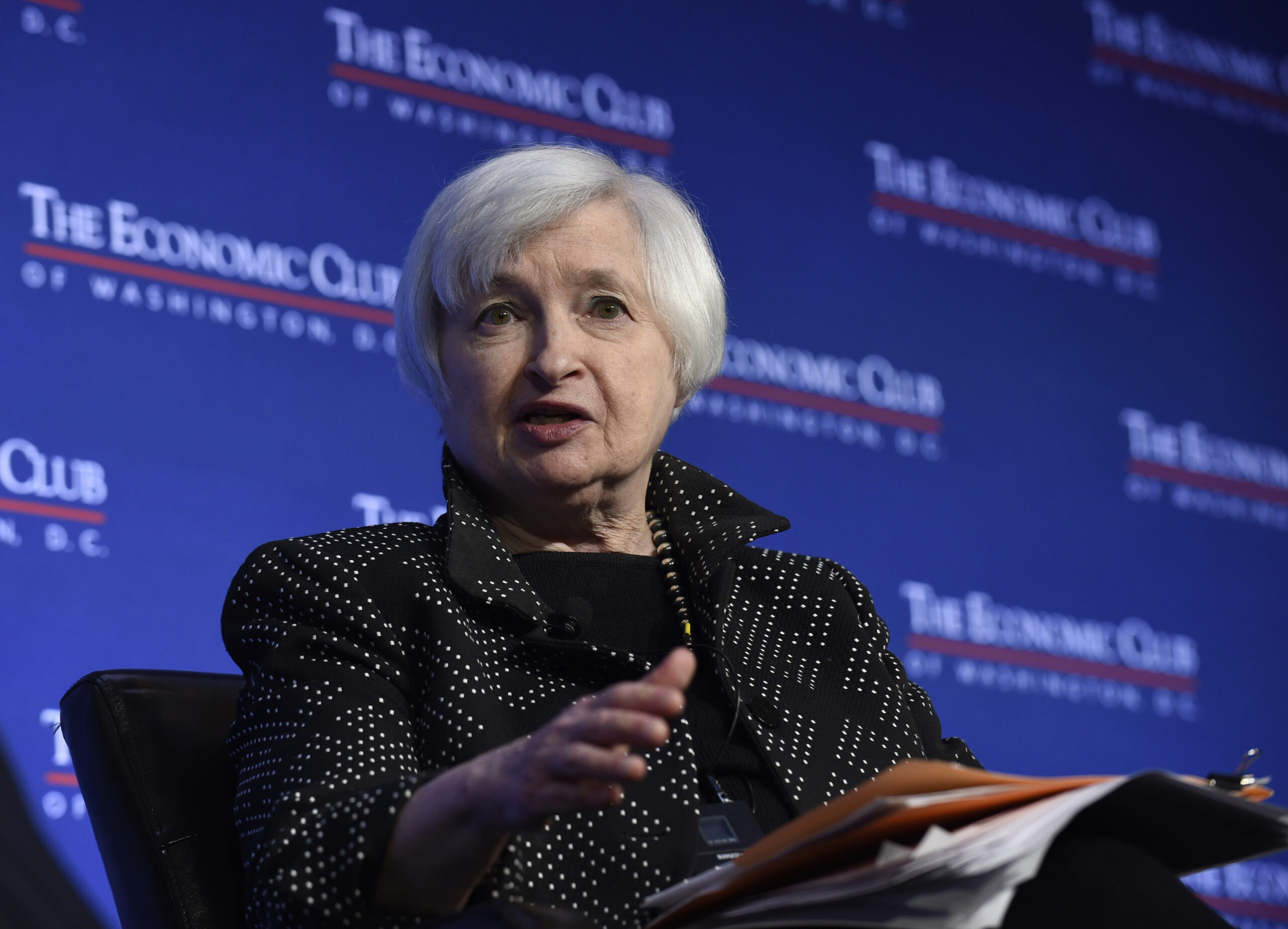
With an interest rate increase all but guaranteed, the top question surrounding Wednesday’s Federal Reserve monetary policy announcement is shifting to the language the central bank uses to describe future rate decisions, and just how loose or tight money will remain.
Recommended Stories



As the Fed’s two-day monetary policy meeting draws to a close with a 2 p.m. announcement and press conference with Chairwoman Janet Yellen, investors are assuming that the Fed will raise rates.
Futures market prices and surveys of economists suggest an overwhelming expectation that the Fed will lift its target range for short-term interest rates from 0-0.25 percent to 0.25-0.50 percent.
Although the rate increase, the first since the Fed cut rates to zero in the teeth of the financial crisis, is historic and long-awaited, a quarter-point change in short-term interest rates won’t have major significance when it comes to businesses investing or consumers borrowing to buy cars or houses.
Instead, the more important consideration is how high the Fed plans to raise interest rates in the months and years ahead, and how quickly.
The Fed and Yellen already have said numerous times that the pace is likely to be slow and tied to the economy’s performance. But Wednesday’s official statement could reveal further clues.
“I expect them to put in words like ‘gradual,'” indicating a slow pace, said Stuart Hoffman, chief economist for the PNC Financial Services Group, adding that the Fed also might reiterate that it won’t raise rates on any pre-set schedule.
The Fed will release other clues Wednesday in its summary of Fed officials’ interest rate projections and in Yellen’s press conference.
Economists will be looking in particular for what emphasis Yellen places on problems overseas, particularly in China.
National Association of Realtors chief economist Lawrence Yun said on a call with reporters Tuesday to look for mentions of “the global economy, the weakness in commodity prices, the wobbliness of China’s economy, the central bank in Europe printing money.”
Such references will be interpreted as signs that the Fed will move more slowly, he said, because they “imply that the Federal Reserve does not want to unhinge with the rest of the world, because by doing so they will make the U.S. dollar even stronger and hurt exporters.”
In recent months, slowing growth in China and elsewhere overseas has devastated demand for commodities, collapsing the price of oil and leading to six-figure job losses in oil production in the U.S. since December. Meanwhile, as central banks in Asia and Europe have sought to ease monetary conditions, the dollar has risen sharply relative to other currencies, raising the cost of U.S. goods abroad and hurting manufacturers that rely on exports.
Fears about the possible effects of slowing international growth, and the associated effects on financial markets, led the Fed to hold off on raising rates in September. Meanwhile, job growth in the U.S. has remained strong, suggesting that the question about how fast the Fed raises rates largely depends on how much Fed officials think international events affect domestic strength.
Hints and clues in the Fed’s detailed language can make a large difference for monetary policy, with communications often in effect becoming the policy. Even though the Fed has not moved short-term interest rates this year, it has effectively raised interest rates across the board, according to one measure published by the Federal Reserve Bank of Atlanta. The “shadow” Fed target rate calculated by the Atlanta Fed estimates what the target rate would be if it could go below zero, based on other benchmark interest rates, such as those on one- and 10-year Treasury securities. Over the past year, the shadow rate has risen from near negative 2.3 percent to close to 0 percent.
In an interview with MarketWatch published Tuesday, former Fed Chairman Ben Bernanke gave his opinion on how the Fed is likely to communicate with markets as it proceeds into 2016.
“The Fed will be very cautious and gradual, that’s what they’ve told us many times, and they’ll be looking for evidence that the economy has been able to accommodate the higher rate increases and still continue to grow,” Bernanke said.
