

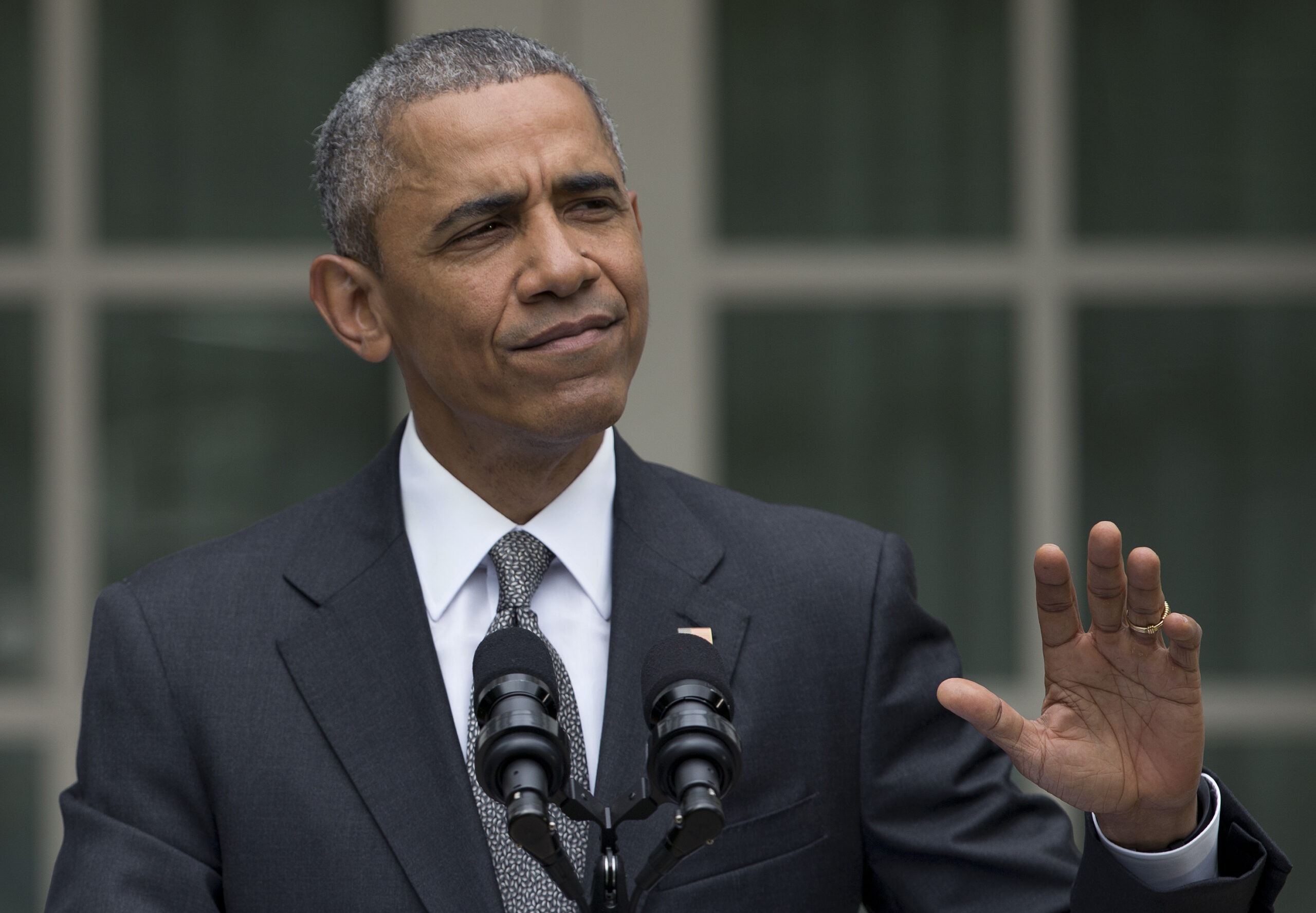
With President Obama’s Supreme Court victory on Obamacare subsidies in hand, and Congress on track to grant Obama new authority to negotiate trade agreements, the White House on Thursday laid out a legislative wish list for the remainder of the president’s time in office.
Notably absent from the wish list is any form of gun control initiative in the wake of the shooting of nine black parishioners at a Charleston, S.C., church. The president will eulogize the pastor of the historic black church Friday morning, and lawmakers are anticipating that Obama will use the national platform to make an urgent request for expanding background checks for unstable individuals, even though the main thrust of his remarks will focus on paying tribute to the victims.
Recommended Stories


Still, the list has four big items that the White House is hoping can advance:
1) Expanding Medicaid in hold-out states
Topping the list is trying to persuade additional states to expand Medicaid, White House press secretary Josh Earnest said Thursday after the ruling.
An earlier high court ruling allowed states to opt out of the Affordable Care Act’s Medicaid expansion, leaving each state’s participation in the hands of its governors and state leaders.
So far, 30 states and the District of Columbia have taken action to expand Medicaid coverage, while two states, Alaska and Utah, are considering expanding the program, according to the Henry J. Kaiser Family Foundation. The Supreme Court’s ruling on Obama’s health care law may remove the last hurdle for Utah’s governor and legislative leaders to reach an agreement on such an expansion.
2) Extracting spending concessions from Republicans in order to avoid a government shutdown
Earnest said the White House wants to try to “facilitate some bipartisan compromise on Capitol Hill” to avoid a looming government shutdown.
“We should be able to ensure that those kinds of decisions are made without drama and without a negative effect on our economy,” he said.
But Democrats were the first ones to fire off a budget salvo this year, when they threatened to stop spending bills in their tracks if Republicans didn’t make concessions and end the budget sequester put in place in 2011. Parts of the government will shut down if the necessary appropriations bills aren’t passed by Oct. 1.
Last week, Senate Democrats blocked a $576 billion defense spending bill from being debated on the floor over demands to end the sequester. Democrats on both sides of the Capitol are demanding that Republicans, which hold majorities in both houses of Congress, come to the table and negotiate a way to avoid spending cuts across the government, instead of just avoiding cuts to the Defense Department.
3) Criminal justice reform
Earnest cited some positive bipartisan momentum on an overhaul to the criminal justice system that would reduce some sentences for non-violent offenses.
On Thursday, Reps. Jim Sensenbrenner, R-Wis., and Bobby Scott, D-Va., introduced the Safe, Accountable Fair and Effective Justice, or SAFE Act, which will overhaul the federal sentencing and corrections system to help stop recidivism, concentrate prison space on violent and career criminals, and increase the use of alternatives to incarceration.
Earnest said the president plans to work across party lines to implement some reforms, and said the positive traction so far would likely yield to more discussions and progress in the future.
4) Closing tax loopholes and using the money on infrastructure projects
Obama has long wanted to close corporate tax loopholes that allow companies to shift some of their U.S. profits offshore to avoid billions of taxes they would otherwise owe.
The president has proposed a small but yet unspecified fee on the more than $2 trillion of profits held by U.S. corporations in overseas tax havens, and using that money to help fix the nation’s bridges, roads and other infrastructure projects.
By paying this fee, U.S. businesses could avoid the full 35 percent rate on repatriated profits, and still produce extra money for infrastructure spending.
“There are some indications that some Republicans, in principle,” would be open to that, Earnest said.
“That’s a lot of work to do in the next 18 months,” Earnest said of Obama’s wish list. “That’s why the president is hoping to make the most every day” he has left in the job.
