

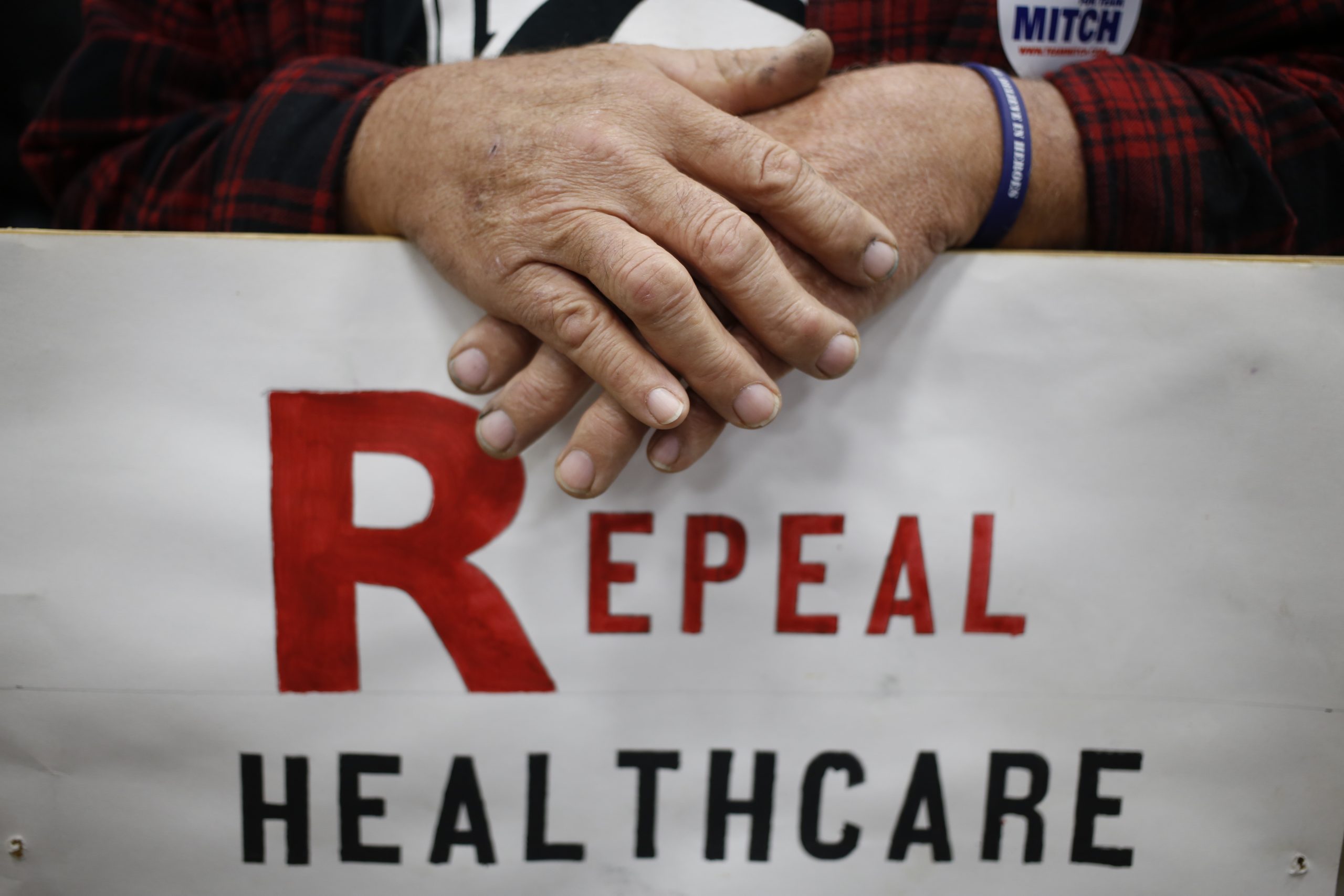
Repealing President Obama’s signature healthcare law would raise deficits by $137 billion over 10 years, the nonpartisan Congressional Budget Office estimated Friday.
The estimate includes what is known as a “dynamic score” of repealing the law, taking into consideration the effects on economic growth of undoing its taxes, subsidies and regulations.
Recommended Stories



Without the added revenues from faster economic growth that would follow repeal, the budget office estimated, deficits would increase $353 billion.
Friday’s projection is the first major dynamic analysis of a legislative proposal or possibility conducted by the budget office under new GOP-appointed director Keith Hall.
Hall said in Senate testimony on Wednesday that repealing the Affordable Care Act would increase deficits.
“We have done analysis of repealing the ACA. We found that doing so would have to increase deficits somewhat over 10 years,” Hall said in response to a question from Budget Committee Chairman Mike Enzi, R-Wyo. “And the difference is the savings from repealing coverage provisions, if you repealed the ACA, it would be outweighed by the costs of repealing other provisions, including those that reduce Medicare’s payment updates.”
The estimates released Friday are subject to significant uncertainty, the budget office noted, to the extent that it’s possible that repealing Obamacare could shrink deficits. Nevertheless, its best estimate is that deficits would increase by $137 billion over 10 years.
Repeal would also increase the number of uninsured people by 19 million immediately and by 24 million over time, according to the projections.
The net number of uninsured would reflect 30 million-plus people losing individual insurance policies or Medicaid coverage, offset by 8 million or so who would gain employer-provided coverage in absence of the law.
In all, the federal government would have to fork over $1.6 trillion less for healthcare coverage in the next 10 years after repeal, including fewer subsidies for plans bought through exchanges and less Medicaid spending.
But those savings to the Treasury would be more than offset by the other fiscal effects of repeal.
The biggest would be $879 billion in planned reductions on Medicare-related spending in the law. Lost revenues from the repeal of the law’s individual mandate and other mandates and from new deductions for new employer-provided health insurance for people losing Obamacare coverage would add $502 billion. Repealing the law’s taxes would take another $631 billion to 10-year deficits.
After 10 years, according to the budget office, projections are too uncertain to be meaningful on a year-to-year basis. But over 2021 to 2035, deficits would be higher by roughly 1 percent of gross domestic product in the absence of Obamacare.
The projections released Friday do not account for possible decisions in the the currently pending Supreme Court case King v. Burwell, which could end tax subsidies to plan in many states.
