

A new year means new faces on the Federal Reserve’s monetary policy committee.
Recommended Stories



The Federal Open Market Committee, which makes decisions about interest rates and the money supply for the central bank, changes composition each year. The seven members of the Fed’s Board of Governors and the president of the Federal Reserve Bank of New York stay on, but four of the 11 regional bank presidents rotate out and four new presidents rotate in each year.
Gone will be Chicago’s Charles Evans, Richmond’s Jeffrey Lacker, Atlanta’s Dennis Lockhart and San Francisco’s John Williams.
Here’s who will be replacing them and how they might influence Chairwoman Janet Yellen and the Fed in 2016:
Loretta Mester, Cleveland
This year will be Mester’s second turn serving on the committee, as she became president of the Cleveland Fed in mid-2014 and immediately joined the committee then. She had attended the monetary policy meetings in Washington before as a staffer at the Philadelphia Fed, where she was a researcher and then an executive starting in 1985.
The Princeton PhD economist has established herself as one of the more “hawkish” members of the Fed system — that is, less willing to keep money loose to reduce unemployment and more worried about inflation rising too fast.
Before the Fed’s September meeting, at which Yellen and company defied expectations that they would raise rates for the first time in nearly a decade, Mester told CNBC that “the economy can sustain an increase in interest rates,” hinting that she may have voted against a committee decision to keep rates at zero.
Mester also is in favor of simplifying the language the Fed uses to talk about what it’s doing and cutting down on “Fedspeak.”
“Oh my God. I would like us to be a little more plain-spoken about it all. That is almost like code,” Mester said in an interview with The Wall Street Journal earlier this year.
James Bullard, St. Louis
Bullard is one of the members of the Fed who appears most likely to change his mind based on news and data about the economy.
He said this month that “it was probably a mistake to delay” raising rates in September, and that he would have dissented from that decision if he had been on the committee. However, he also has voiced objections to the Fed moving toward tighter monetary policy when he has thought it wasn’t justified. In June 2013, he voted against the committee’s plan to have then-chairman Ben Bernanke spell out a plan for winding down the Fed’s large-scale bond-buying program, worrying that the Fed was falling short of its inflation target.
Nevertheless, Bullard is likely to be an advocate of some of the ideas that congressional Republicans have advanced in criticizing the Fed’s monetary policy over the years. He has said that he favors rules-based monetary policy, meaning that the Fed respond predictably to movements in economic growth, inflation, unemployment and other macroeconomic indicators.
In an interview this month with the Washington Post, he also noted that it isn’t healthy that Republicans have had more cause to complain about the Fed in recent years. “I would like to see equal criticism from both sides,” he said. “I think it has tilted more toward the Republican Party in the last five years.”
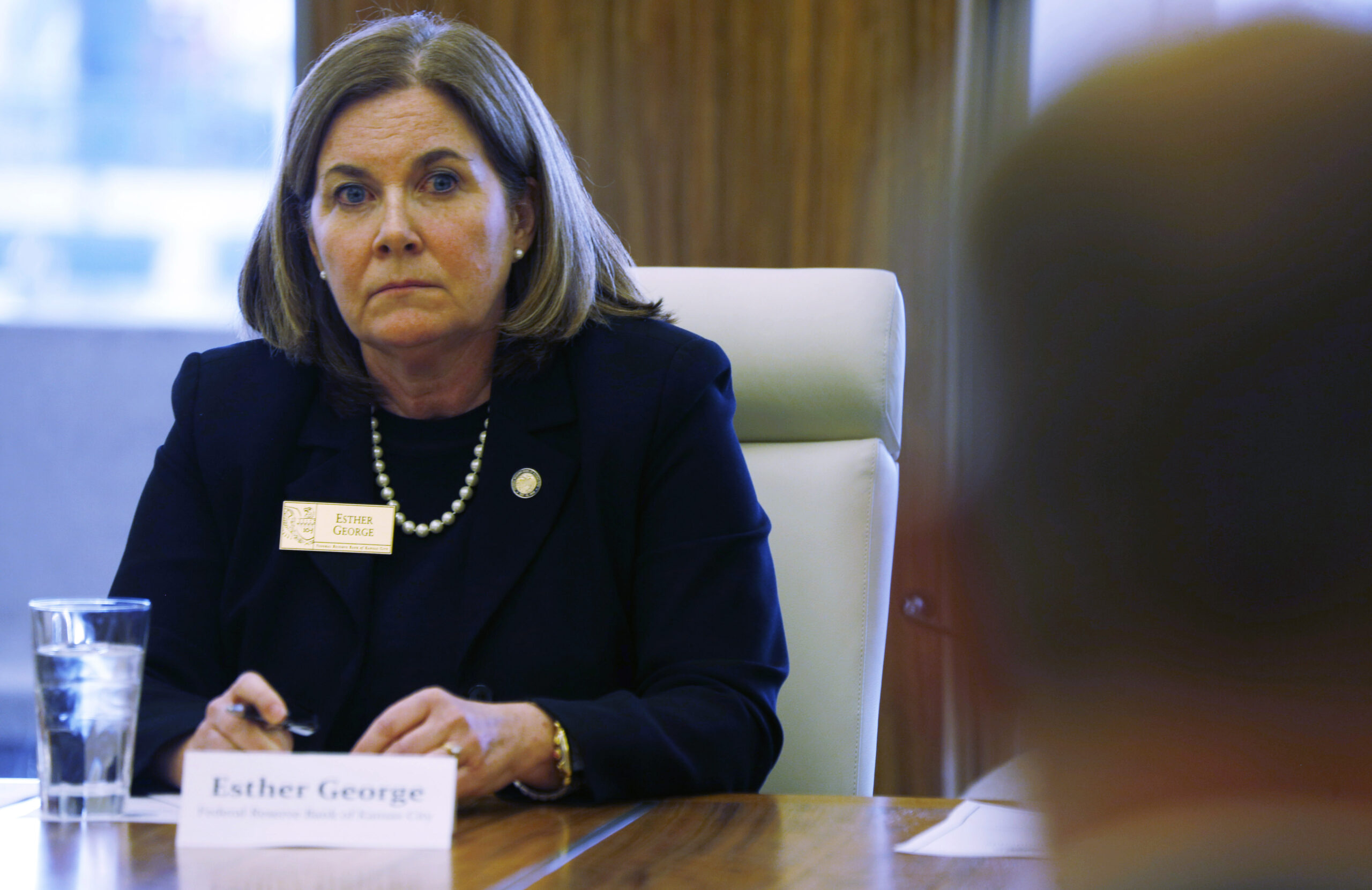
Esther George, Kansas City
George is one of the most “hawkish” members of the Fed, known for her view that the central bank should tighten monetary policy to prevent bubbles from forming, a controversial stance within the central bank.
With a background regulating banks at the Fed, George has consistently expressed more concern about financial stability than other members of the Fed. She also has argued that too-loose monetary policy could lead to too much inflation. But her unique contribution to the Fed is a focus on the possibility of low rates translating into financial excess. She also laid out the case for ending the Fed’s low-rate policies for financial safety purposes in a speech earlier this year, warning that “monetary policy runs the risk of remaining overly accommodative following a downturn, and lead to future instability.”
It’s safe to bet that if Yellen hesitates in raising rates in 2016, George will vote against her. In 2013, George voted against all but one Fed decision because she favored tighter money.
Eric Rosengren, Boston
Rosengren is at the opposite end of the spectrum, being regarded as one of the biggest “doves” in the Fed — most concerned about high unemployment and least worried about stimulus leading to too-high inflation.
At the one meeting in 2013 at which George didn’t dissent, the December meeting at which the Fed began “tapering” its massive bond purchases, Rosengren did dissent. He argued that pulling back on stimulus wasn’t yet justified.
This fall, Rosengren appeared to agree with Yellen that raising rates would be justified. But he also has called for the Fed to move toward further rate increases more slowly than in past cycles, arguing that the severity of the fallout from the financial crisis means that a “more modest” path of interest rate increases is necessary.
