

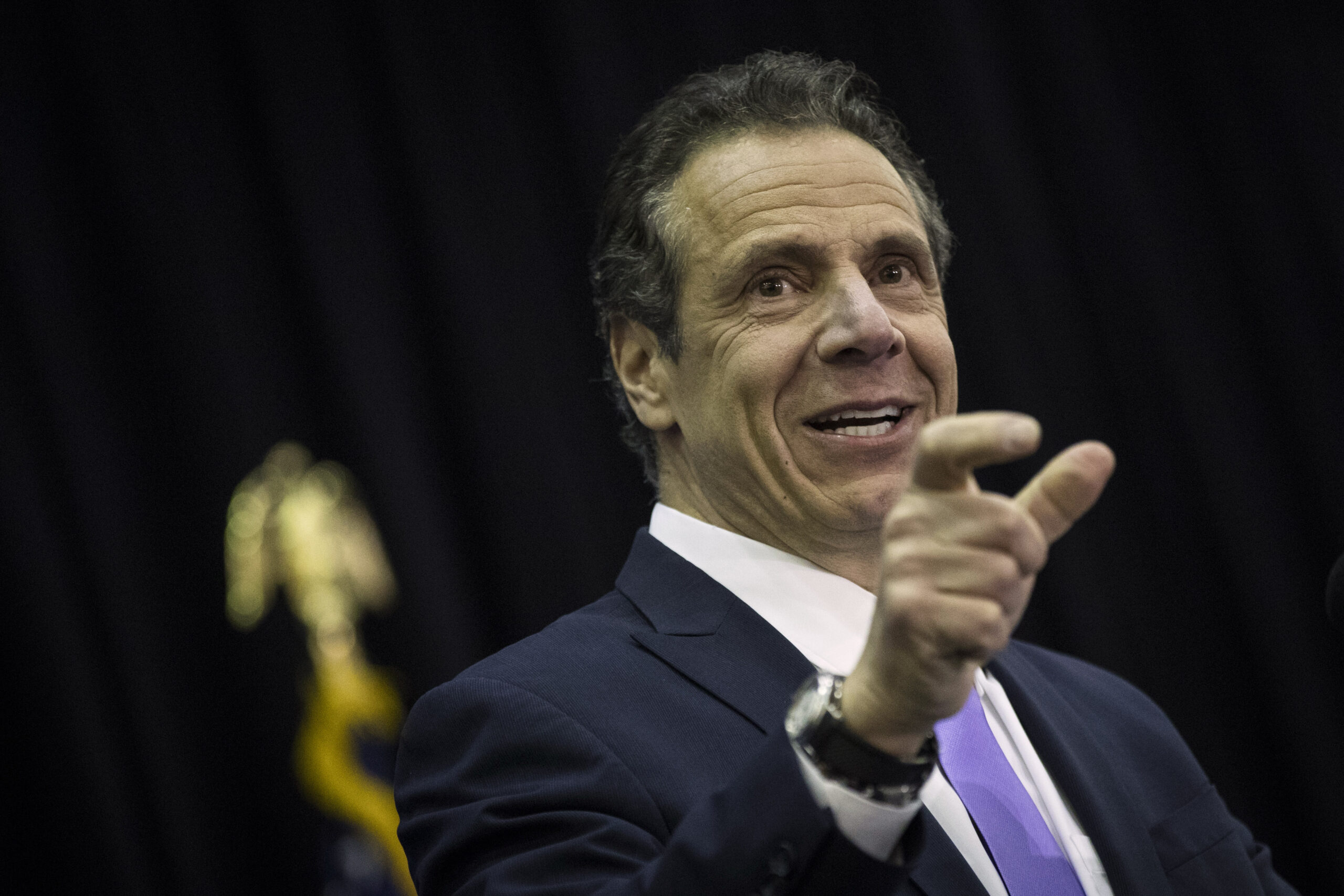
In New York’s gubernatorial primary Thursday, the nation’s last one until Election Day, Democratic voters decided: Four more years for Andrew Cuomo.
The Associated Press called the race for Cuomo at 9:25, shortly after the polls had closed. Cuomo, who campaigned aggressively despite a 41-point lead over Sex and the City actress Cynthia Nixon, was widely expected to defeat his progressive challenger for a third term in Albany. Cuomo’s lead only grew throughout the summer, and his decisive win Thursday confirmed what statewide polls had increasingly forecast.
Recommended Stories


A victory for Cuomo also confirms the conventional wisdom that, however restless the liberal base may be, the status quo tends to endure: A two-term incumbent governor with stable approval, and immense funding support, in a state driven by machine politics makes an intractable foe—even for a celebrity candidate attempting to galvanize the energized, Trump-era left.
The electorate’s energy wasn’t exactly flagging: Voter turnout was higher than it had been four years ago, when Cuomo defeated progressive challenger Zephyr Teachout—who was also on the ballot Thursday, running for attorney general—more narrowly than expected. (In the AG race, Teachout came in second in a field of four.)
Cuomo, whose father, Mario, served three terms as governor of New York, emerged from a summer marred by his closest aide’s corruption trials and a series of unbecoming headlines—from spending state funds on national travel to smearing Nixon, who takes her children from her first marriage to Synagogue every week, as an anti-Semite and enticing developers to open a new bridge dangerously ahead of schedule (they refused). But New Yorkers already knew Andrew Cuomo to be ruthless. Indeed, from his arrogant dismissal of Nixon’s campaign announcement—“This is political silly season,” he said—to his easy win on Thursday night, nothing about Cuomo’s campaign has been especially surprising.
Nixon’s missteps, on the other hand, at least felt new. While much lighter in actual impact, her gaffes told voters—and reporters—something they didn’t know. There was the press release that misspelled Ithaca. “Ithica,” it read. There was the time she called her marijuana legalization platform “a form of reparations” for the black community. And who can forget the horrors of Bagelgate? Mere days before New Yorkers would head to the polls, Nixon was caught on film ordering a cinnamon raisin bagel with cream cheese—and lox, and capers.
Nixon’s defeat is a disappointment for progressives bolstered by the losses of establishment Dems like Joe Crowley and Michael Capuano. Would an energized liberal base choose ideological purity over Albany pay-for-play? Florida Democrats nominated Andrew Gillum, the progressive mayor of Tallahassee, for the open governor’s seat. Nixon and her supporters thought, just maybe, New York would do the same.
But Nixon did not surpass Teachout’s 35 percent from 2014. An unlikely win for Nixon would have required on an even stronger upstate surge than the surprising one Teachout managed in the same contest four years prior. At the time, 538’s Harry Enten wrote that, “Winning only 70 percent of the vote would mean that voters in his party don’t like Cuomo much more than voters in general do. That’s unusual.” Cuomo, that primary day, won just 60 percent.
2014’s results proved his vulnerability, and they gave Nixon—then a devoted progressive activist and an avid support of New York City mayor, and Cuomo bete noire, Bill de Blasio—an opening to run. But, 2014 also ensured that Cuomo would be on guard against a challenger ever getting so close again.
Nixon won fewer upstate counties than Teachout, and outperformed her by a few points in New York City—with the biggest gains, 12 points, since 2014 in Brooklyn—but not in the suburban counties—Westchester, Rockland, Nassau and Orange—where Cuomo surpassed his own 2014 numbers. To win, she would have needed build on Teachout’s success upstate and bridge more of the gap in the city, where Cuomo won by an only slightly smaller margin than 2014’s.
Her ability to replicate and exceed Teachout’s showing upstate became a measure of whether she could convince a liberal electorate that she knew what they needed from a governor. Nixon’s platform has hewn closely to Cuomo’s failures downstate. The deterioration of the MTA under Cuomo’s watch, next only to the political machine he’s operated in Albany for eight years, was chief among her top-drawer talking points. A heavy focus on the subway was never going to sway upstaters, and while she—having, most famously, been Miranda—may have surpassed her in name recall, Nixon lacked law professor Teachout’s command of the political corruption canon.
Nixon, who could still run on the Working Families Party ticket, has suggested in interviews that her post-primary plans are flexible. As is her definition of a “win.” Nudging Cuomo leftward—what her campaign called the “Cynthia Effect”—on progressive mainstays like health care, immigration, education funding, and marijuana is one kind of victory. And even the fact that he agreed to a debate—which he didn’t do in 2014, and hadn’t done since 2006—seemed another proof that Nixon campaign succeeded in giving Cuomo, who’s not known for his humility, a good scare. That’s one kind of a win.
