

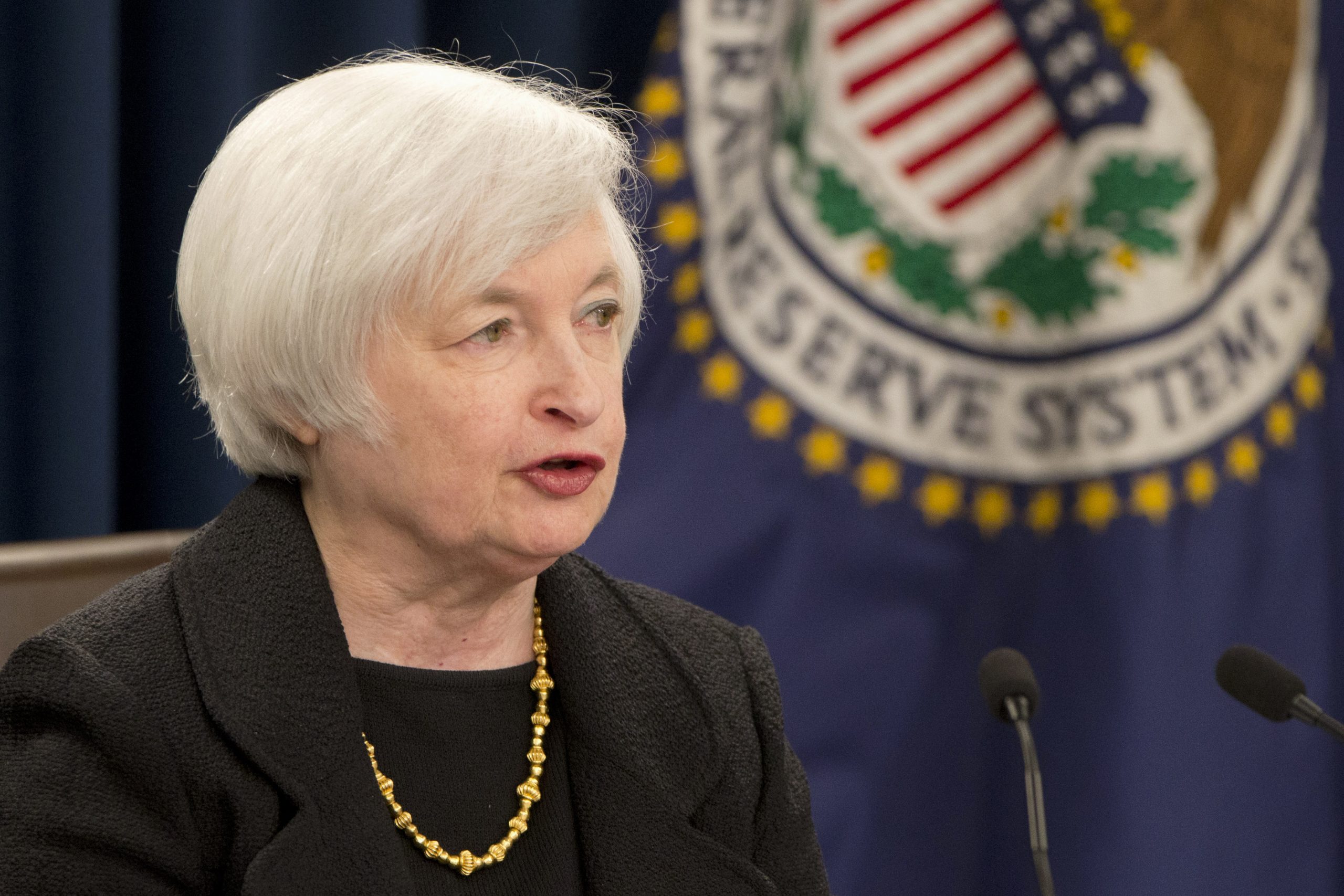
After a summer of anticipation, the Federal Reserve’s September meeting changed little about the outlook for monetary policy and the U.S. economy. Now, the question becomes what kind of economic signals Chairwoman Janet Yellen is looking for in order to raise interest rates in December.
Recommended Stories


The market’s reaction to the Fed’s decision on Thursday was to push back expectations for a rate hike even beyond December.
By market close, U.S. treasury yields were down, reflecting traders’ guesses that the Fed will not tighten as soon or by as much as previously thought. Prices in futures markets suggested that a rate hike was not likely until the Fed’s meeting at the end of January.
But those expecations may be out of step with Yellen’s own thoughts about how economic events are likely to unfold.
Yellen’s comments at her press conference Thursday suggest that, while the economy was not strong enough to support a rate hike at the moment, it also wasn’t far off. The factors preventing the Fed from raising rates, namely “[r]ecent global economic and financial developments,” according to the statement Thursday, are ones that Yellen also said are likely to prove only temporary.
“I do not want to overplay the implications of these recent developments, which have not fundamentally altered our outlook. The economy has been performing well, and we expect it to continue to do so,” Yellen said at the start of her press conference.
Her concern is that slowing growth in China and emerging market economies could lead to an appreciation of the dollar and falling oil prices, both of which could tamp down inflation. The Fed is trying to lift inflation toward its 2 percent target.
Nevertheless, Chinese struggles and market volatility are “very likely to be transitory,” she added.
“She implied that, without those developments, they probably would have started the normalization process today,” High Frequency Economics economist Jim O’Sullivan wrote in a note on the press conference.
Throughout her remarks, Yellen tried to reassure investors that a one-meeting delay of rate hikes was not a signal that the Fed sees the U.S. economy as weak. She also repeated that the timing of the first rate hike is less important than the subsequent pace at which they raise rates.
“I want to emphasize domestic developments have been strong,” she said at one point.
Later, she downplayed the Fed’s level of worry over stock market swings, saying there are “a lot of different pieces, different cross currents, some strengthening the outlook, some creating concerns, but overall, no significant change in the economic outlook.”
Yellen stated that “October remains a possibility” for the Fed to raise rates, even though many economists believe the Fed would hesitate to make a big policy move at a meeting that did not include a quarterly press conference.
Yellen will have another chance to more clearly state her views next Thursday. She’ll be traveling to the University of Massachusetts, Amherst, to give a speech on inflation and monetary policy.
Before the October meeting, investor attention will be on the major economic statistics set to be released. Next Friday, the Bereau of Economic Analysis will release a revised estimate of gross domestic product growth in the second quarter. On Friday, Oct. 2, the Bureau of Labor Statistics will report on job growth in September. On Thursday, Oct. 15, the BLS will estimate consumer price growth in September.
