

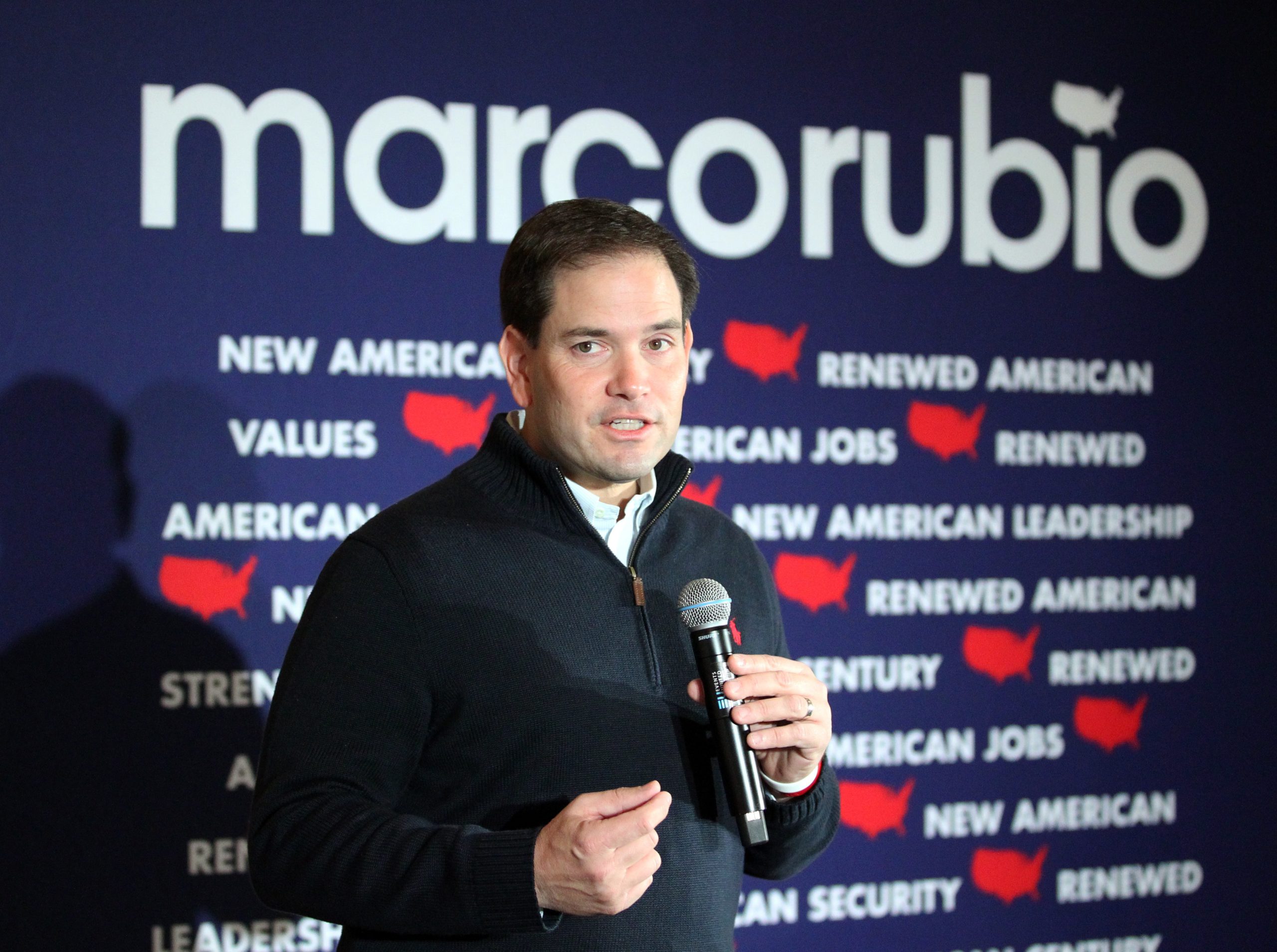
Sen. Marco Rubio has teamed up with a prominent Southern Baptist to urge the Obama administration to step up its protection of persecuted Christians in the Middle East.
The Florida senator, who is seeking the Republican presidential nomination and is competing with Sen. Ted Cruz for the votes of evangelicals, decried the intensified persecution of Christians by the Islamic State and other jihadist groups and listed some steps he’d like to see the administration take, in a Washington Post op-ed posted Thursday.
Recommended Stories


Rubio co-wrote the piece with Russell Moore, president of the Southern Baptist Convention’s Ethics and Religious Liberty Commission. Moore has recently been critical of Republicans for their response to the Syrian refugee crisis, urging them to welcome them into the U.S. rather than block them from entering as many have called for.
Moore’s collaboration with Rubio could help the senator, who is Catholic, among evangelical voters in the upcoming primary battles.
The two men called on the administration to designate more foreign aid dollars specifically for Christian refugees forced to flee their homes because of religious persecution. They also criticized the State Department for not yet designating the Islamic State’s aggressions against Christians as genocide.
“Reports suggest that the State Department is ready to designate the Islamic State’s terror against the Yazidis as genocide, which it clearly is, but they might not to do so for equally embattled Christian communities,” Rubio and Moore wrote. “This is only one part of a refusal to come to grips with the full weight of these facts.”
They also said President Obama should also require the State Department to apply the “Country of Particular Concern” designation and its sanctions to all nations with rampant persecution and called on him to take more seriously the recommendations of the U.S. Commission on International Religious Freedom.
“As important as this commission’s work is, it can only do so much without a president or State Department willing to take its counsel seriously,” they wrote.
