


Marilyn Tavenner was chief implementer of President Obama’s contentious healthcare law, yet she managed to remain one of the most widely respected officials in Washington over the three years she guided the Centers for Medicare and Medicaid Services.
As Republicans called for heads to roll during the first Obamacare enrollment season, many of them continued backing Tavenner, whose office had created the glitchy healthcare.gov website. Even former House Majority Leader Eric Cantor, a vocal critic of the Affordable Care Act, never criticized her during the early, troubled days of insurance sign-ups under the law.
Recommended Stories


Tavenner departed CMS this year to head America’s Health Insurance Plans, the influential association of nearly every major insurer. The Washington Examiner spoke with her about how she leads, her new role and why she left the Obama administration.
While she specifically declined to address UnitedHealthcare’s threat to exit the exchanges, she did say, “We’ve been very clear with the administration about the serious challenges facing consumers and health plans in this exchange market. Most recently, nearly 800,000 Americans have faced coverage disruptions as a result of the significant and unexpected shortfall with the risk corridors program. When health plans cannot rely on the government to meet its obligations, individuals and families are harmed as a result.
“The administration must act to ensure this program works as intended and consumers are protected.”
Washington Examiner: Why did you decide to leave CMS in February, near the end of the second Obamacare enrollment season?
Tavenner: Originally when I went to work at CMS it was a political appointment, so I knew it had a certain time limit. My thought had always been to stay there two or three years. I ended up staying five. I had always planned to leave after we got through first open enrollment. Well after the first enrollment was so rocky and it took us a while to recover, so I decided to stay longer, [but] I had made [Health and Human Services Secretary Sylvia] Burwell aware of my desire to leave before second enrollment.
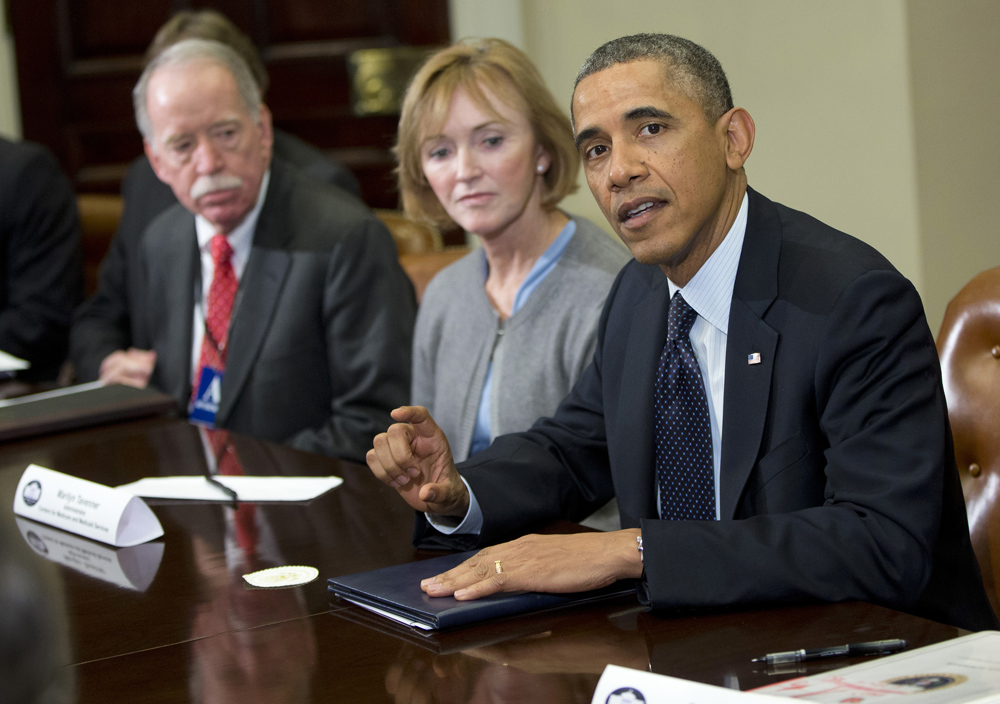
“[After the first enrollment was so rocky and it took us a while to recover, so I decided to stay longer, [but] I had made [HHS Secretary Sylvia] Burwell aware of my desire to leave before second enrollment,” she said.
Examiner: With your experience, you could have gone just about anywhere you wanted. Why AHIP?
Tavenner: That’s a great question. AHIP was not on my radar screen simply because I had developed a pretty good relationship with [former President] Karen [Ignagni] over the years. She’s well-respected and nothing about Karen sounded remotely like retirement.
I was heading down the path of joining a couple boards, was going to do some consulting, when I got a call from Karen in late May saying she had decided to leave AHIP. And that was followed up by “do you think you’d have interest in serving as the CEO of AHIP?” It was like wow, I need a few minutes to think about this and then I was like yes. It was not where I intended to go, but I did intend to do some work around private health plans.
Examiner: How’s your new job different from the pace at CMS?
Tavenner: I think the pace is just as intense. Healthcare is always busy and always seems to be on everyone’s top-of-mind. I’m the kind of person who likes to get to work early and have my quiet time and then the pace starts, but I’m also the kind of person who likes to be in bed by 9:30.
Examiner: What was it like during the first difficult days of Obamacare enrollment when everyone realized Healthcare.gov didn’t work well?
Tavenner: I think for the first two or three days everyone was trying to figure out what was going on. After the first 48 or 72 hours was the ah-ha moment: We have a core problem and not everyone can get through. I remember it very well, we were sitting with the team — of course this is also in the midst of a government shutdown, so we were sitting with a skinnier team than we would normally have — and asking how do we solve the problem.
We pulled in people from Silicon Valley, we engaged Optum, and it was the team pulling together. I said it took a village of people moving all in the same direction. I basically said to the team don’t read the paper, don’t pay attention to what’s being said. Just get the job done.
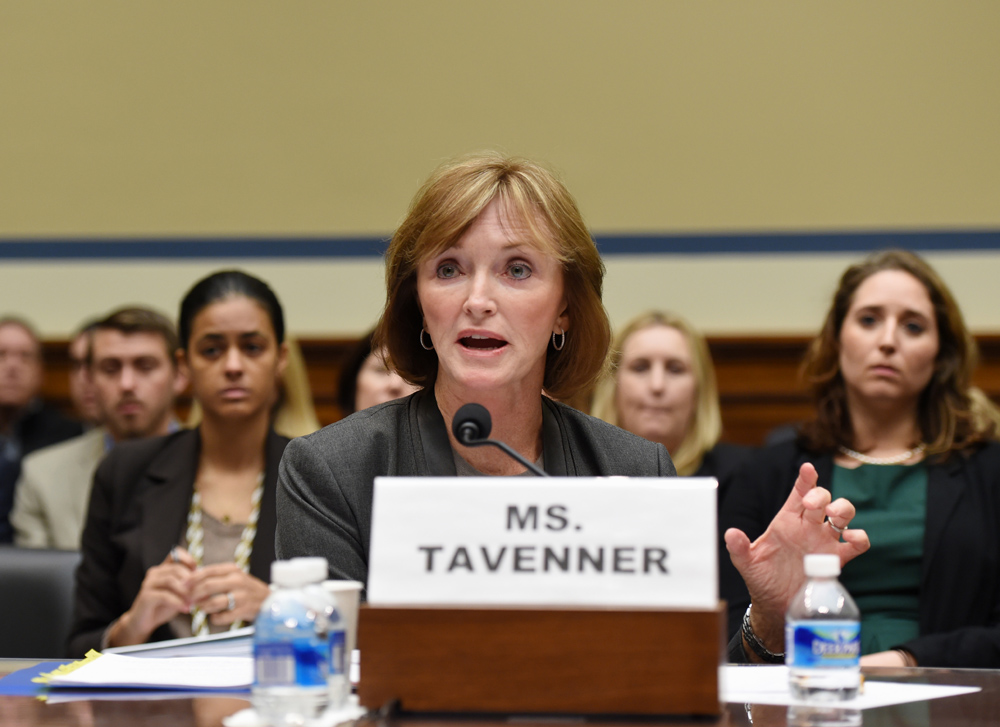
“My history has been I had supported both Republicans and Democrats, so I think they were able to check out my background,” Tavenner said when asked about her relationship with Congress.
Examiner: As a chief overseer of one of the most controversial federal laws ever, how did you still manage to be so well-liked by Republicans? Basically nobody has anything bad to say about you.
Tavenner: I am kind of a middle-of-the road person, and many members of Congress knew that. My history has been I had supported both Republicans and Democrats, so I think they were able to check out my background.
I also think most importantly for the first 18 months or so I was in the No. 2 position, and I fielded a lot of inquiries from members on both sides of the aisle who had constituent issues or questions or problems. One belief I hold very strongly is when people come to me with a set of issues, I’ll try to solve their problem. Either way, yes or no, I’m going to get back to that person with the answer. And I think that’s what builds that relationship. So I think there was a certain amount of trust there. Did they always like what I was doing? Of course not.
Examiner: How do you see your leadership style as different from your predecessor, Karen Ignagni?
Tavenner: I describe Karen frequently to her as the Energizer Bunny. I think my leadership role will be complementary, but a little different. I’m very into building partnerships and relationships, so what you’re going to see with me is I want to continue my strong relationships with the Hill, I want to work with the board here to solve problems and I want to work with everyone, so I think you’ll see a lot more outreach than what’s been historical. I think the CEOs will be out-front with me.
Examiner: Many of the presidential candidates and Democrats in Congress are increasingly talking about high drug prices. How can insurers help lower costs?
Tavenner: We see we have a major role there because what happens with pharmaceutical pricing also affects our consumers and it also affects premiums pricing. We think the solutions have to do with how the FDA reviews drugs and how patents are protected or not protected. The second issue is transparency in what goes into pricing — how much is in profit margin. What we’re trying avoid is going to price controls or a blunt tool, but saying what is involved in the making of these drugs.

Tavenner mentions that “this year the premiums came in a little higher, but I think that again reflects some of the transition and people learning what these consumers look like.”
Examiner: What’s your pulse on how the Obamacare marketplaces are doing? Premiums rose more this year than while you led CMS. Are insurers getting the customers what they need to keep their products attractive?
Tavenner: This is a market that is still in transition. I think because the first rollout — despite the initial bumps — went so well and because enrollment was higher than projections, people said that’s great. But they didn’t realize the way the law was set up with risk corridors there would always be an adjustment and that was planned for years 2014, 2015 and 2016. This year the premiums came in a little higher, but I think that again reflects some of the transition and people learning what these consumers look like.
Examiner: Any thoughts on why the Obama administration set enrollment targets this year lower than people expected?
Tavenner: I think they were more modest. I won’t even get into the political side because I don’t know what’s going on there. Obviously, it’s going to be a number that’s watched so they were probably being very conservative in their number.
Examiner: Why is health insurance still so confusing to the average consumer, and what can be done about that?
Tavenner: Obviously there are some tools, but they are still early and kind of blunt tools on the exchange itself. I’ve heard that frustration more than once, so plans have to create cost calculators that help you pick. There are early and somewhat newer tools, so they’re not perfect yet but there’s a market for further development out there. I think in the next year you’ll see CMS do some work on that.
It’s going from getting the product on the shelf to helping people pick the product. It still is a little complicated and when we were talking about people signing up for health insurance, one thing we’ve avoided saying to the consumer is this is quick and easy.

The Aetna and Humana consolidation is a “perfect example of why it’s easy to support this consolidation and talk about it in a way consumers understand,” she said.
Examiner: What about all this consolidation of big insurers? It’s something consumers aren’t too happy about.
Tavenner: Whether it’s a hospital consolidation or a plan consolidation, you need to look at what was the purpose behind consolidation. Let me talk about Aetna and Humana’s consolidation because I think that’s the perfect example of why it’s easy to support this consolidation and talk about it in a way consumers understand. The reason they’re consolidating is because of the Medicare Advantage product. Even after their consolidation, they’re left with a very small piece of the Medicare Advantage market.
But the part I think makes the most compelling argument is they want to become super experts in the healthcare space, with the consumer up front. Advance everything from delivery system models to bundled payment, with the idea that the consumer needs a coordinated approach to care. Listening to their discussion, it makes total sense for why the consolidation would be in the consumer’s best interest.
Examiner: You’re turning 65 in May. Will you sign up for Medicare?
Tavenner: I probably won’t sign up because I’ll have employer insurance, but I have to register because if I don’t I have to pay a penalty later.
Examiner: How do you argue for repealing the law’s “Cadillac” tax on health-cost health plans, as AHIP carries out a big lobbying effort to get it ditched?
Tavenner: Whenever there’s been a major law — forget the Affordable Care Act for a moment, go back to Medicare, Medicaid — there has always been a law put in the books and then immediately followed by a series of modifications that were necessary. Certainly that’s necessary for us today, so I try to not get down in the weeds or wonkiness and I just say this law has room for improvement.
I think there are areas where we can have bipartisan agreement, and that’s the way we go forward. I don’t get into the conversations of repeal and who knows what the election brings. I’m just interested in how we can manage today. I didn’t think [sustainable growth rate repeal] would ever move, and behold 60 days later … it just shows when Congress wants to sit down and work together, they can actually get something done with great results.
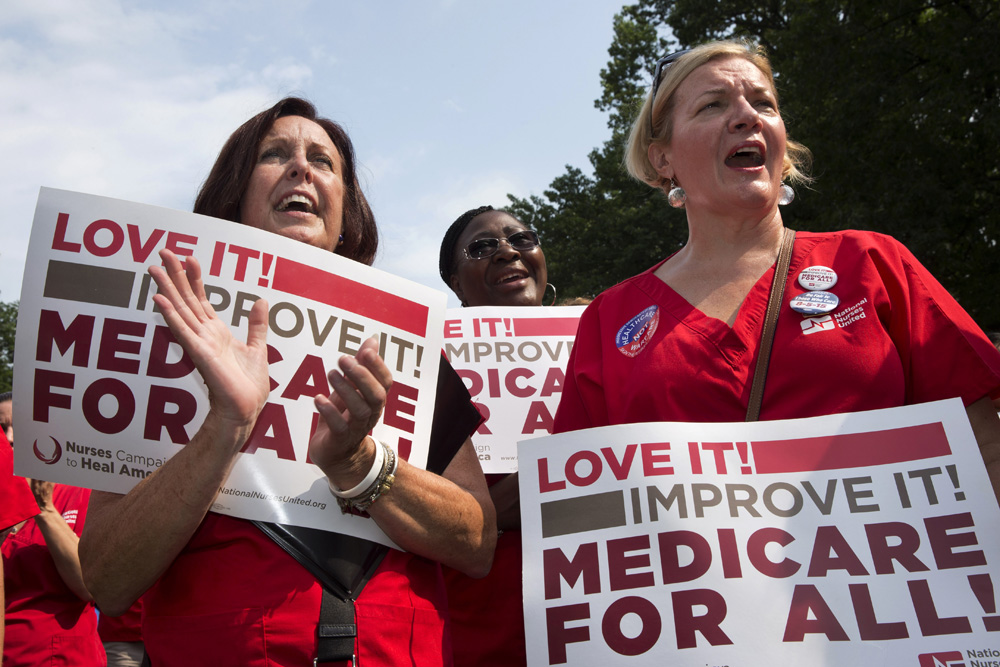
Tavenner said that she probably won’t sign up for Medicare “because I’ll have employer insurance, but I have to register because if I don’t I have to pay a penalty later.”
Examiner: But do you have a realistic hope this tax will actually get repealed?
Tavenner: I’m the kind of person who thinks you have a handful of strategies and you really go broad and deep in those strategies.
Examiner: What other lobbying efforts are you planning?
Tavenner: Some activity that will become more important as we get into February timeframe has to do with Medicare Advantage, which is an important and ever-growing product for our members. There have been ongoing efforts to try to make some cuts, so you’ll see us very engaged on the Hill. As a corollary to that, Medicaid is becoming even more important to our members for a number of reasons. Those are two very strong growth markets and they’re markets where we think delivery system changes and coordinated care will make a difference.
