

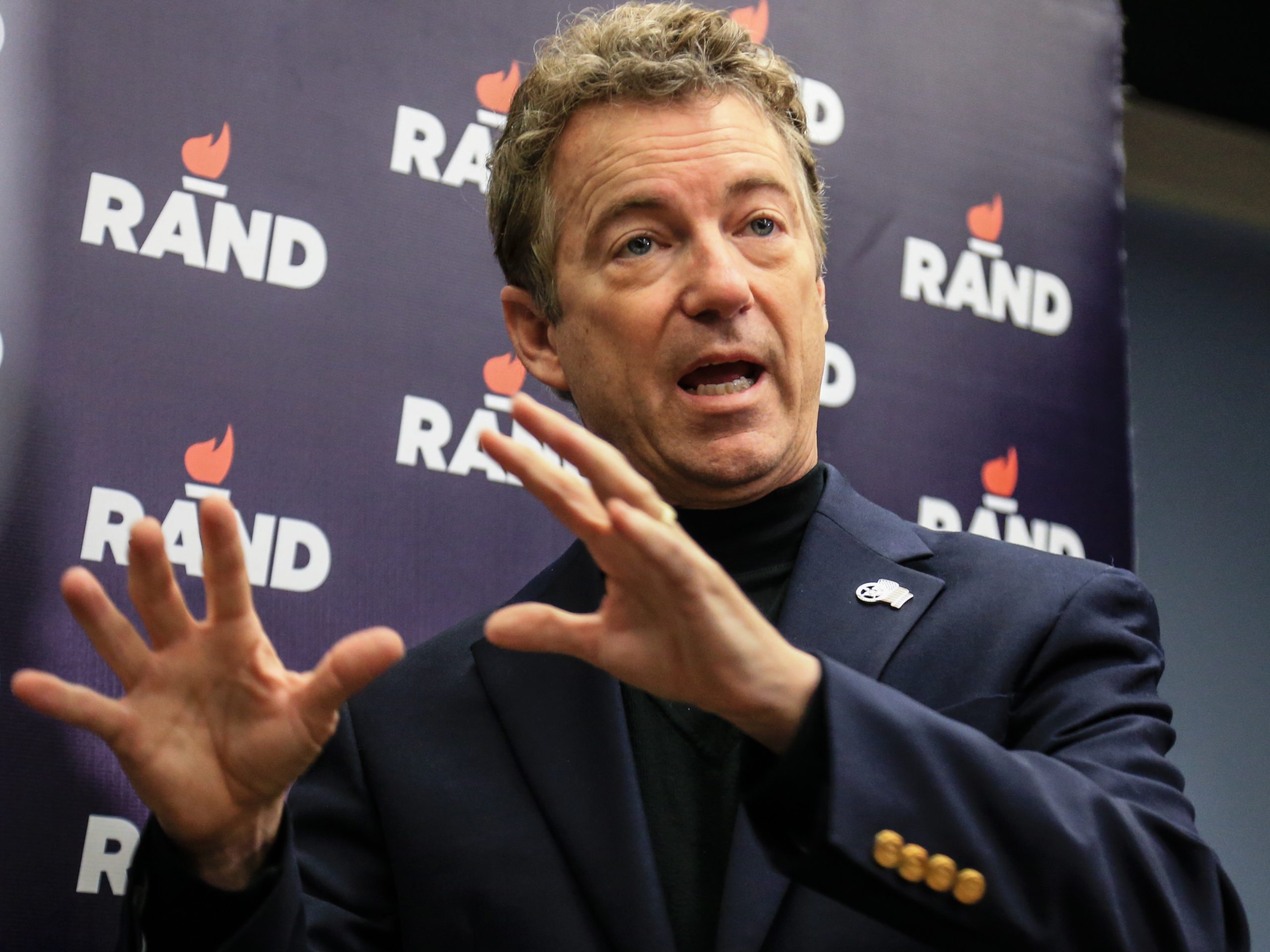
He didn’t get the support he needed, but Sen. Rand Paul got a vote on auditing the Federal Reserve in the Senate Tuesday.
The legislation failed to advance, but the vote provided the Kentucky senator and presidential candidate with the opportunity to highlight his libertarian opposition to the central bank’s management of monetary policy and regulation. The time on the Senate floor gave him visibility at a time when his presidential campaign is struggling amid a crowded Republican field.
Recommended Stories


“It’s time we audit the Federal Reserve once and for all to restore transparency to our nation’s textbook,” Paul said on the Senate floor shortly before the vote. He currently ranks eighth in the Washington Examiner’s presidential power rankings.
A majority of senators, 53, voted for Paul’s legislation, while 44 voted against it, with the vote falling mostly along party lines. The vote, however, which was set up under special Senate rules, fell short of the 60 “yes” votes needed to cut off debate and proceed.
Bernie Sanders, a Democratic candidate for the presidency who serves as an independent senator from Vermont, voted for Paul’s bill. In a statement released after the vote, Sanders said that an audit “would be an important step towards making the Federal Reserve a more democratic institution that is responsive to the needs of ordinary Americans rather than the billionaires on Wall Street.”
Sen. Tammy Baldwin, D-Wisc., also voted for the legislation. Sen. Bob Corker, a Tennessee Republican who sits on the Banking Committee, crossed party lines to vote against it.
Marco Rubio, the Florida Republican who is one of Paul’s rivals for the GOP presidential nomination, voted in favor of the measure. Texas senator Ted Cruz, another competitor, missed the vote, an absence for which Pauls’ father, former Texas representative and GOP presidential candidate Ron Paul, later criticized Cuz on Twitter.
Paul’s bill, the Federal Reserve Transparency Act of 2015, would have eliminated existing restrictions on the Government Accountability Office’s ability to audit the Federal Reserve’s operations.
The Fed already is audited by the comptroller and has its finances audited by an outside company. The main effect of Paul’s legislation would be to subject the Fed’s monetary policy deliberations to a GAO program audit.
Fed Chairwoman Janet Yellen and other Fed officials, as well as the White House, have argued that the bill would inject short-term politics into the monetary policy decisions made by the independent Fed.
In recent days, outside conservative groups such as Heritage and Freedomworks have rallied around auditing the Fed. The Chamber of Commerce, however, the biggest business group, told senators to vote it down.
