

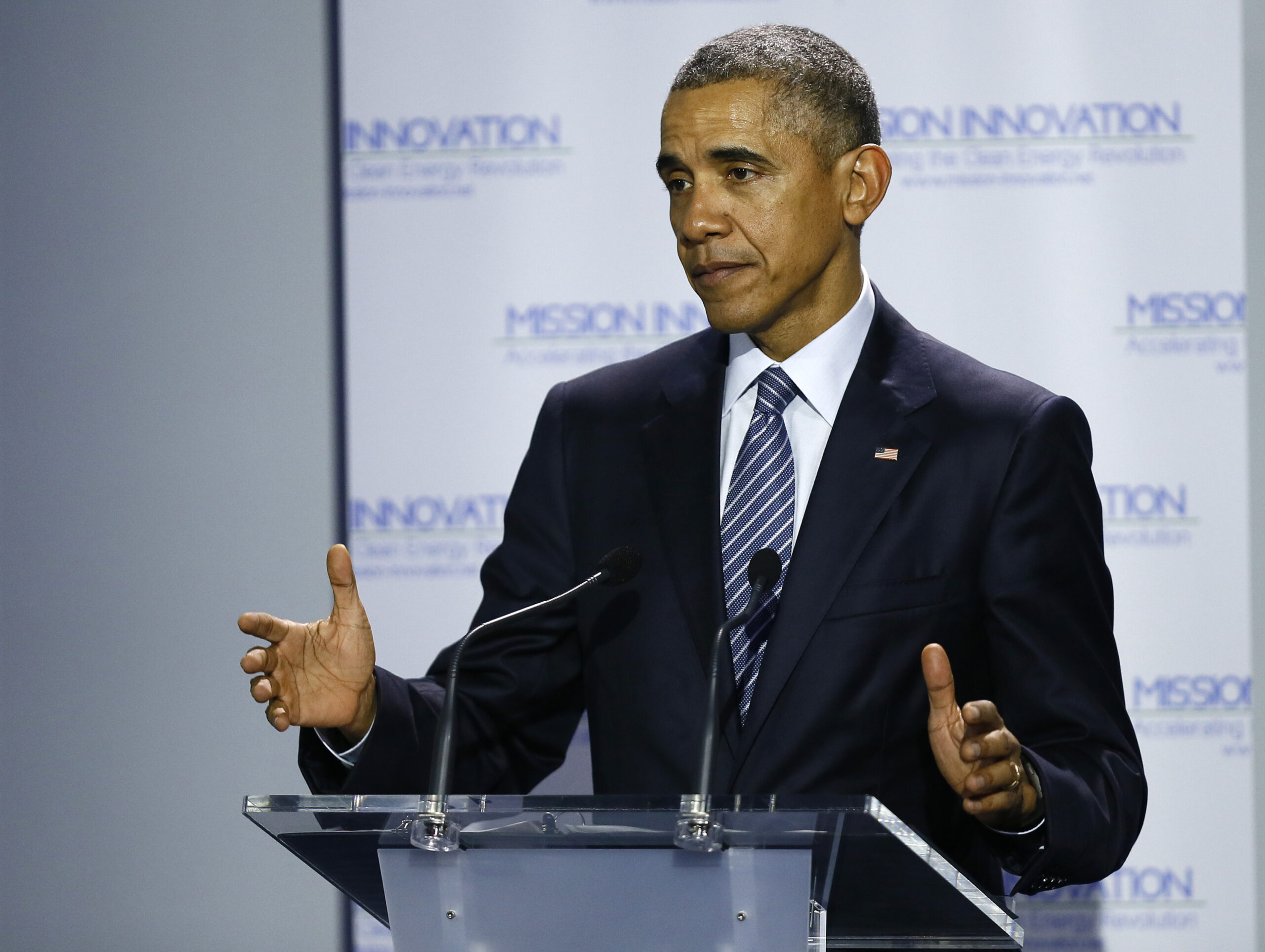
The White House said any climate change deal reached in Paris would not be legally binding, reinforcing concerns by Republican critics that President Obama is seeking to go around Congress.
The Obama administration argues that a legally binding agreement would dissuade big polluters China and India from making steeper emission cuts under a United Nations climate change deal the president wants to succeed over the next two weeks in Paris.
Recommended Stories


“Absolutely not,” said White House deputy national security adviser Ben Rhodes, answering questions from reporters over whether a climate change deal would be legally binding.
Rhodes told reporters that the president wants to ensure any deal is a “truly global effort” and that both developing and developed nations step up to make commitments to reduce greenhouse gas emissions that scientists say are causing the Earth’s temperature to rise by the burning of fossil fuels.
“If we set a legally binding treaty … we would have lost that global effort” by pushing away developing nations from agreeing to greenhouse gas emissions reductions. “China is the world’s largest emitter,” Rhodes said. “China and India need to be part of the solution” in lowering global emissions.
Obama was in Paris Monday to kick off two weeks of climate change talks, in the hope of securing a deal with about 200 countries on cuts to greenhouse gas emissions cuts.
Many Republican lawmakers, and some Democrats, argue that the only reason the administration wants a deal not to be legally binding is to block Congress from having a say on whether the U.S. can be part of any agreement. The GOP argues that a legally binding deal would require ratification by Congress since it would be an international treaty. It would be unlikely that Congress would approve such a deal.
House and Senate members warned Obama last week that if a deal is not sent to Congress for approval, they would block the funding needed for the U.S. to meet its obligations
But Rhodes said the administration is seeking a non-binding deal because of the failure to reach an agreement in Copenhagen in 2009. After that meeting, nations agreed that, to include the developing world, a legally binding, treaty-like agreement would not work. In Copenhagen, developing nations said they should not be held to the same standard as developed countries in making strict cuts to emissions, which would harm their economic growth.
Although any deal reached in Paris in the next two weeks would not be legally binding, the White House said any agreement would include reporting requirements from China and India to show they are moving toward reductions. The Paris talks would establish a framework for the targets to be increased, as better technology encourages more ambitious targets, Rhodes said.
“In order to make these goals achievable, there needs to financing,” he said. There has been “significant progress on [a] Green Climate Fund,” which would provide $100 billion per year to developing nations to meet the challenges posed by climate change.
Obama met Monday for one-on-one talks with Chinese President Xi Jinping and Indian Prime Minister Narendra Modi to drive home that both countries are large emitters and need to make strong commitments to emission reductions, Rhodes said.
Obama “wanted to send a signal with the meetings” that they need to work together “to try and pursue an ambitious agreement.”
