

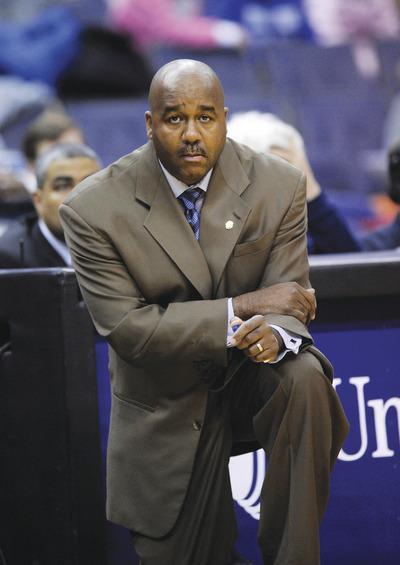
Big East scrambling after loss of schools The ground is shaking underneath Georgetown and other non-football Big East schools as the earthquake of conference realignment rattles the college sports landscape. Whenever the tremor is over, and it’s hard to tell when that will be, the Hoyas might just find that while the foundation has been shifted, the damage, thanks to the strength of the basketball program, will be far from unrecoverable.
Recommended Stories


“If you’re Georgetown, you sit tight and you’re going to be fine,” CBSSports.com college basketball analyst Jeff Goodman said. “Either you’re going to be in a group that’s going to merge and bring in some of those Big 12 programs, and still be a football and basketball league, or the backup plan, and their safety net, really, is the Big East will turn into a basketball league.”
It doesn’t mean there haven’t been sleepless nights around Georgetown since the announcement last weekend that Syracuse and Pittsburgh were both defecting from the Big East to the ACC. The prospect that Connecticut, Rutgers and West Virginia might also part ways, even if it doesn’t come for more than two years, had the rest of the conference’s athletic directors scrambling to assess their options, according to multiple reports.
The first option involves picking up the pieces of the Big 12, with Texas on the verge of leaving and potentially taking Oklahoma, Oklahoma State and Texas Tech to the Pac-12.
Georgetown and the other remaining non-football Big East schools — DePaul, Marquette, Providence, St. John’s, Seton Hall and Villanova — could scoop up the leftovers (potentially Kansas, Kansas State, Iowa State and Baylor). While football would remain a key sport within the conference, the size and strength of the remaining Big 12 programs might also lead to wandering eyes in search of more attractive suitors.
On the other hand, a basketball-driven realignment could cause even more chaos, but might also bring the Hoyas the greatest payoff. It would consist of taking the 16 Final Fours and three national titles among the remaining Big East schools and using that leverage to coax schools like Butler, Xavier and some combination of Temple, Dayton and perhaps VCU and George Mason to create what could potentially be one of the best basketball leagues in the country.
“If you develop a strong enough basketball league, you’re going to be on TV, you’re going to get multiple bids, and those are what matter the most for kids,” Goodman said about the potential effect on recruiting.
The loss of traditional rivalries is still hard to stomach, even for Syracuse coach Jim Boeheim, who stated his opinions clearly to the Monday Morning Quarterback Club in Birmingham, Ala.
“We’ve played St. John’s for the 50 years I’ve been at Syracuse, and Georgetown for 40, so yeah, there’s some nostalgia there,” Boeheim said. “There’s some heartbreak, no question about it.”
But preparation trumps nostalgia, and it was evident in the statement put out by Georgetown on Monday.
“It’s been clear for two years, if not longer, that the landscape of intercollegiate athletics is fluid and is changing,” said Hoyas coach John Thompson III in the release. “The Big East is no different. In the future, be it the very near future or longer than that, we are going to undergo a transformation, a change. If you look at our history, the Big East has undergone changes in the past, be it subtractions or additions, and we’ve always emerged with quality teams that compete for and win championships.”
